Immigrant Households in Mid-City: Excavations from Albert Wicker Elementary School
Text
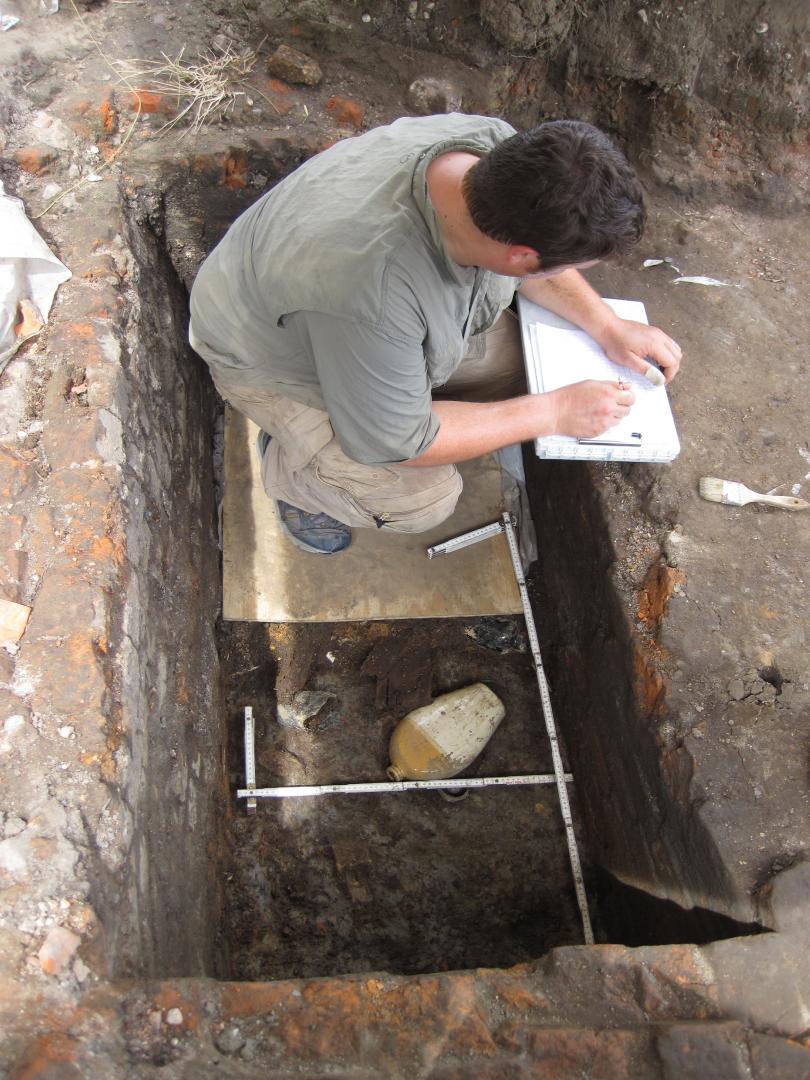
Albert Wicker Elementary School had been located on Bienville Street in Mid-City 1971. Due to the effects of Hurricane Katrina, the school was damaged to the extent that the Orleans Parish School Board elected to demolish a new school and build another in the same place. Because the demolition of the school risked damaging cultural remains underneath the surface, the Federal Emergency Management Agency (FEMA) sent archaeologists to excavate select areas in order to mitigate any damage that might occur.
The excavations and archives that the archaeologists uncovered related to first residents of the new neighborhood just prior to the Civil War. Most of these residents were European immigrants. The artifacts revealed the tastes and habits of these families new to New Orleans. These include artifacts such as the poëlon, or German ceramic pan belonging to the Haabs family, one of the first residents on the block. They included a stag copper luster pitcher with molded stags depicted on either side belonging to the Cunningham family, and Irish family who lost their home to creditors in 1860. They also include an organ pull that belonged to Ferdinand Kodlin, a German immigrant who retired in 1890 from running the largest piano store in New Orleans.
These select artifacts are among the over 4000 artifacts that archaeologists identified on this city square that put together the daily lives of the shoemakers, pharmacists, grocers, and shopkeepers who first moved into this neighborhood.
Adapted from an exhibit originally published on GNOARCH.com.
Files
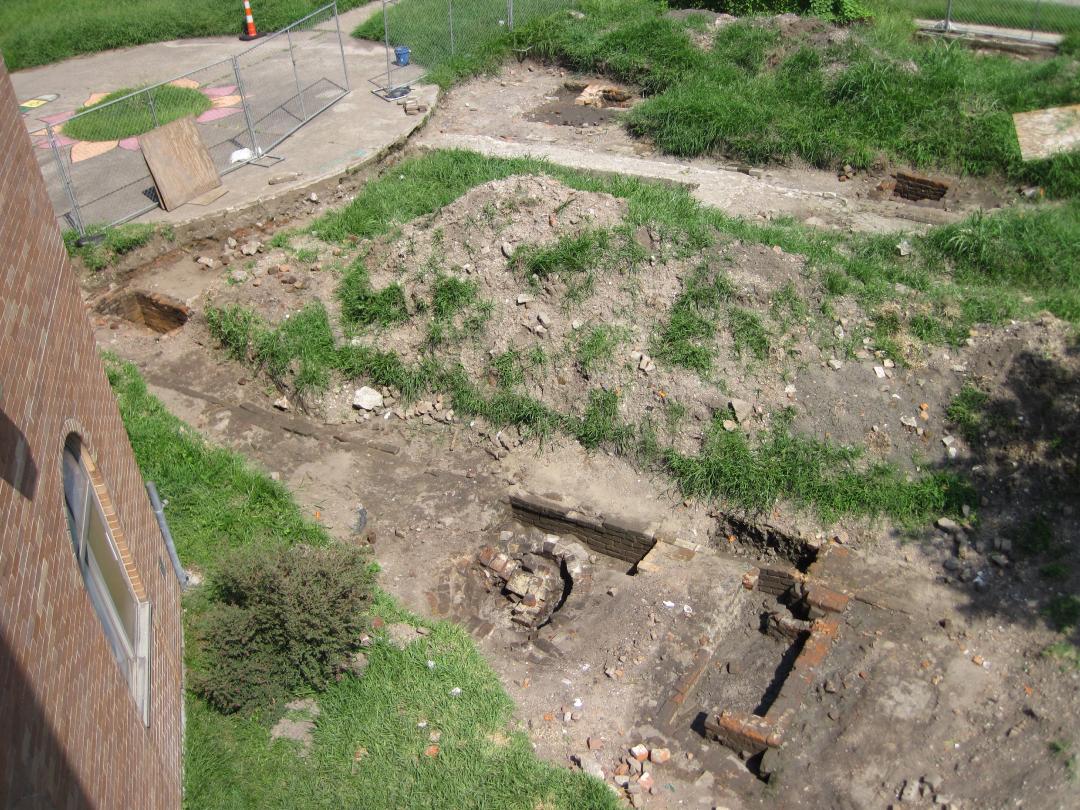
Overview of site
Project area overview with brick features | Source: Coastal Environments, Inc. | Date: 8/23/2018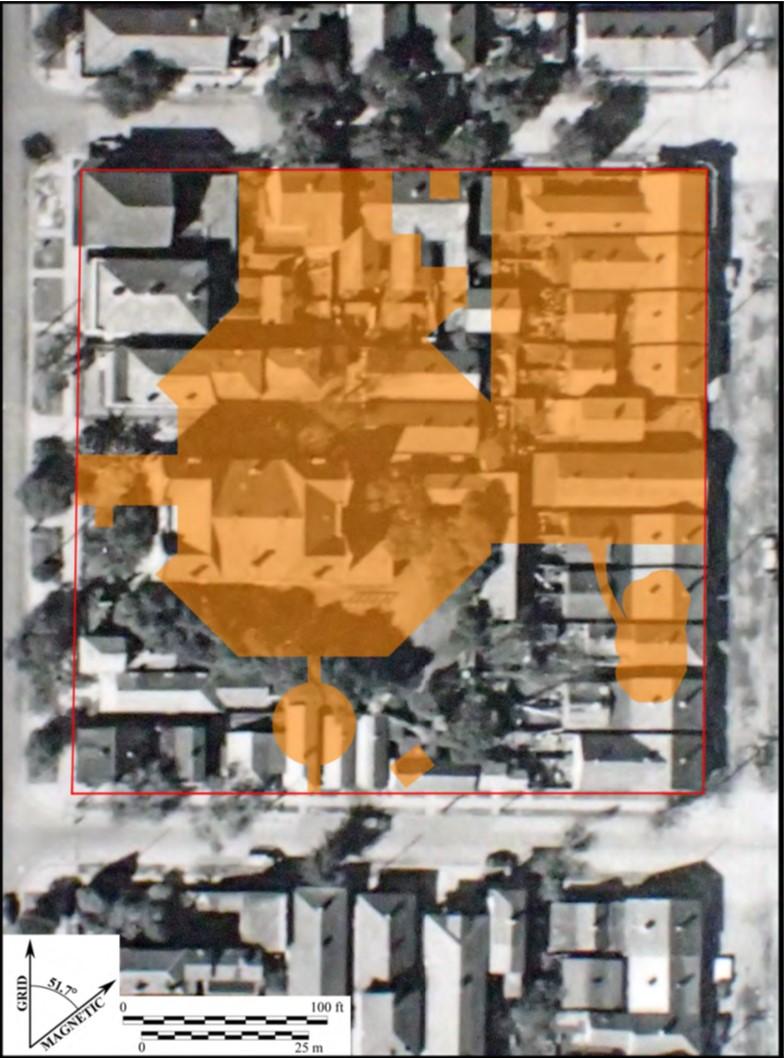
Historic buildings overlay using aerial imagery (1946 aerial photo DX-19-56, Orleans Parish)
Aerial photo from 1949 showing historic homes on the block with Wicker Elementary School outline shaded on top of image. Overlay created by CEI. | Source: Aerial Collection, City Archives and Special Collections, New Orleans Public Library | Date: 1949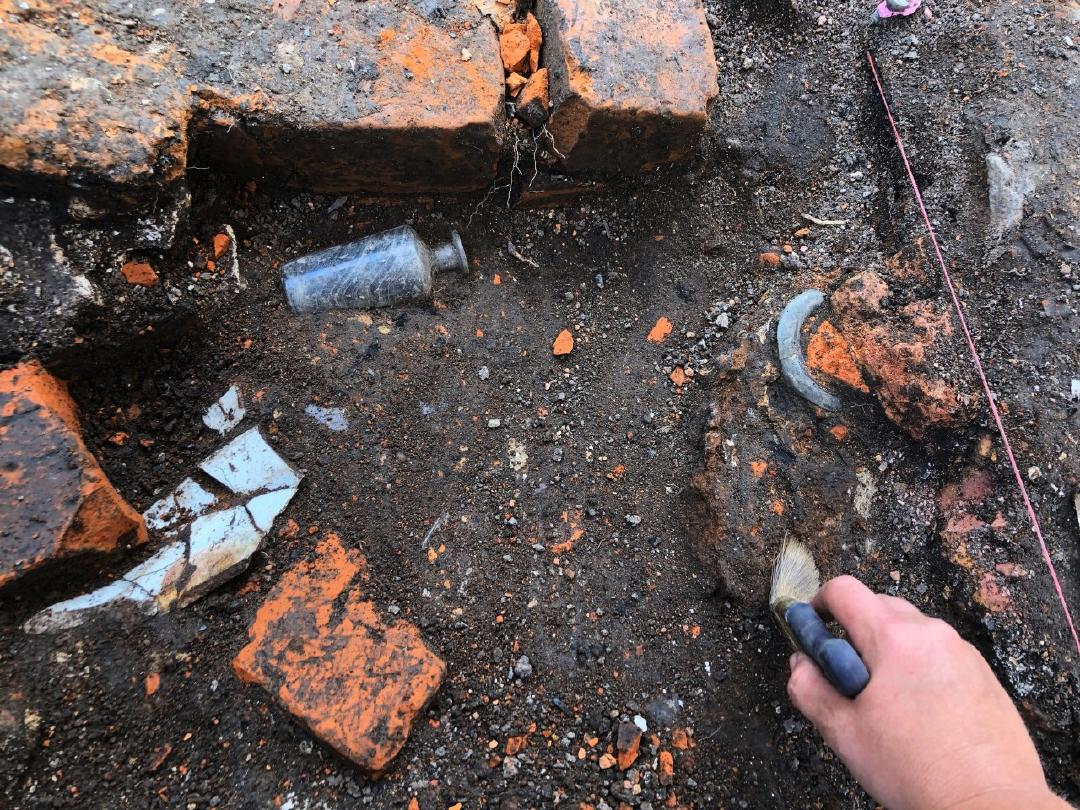
Brushing
Exposed bottle, ceramics and bricks being cleared off to record relationships | Source: Coastal Environments, Inc. | Date: 8/13/2018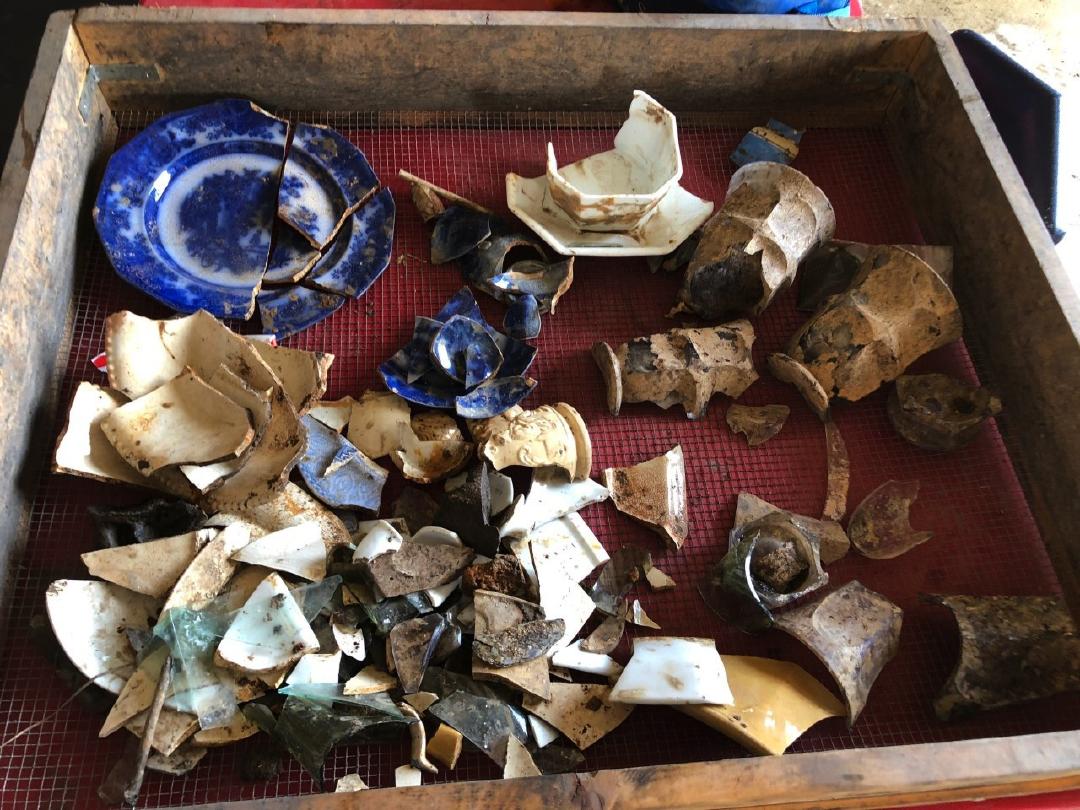
Screen containing some of the many artifacts at this site
Screen containing some of the many artifacts at this site | Source: Coastal Environments, Inc. | Date: 8/20/2018