<?xml version="1.0" encoding="UTF-8"?>
<feed xmlns="http://www.w3.org/2005/Atom">
  <title type="text">New Orleans Historical</title>
  <updated>2026-08-24T00:38:18+00:00</updated>
  <generator uri="http://framework.zend.com" version="1.12.20">Zend_Feed_Writer</generator>
  <link rel="alternate" type="text/html" href="https://neworleanshistorical.org/"/>
  <link rel="self" type="application/atom+xml" href="https://neworleanshistorical.org/items/browse?output=rss2"/>
  <id>https://neworleanshistorical.org/</id>
  <author>
    <name>New Orleans Historical</name>
    <uri>https://neworleanshistorical.org</uri>
  </author>
  <link rel="hub" href="https://pubsubhubbub.appspot.com/"/>
  <entry>
    <title type="html"><![CDATA[K&amp;B Drug Stores]]></title>
    <summary type="html"><![CDATA[<img src="https://neworleanshistorical.org/files/fullsize/00d49e3df4a67fb393229bb018135c5c.jpg" alt="Katz &amp; Besthoff, Store No. 12, 1011 Canal Street" /><br/><p>Katz & Besthoff, Ltd., later known as K&B, was a drug store chain headquartered in New Orleans throughout much of the 20th century. 1011 Canal Street was home to one of the chain's 186 storefronts. </p><p>In 1905, Gustave Katz and Sydney Besthoff opened the original Katz & Besthoff drugstore at 732 Canal Street. Gustave Katz was an established New Orleans pharmacist, and Sydney Besthoff was a successful drugstore owner from Memphis, Tennessee.  </p><p>K&B was known for its signature “K&B Purple” branding. There are several stories that explain how the color branding came to be, all of which date from 1908 to 1911. According to one such story, early 19th century retailers wrapped customer purchases in paper and tie it into a bundle for them to carry home. In 1911, Sydney Besthoff’s wife was shopping to buy wrapping paper for the K&B stores. Money was tight in those early years and ways to save money on operating costs were important. She came across some purple wrapping paper that was on sale because no one wanted such an outlandish color. But, seeing the savings in costs, she secured as much of the paper as she could and returned to the store. The purple paper soon became a K&B slogan: “If it’s purple on the outside, it’s only the BEST from Katz and BESThoff on the inside.”  </p><p>Katz and Besthoff develop a business that grew into a popular part of New Orleans culture with multiple drugstores throughout the city. In 1926, Sydney Besthoff died of a heart attack, and his son, Sydney Besthoff III, became more involved in the business. In 1940, after Gustave Katz passed away, the Besthoffs bought out the Katz Family’s stake in the business.</p><p>By 1955, after 50 years of business, K&B operated eighteen stores. In the 1960s, after K&B’s expansive growth, the company’s corporate headquarters, then located at 900 Camp Street, relocated to larger offices at 1055 St. Charles Avenue. The new office space was initially leased from the John Hancock Insurance Company. In the early 1970s, K&B purchased the building from John Hancock and renamed the site “K&B Plaza.”  </p><p>In 1997, Rite Aid purchased the entire K&B drug store chain, including 186 stores located in Louisiana, Mississippi, Alabama, Florida, Tennessee, and Texas. The Besthoff family still occupies offices at 1055 St. Charles Avenue where they manage real estate, art collections, and other family interests.  </p><p>Since selling K&B, the Besthoff families have engaged in philanthropic endeavors in New Orleans. In the 1980s, the Bestoffs donated the vacant K&B headquarters and warehouse at 900 Camp Street to form the New Orleans Contemporary Arts Center. The Besthoff family has also donated substantial artworks to many venues in the City of New Orleans including The Sydney and Walda Besthoff Sculpture Garden, which adjoins the New Orleans Museum of Art. </p><p><em><strong><a href="https://neworleanshistorical.org/items/show/1607">For more (including 8 images) view the original article</a></strong></em></p>]]></summary>
    <published>2020-07-07T22:47:40+00:00</published>
    <updated>2026-08-24T00:32:16+00:00</updated>
    <link rel="alternate" type="text/html" href="https://neworleanshistorical.org/items/show/1607"/>
    <id>https://neworleanshistorical.org/items/show/1607</id>
    <author>
      <name>Gregory Scott</name>
    </author>
  </entry>
  <entry>
    <title type="html"><![CDATA[Mother Catherine Seals]]></title>
    <summary type="html"><![CDATA[<p><strong><em>Paper Monuments Project #004</em></strong></p><img src="https://neworleanshistorical.org/files/fullsize/fe55bb04e1f5ed9229787cc75e342af7.jpg" alt="Paper Monuments Poster #004: Mother Catherine Seals" /><br/><p>Mother Catherine Seals is a mysterious figure. There’s not much written about her, and only a few photographs of her exist. So a lot of what we do know about this spiritual mother is hearsay. And some say that once she created her Bethlehem in the Lower Ninth Ward, she never left.</p><p>This Bethlehem was the church and manger where Mother Catherine ministered to thousands of people, black and white, during the height of Jim Crow in the 1920s. She started her own temple, The Temple of The Innocent Blood, after a white spiritual healer turned her away for being black. After that, she was visited by a spirit that told her to create her own organization.</p><p>This experience led her to Mother Leafy Anderson, the founder of the spiritual church movement in New Orleans. Anderson trained her to be a spiritual mother, so she could follow her calling and start her own independent church. There were a lot of small spiritual churches in the 9th Ward at the time, usually run out of people’s homes. Most of these rituals were kept behind closed doors. Since spiritual practices trace back to African traditions, many white people associated these religions with Voodoo. To them, voodoo meant black. It meant backward. It meant dangerous. That’s why Mother Catherine Seals looked to the outskirts of town to build her compound, across the industrial canal, where there was still no electricity, or paved roads. She bought what’s now an entire block of Charbonnet Street in the Lower 9th Ward, built a ten-foot wall around her property, and got to work.</p><p>Mother Catherine was most known for her healing powers. She used simple ingredients like castor oil and Epsom salts to ward off or expunge disease. There are also descriptions of people having wounds healed through chickens that were tied onto their legs.</p><p>As word got around about Mother Catherine, more people trudged through knee-deep mud to visit her temple, which brings us back to the name: The Temple of the Innocent Blood. Mother Catherine related to women who were abandoned and abused by men, so she decided to service these women, first and foremost. But she also vowed to not turn anyone anyway, no matter their age, gender, or race. This is how the Temple of the Innocent Blood flattened racial hierarchies, which caused backlash, including regular arson attacks on the compound. People were not happy about an integrated healing space in Jim Crow New Orleans. </p><p>So why did white people go to her temple? Well, let’s say you didn’t have money to see a doctor, or you did see a doctor, who said there was nothing he or she could do. And then you heard there was a healer down in the Lower 9 who was curing tuberculosis? You went.</p><p>Mother Catherine Seals led the Temple of the Innocent Blood from 1922 until her death in 1930. Her Jazz Funeral was one of the largest in the city’s history, with thousands of people in the streets, and a write up in TIME magazine. Mother Rita was second in command to Mother Catherine, and kept the temple alive for another few years. Ultimately, it couldn’t survive without her. But her success inspired a larger spiritual church movement, and those churches kept a picture of Mother Catherine on their altars. In some ways, she’s the Lower 9th’s patron saint.</p><p><em><strong><a href="https://neworleanshistorical.org/items/show/1509">For more view the original article</a></strong></em></p>]]></summary>
    <published>2019-06-12T21:09:18+00:00</published>
    <updated>2026-07-15T16:20:26+00:00</updated>
    <link rel="alternate" type="text/html" href="https://neworleanshistorical.org/items/show/1509"/>
    <id>https://neworleanshistorical.org/items/show/1509</id>
    <author>
      <name>Paper Monuments, Laine Kaplan-Levenson: Storyteller,&amp;#32;&amp;amp;&amp;#32;Bryan Brown: Artist</name>
    </author>
  </entry>
  <entry>
    <title type="html"><![CDATA[Toxic Chemicals Deposited at Agriculture Street Landfill]]></title>
    <summary type="html"><![CDATA[<img src="https://neworleanshistorical.org/files/fullsize/bb3934df97cdcc9823fc6c6243e69f97.jpg" alt="The hazard symbol for highly toxic substances according to directive 67/548/EWG by the European Chemicals Bureau.
" /><br/><p>In 1948, facing increased public health concerns, the Louisiana State Legislature passed a law prohibiting open-air landfills in highly populated areas. [1] However, New Orleans city officials sidestepped this law to continue operating Agriculture Street Landfill (ASL) by transforming the dump into a so-called "sanitary landfill." At ASL, the implementation of sanitary landfill procedures included spraying the dump with Dichlorodiphenyltrichloroethane (DDT). [2] DDT, a powerful insecticide, is now infamous for its detrimental environmental impact and carcinogenic capacity.</p><p>Before 1956, ASL operators regularly sprayed the chemical Malathion to kill flies. After a particularly intense fly infestation in 1956, the city oversaw “experimental spraying” with Diazinon. [3] In 2009, the Environmental Protection Agency (EPA) designated Malathion a probable carcinogen. [4] Diazinon is toxic to humans, negatively impacting cardiovascular, respiratory, and nervous systems. In 2004, the EPA outlawed the residential use of Diazinon.</p><p>In the 2018 interview featured below, longtime Gordon Plaza resident Shannon Rainey describes discovering toxic chemicals in her backyard.</p><p><em><strong><a href="https://neworleanshistorical.org/items/show/1503">For more (including 1 video) view the original article</a></strong></em></p>]]></summary>
    <published>2019-05-03T18:57:45+00:00</published>
    <updated>2026-07-15T16:20:26+00:00</updated>
    <link rel="alternate" type="text/html" href="https://neworleanshistorical.org/items/show/1503"/>
    <id>https://neworleanshistorical.org/items/show/1503</id>
    <author>
      <name>Kathryn O&amp;#039;Dwyer</name>
    </author>
  </entry>
  <entry>
    <title type="html"><![CDATA[Gordon Plaza Residents&#039; Present Day Political Activism ]]></title>
    <summary type="html"><![CDATA[<img src="https://neworleanshistorical.org/files/fullsize/ecdf3d1d151a7021e58a0b2ec6eb5d17.jpg" alt="Protestors carry a banner during RISE for Cancer Alley Rally in Gordon Plaza and St. James Parish." /><br/><p>For decades, residents of Gordon Plaza engaged (and continue to engage) in political activism to spread public awareness about toxic contamination in their neighborhood. Residents hope to achieve fair and just relocation from their tainted properties. Recently, the New Orleans People's Assembly partnered with Gordon Plaza residents to organize several events to increase public awareness of these injustices.</p><p>On September 8th, 2018, the Gordon Plaza neighborhood hosted “RISE for Cancer Alley,” a political rally tying together issues of environmental racism faced by the people of Gordon Plaza and residents living near petrochemical plants along the Mississipi River. Later that day, the rally made its way to St. James where toxic pollutants produced by petrochemical plants are destroying the health and wealth of black homeowners. </p><p>On October 26th, 2018, activists staged "Asphyxiated: Exposing Gordon Plaza" in front of St. Louis Cathedral. Some actors coughed and wheezed, while others wore signs with the names of past politicians who turned a blind eye to the injustices faced by residents of Gordon Plaza. Performed in the heart of the French Quarter, this protest demanded residents and visitors alike to recognize the plight of community members residing just three miles away.</p><p>In 2024-2025, the City of New Orleans completed a voluntary buyout of residential properties. But for some former residents the fight is still not over. A federal lawsuit, filed in May of 2026 alleges that the city is prioritizing other payments over millions owed in a class-action lawsuit for compensation for emotional distress and property damage.</p><p><p class="p1">As of 2025, the houses and buildings of Gordon Plaza no longer exist. They were torn down to make way for a a solar farm. In the videos below, longtime Gordon Plaza resident Shannon Rainey shares her decades of political activism.</p><p>To support the residents of Gordon Plaza: </p><p>Follow New Orleans People’s Assembly for more details on how to get involved on their website https://gordonplaza.com/</p><p><em><strong><a href="https://neworleanshistorical.org/items/show/1500">For more (including 6 images&#32;&amp;&#32;2 videos) view the original article</a></strong></em></p>]]></summary>
    <published>2019-04-29T20:40:37+00:00</published>
    <updated>2026-07-15T16:20:26+00:00</updated>
    <link rel="alternate" type="text/html" href="https://neworleanshistorical.org/items/show/1500"/>
    <id>https://neworleanshistorical.org/items/show/1500</id>
    <author>
      <name>Lones Gagnard&amp;#32;&amp;amp;&amp;#32;Kathryn O&amp;#039;Dwyer, Editor</name>
    </author>
  </entry>
  <entry>
    <title type="html"><![CDATA[Gordon Plaza Deemed EPA Superfund Site]]></title>
    <summary type="html"><![CDATA[<img src="https://neworleanshistorical.org/files/fullsize/6ef8c538d7570fe9cca362a27936eeeb.jpg" alt="Newspaper clip showing EPA workers collecting soil in Gordon Plaza neighborhood." /><br/><p>By 1985, just four years after the first residents moved into Gordon Plaza, state environmentalists recommended testing soil and air in the Gordon Plaza subdivision to determine the extent of hazardous wastes underneath the houses that were built over an old landfill. Testing performed at the site of the new Moton Elementary School in 1983-1984 revealed high levels of toxic chemicals in the soil. Due to their proximity to the contaminated school site, Gordon Plaza residents demanded the testing of their own soil. It was at this point that residents discovered their homes were built on the former Agricultural Street Landfill, where many of the growing industries of New Orleans dumped their toxic chemicals and garbage for over fifty years. [1] A Times-Picayune article from October 3, 1986, states that “residents and local environmentalists were still concerned with the toxic chemicals after Environmental Protection Agency (EPA) officials told them that lead was the only one in over 130 toxic chemicals discovered in levels high enough to generate health concerns.” </p><p>Following a sewage leak in 1993, concerns over the toxicity of Gordon Plaza land surfaced once again. Despite earlier assertions that the pollutant levels were not dangerous, the EPA designated the Gordon Plaza subdivision as a Superfund site in 1994. The initial reaction of the community was positive because they believed they would be able to get access to funding for relocation, however, this would not prove to be the result. The EPA encouraged people not to dig in their yards or gardens. Relocation of Gordon Plaza residents was not considered as a solution by the EPA. In 1994, the first class-action lawsuit was filed by Press Park and Gordon Plaza residents against the city of New Orleans, the New Orleans school board, and two unnamed construction companies, for knowingly putting their houses in a contaminated area. In 2001 the EPA oversaw the installation of a layer of topsoil on Gordon Plaza properties to form a barrier from the toxic land. This soil was washed away by flooding during Hurricane Katrina.</p><p>In the videos below, longtime Gordon Plaza resident Shannon Rainey discusses the impact that toxic chemicals buried underneath Gordon Plaza have had on her, her family, and her neighbors. </p><p><em><strong><a href="https://neworleanshistorical.org/items/show/1466">For more (including 3 images&#32;&amp;&#32;2 videos) view the original article</a></strong></em></p>]]></summary>
    <published>2019-03-18T00:10:03+00:00</published>
    <updated>2026-07-15T16:20:26+00:00</updated>
    <link rel="alternate" type="text/html" href="https://neworleanshistorical.org/items/show/1466"/>
    <id>https://neworleanshistorical.org/items/show/1466</id>
    <author>
      <name>Kathryn O&amp;#039;Dwyer, Shelby Loyacano,&amp;#32;&amp;amp;&amp;#32;Ella McIntire</name>
    </author>
  </entry>
  <entry>
    <title type="html"><![CDATA[Constructing Gordon Plaza]]></title>
    <summary type="html"><![CDATA[<img src="https://neworleanshistorical.org/files/fullsize/28aa18fe6fc1f93983c8bf797e19809a.jpg" alt="&quot;Mayor Ernest N. Morial (center); Councilman Philip Ciaccio (left); Councilman Lambert Boissier (right); others unidentified&quot;" /><br/><p>In the 1970s, under the administrations of Mayors “Moon” Landrieu and his successor “Dutch” Morial, the city planned and built housing for elderly and low-income families on the former site of Agriculture Street Landfill (ASL). </p><p>The city of New Orleans was able to fund this development with federal money available through the Department of Housing and Urban Development (HUD) via Community Development Block Grant Program (CDBG/CD Grant) under the auspices of improving Desire Community Housing, a public housing complex build near ASL in the 1950s. Throughout the nation, low-income public housing complexes like Desire were created by the federal government beginning in the 1930s. Although they alleviated the housing shortage created by the depression economy, these complexes were segregated by design, ushering in a new era of systematic racial segregation in the United States. [1] </p><p>Federal policies of developing segregated housing while simultaneously refusing to ensure home mortgages in racially mixed areas, a policy known as redlining, made rentals in public housing like Desire Projects one of few options for African-American households until the Fair Housing Act of 1968. [2] By 1975, Press Park and Gordon Plaza Apartments for the Elderly expanded these public housing options. Gordon Plaza was designed as a residential development for low-income homebuyers in areas directly adjacent to Desire Housing Project, which, because of the segregated history of public housing, was primarily African-American.</p><p>Construction of single-family homes, apartments in Press Park, and the Senior Center in Gordon Plaza began in 1978. On August 26, 1979, an advertisement listed in the Times Picayune alerted the public that “applications are now being accepted for 128 units of Gordon Plaza Elderly and Handicapped Complex… All apartments will be under the Section 8 Subsidy Programs.” Advertisements for Gordon Plaza properties clearly targeted low-income families and senior citizens. By 1981, residents begin to move into the Gordon Plaza neighborhood. </p><p>Soon after the development opened, city officials began to receive complaints concerning deficiencies at Gordon Plaza and Press Park. In a letter to the mayor's office and Community Improvement Agency dated June 26, 1980, Philip C. Ciaccio, Councilman of District E, stated: </p><p>"I attended a ceremony at the Gordon Plaza Apartments for the Elderly at the end of May and observed that the meeting room was extremely warm because several of the air-conditioning units were inoperative...I took the time to discuss the existence of various deficiencies in the building...I am particularly disturbed by the apparent run-around they are getting, particular the brand new air-conditioning units that are inoperable." [3] Enclosed with this letter was a list of complaints about the development, five pages long.</p><p>In the videos below, longtime Gordon Plaza resident Shannon Rainey shares her experiences purchasing a home in Gordon Plaza.</p><p><em><strong><a href="https://neworleanshistorical.org/items/show/1465">For more (including 6 images&#32;&amp;&#32;2 videos) view the original article</a></strong></em></p>]]></summary>
    <published>2019-03-18T00:03:42+00:00</published>
    <updated>2026-07-15T16:20:27+00:00</updated>
    <link rel="alternate" type="text/html" href="https://neworleanshistorical.org/items/show/1465"/>
    <id>https://neworleanshistorical.org/items/show/1465</id>
    <author>
      <name>Kathryn O&amp;#039;Dwyer, Shelby Loyacano,&amp;#32;&amp;amp;&amp;#32;Elizabeth Williams</name>
    </author>
  </entry>
  <entry>
    <title type="html"><![CDATA[Local Residents Demand Closure of Agriculture Street Landfill]]></title>
    <summary type="html"><![CDATA[<img src="https://neworleanshistorical.org/files/fullsize/9d9df5493f94fc9df33ea280f5a0bf60.jpg" alt="&quot;Brandishing a sign which calls for the removal of the Agriculture St. dump...&quot;" /><br/><p><span style="font-weight: 400;">Throughout the 1950s, the local community suffered from horrible stenches, pest infestations, and smoke emanating from </span><span style="font-weight: 400;">Agriculture Street Landfill (ASL)</span><span style="font-weight: 400;">. Spontaneous combustion commonly occurred at the site when incompatible wastes came in contact underground, garnering ASL the nickname “Dante’s Inferno.” [1]</span><span style="font-weight: 400;"> In October of 1950, police guided motorists through the streets surrounding ASL at 10 miles per hour due to low visibility caused by smoke emanating from the landfill. [2]</span><span style="font-weight: 400;"> In October of 1956, eight public schools stopped serving hot lunches due to a severe fly infestation at the dump. [3]</span><span style="font-weight: 400;">Residents near ASL began to make public complaints and eventually organized legal and political action against the landfill. One resident quoted in a local newspaper article said “the cost in depreciation of land in the close proximity of this landfill has been tremendous.” [4]</span><span style="font-weight: 400;"> In 1951, neighborhood residents made a failed attempt to sue the City for its negligent operation of the landfill. [5]</span><span style="font-weight: 400;"> In 1955, residents of the Eighth and Ninth Wards picketed the landfill. Residents quoted in local media coverage of the protest condemned ASL's "menacing operations" and "the deplorable conditions it inflicted upon the neighborhood." [6]</span>
<span style="font-weight: 400;">City officials responded to these protests with a plan to construct a supposedly odorless and smokeless incinerator on Florida Avenue just ten blocks from ASL. [7] </span><span style="font-weight: 400;"> Community members, outraged that the incinerator would remain so close to their homes, circulated a petition to bar its construction. [8]</span><span style="font-weight: 400;"> </span>
<span style="font-weight: 400;">In 1957, the City closed the landfill because it could not accommodate any more trash. City officials celebrated the closure of ASL and called for the redevelopment of the blighted site. Councilman Glenn P. Clasen asserted that the land would be “restored and developed to provide additional housing within a very few years,” aiding in the “progress and growth [of] the rest of our city.” [9]</span><span style="font-weight: 400;"> While overlooking mounds of rubbish during a landfill inspection, Councilman Victor H. Shiro proclaimed: “I’d like to see the day when this is a beautiful subdivision.” [10]</span>
<span style="font-weight: 400;">In September of 1965, following the destruction wrought by Hurricane Betsy, the City temporarily reopened ASL to accommodate excess trash produced by the storm. [11]</span><span style="font-weight: 400;"> The City did not place any restrictions on these deposits and every day trucks delivered 300 loads of hurricane debris and trash to ASL. Much of this refuse contained high levels of toxic lead and arsenic. [12]</span><span style="font-weight: 400;"> Though sanitation officials stated that “emergency burning of garbage in long-unused landfill locations [would] cease as soon as practicable,” ASL did not close again until the summer of 1966. [13]</p><span>Despite long-standing public concerns regarding the safety of repurposing landfills, City officials continued to support the redevelopment of ASL. [14]</span><span> In the 1970s, the City began construction of</span><span> Gordon Plaza, a low-income housing project targeted at first-time home buyers, atop the toxic landfill.</span></p><p><em><strong><a href="https://neworleanshistorical.org/items/show/1464">For more (including 2 images) view the original article</a></strong></em></p>]]></summary>
    <published>2019-03-17T21:38:59+00:00</published>
    <updated>2026-07-15T16:20:27+00:00</updated>
    <link rel="alternate" type="text/html" href="https://neworleanshistorical.org/items/show/1464"/>
    <id>https://neworleanshistorical.org/items/show/1464</id>
    <author>
      <name>Kathryn O&amp;#039;Dwyer</name>
    </author>
  </entry>
  <entry>
    <title type="html"><![CDATA[Agriculture Street Landfill Opening and Operations]]></title>
    <summary type="html"><![CDATA[<img src="https://neworleanshistorical.org/files/fullsize/376884cafd832862e15b70ca145ea044.jpg" alt="Trash heap at the Agricultural Street Landfill." /><br/><p><span style="font-weight: 400;">In 1909, </span><span style="font-weight: 400;">Agriculture Street Landfill (ASL)</span><span style="font-weight: 400;"> opened to accommodate trash produced by half of New Orleans residents. ASL occupied 95 acres of previously undeveloped swampland surrounded by Abundance Street, Industry Street, and the Northeastern Railroad Company tracks. The new landfill received trash via train cars. Employees either burned the deposits in open fires or buried them underground. [1, 2]</span> <span style="font-weight: 400;"> By 1912, employees began freely using toxic disinfectants to treat infestations and stenches permeating from the landfill. [3]</span><span style="font-weight: 400;"> In 1914, landfill operators oversaw the erection of an incinerator. [4]</span>
<span style="font-weight: 400;">Through the 1930s, the amount of waste produced in New Orleans dramatically increased. Trash deposits overloaded the ASL incinerator and employees once again burned excess garbage in the open air. In 1939, the Works Progress Administration refurbished the incinerator, tripling its daily capacity. [5, 6]</span> <span style="font-weight: 400;"> </span>
</p><p><span style="font-weight: 400;">City officials did not enforce sanitary regulations at ASL. In 1957, City Sanitation Director George M. Rittiner said it was "only necessary to use six- to 10- inch cover" when remediating the landfill’s trash laden soil, even though he acknowledged the regulations recommended two feet of cover. [7]</span> <span style="font-weight: 400;">As garbage mounted at ASL, residents of the surrounding neighborhood expressed growing dissatisfaction with the landfill’s unsanitary conditions. </span></p><p><em><strong><a href="https://neworleanshistorical.org/items/show/1463">For more (including 2 images) view the original article</a></strong></em></p>]]></summary>
    <published>2019-03-17T20:30:13+00:00</published>
    <updated>2026-07-15T16:20:27+00:00</updated>
    <link rel="alternate" type="text/html" href="https://neworleanshistorical.org/items/show/1463"/>
    <id>https://neworleanshistorical.org/items/show/1463</id>
    <author>
      <name>Kathryn O&amp;#039;Dwyer</name>
    </author>
  </entry>
  <entry>
    <title type="html"><![CDATA[The New Orleans Mission]]></title>
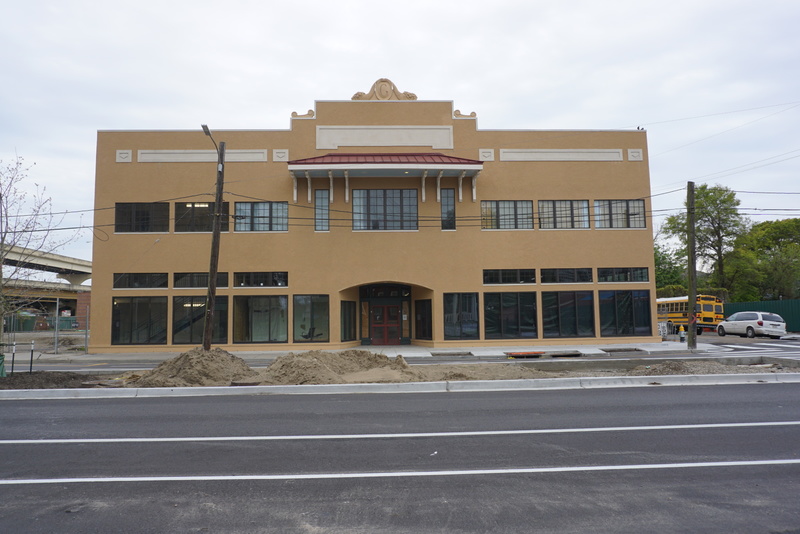
    <summary type="html"><![CDATA[<p><strong><em>Big Easy, Big Heart. Rescue, Recovery, Re-Engagement.</em></strong></p><img src="https://neworleanshistorical.org/files/fullsize/aeba3d0cf1cce3865dc0d4dceafb8941.jpg" alt="The New Orleans Mission" /><br/><p>Founded in 1989, The New Orleans Mission first started providing shelter, food, and religious guidance to a growing population of homeless men. Financially supported by donations from local residents, churches, organizations, and corporations, The Mission strives to reduce the number of men, women, and children living on the streets. Today, The Mission is the largest faith-based private service provider to homeless people in New Orleans and the economically disadvantaged residents of Central City. Currently, The Mission is under construction to complete renovations that will help it operate more efficiently and provide an inviting environment to the homeless. The newly completed façade recreates the historic storefront of a former furniture store.</p><p><em><strong><a href="https://neworleanshistorical.org/items/show/1408">For more view the original article</a></strong></em></p>]]></summary>
    <published>2018-04-08T05:57:21+00:00</published>
    <updated>2026-07-15T16:20:27+00:00</updated>
    <link rel="alternate" type="text/html" href="https://neworleanshistorical.org/items/show/1408"/>
    <id>https://neworleanshistorical.org/items/show/1408</id>
    <author>
      <name>Jennie Garcia, Adriana Bennett ,&amp;#32;&amp;amp;&amp;#32;Dr. Michelle Thompson</name>
    </author>
  </entry>
  <entry>
    <title type="html"><![CDATA[The Daughters of Charity: From New Orleans to Carville]]></title>
    <summary type="html"><![CDATA[<img src="https://neworleanshistorical.org/files/fullsize/2824574fe6fb64ba4ec453d3f3f4ad96.jpg" alt="Father Colton and the First Sisters" /><br/><p>In 1896, the Daughters of Charity boarded a barge on the Mississippi River at Canal Street heading to Carville, Louisiana, about 70 miles upriver from New Orleans. Carville was the new site of the Louisiana Leper Home, where the Sisters performed both managerial and nursing duties. It was no coincidence that a religious community became the caregivers to leprosy patients. By the time the Federal government instituted isolation facilities in the late 19th century, religious communities had a long history of caring for the sick. In 1633, Vincent DePaul organized young peasant women in France, known as Filles de la Charité, to answer the country’s need for caregivers to the sick and the poor. In 1809, Elizabeth Seton founded the Sisters of Charity in the United States based upon the tradition of DePaul’s group. The Sisters answered the call in both war and peace, providing professional nursing services to those who fought in the Civil War and the Spanish American War as well as caring for the sick, orphaned and poor. In 1850, the Sisters joined with the Daughters of Charity to become one religious community.  </p><p>In 1832, before the two orders merged, Bishop Rosati summoned two Sisters of Charity to teach at the Poydras Asylum in New Orleans. Less than a year later, members of Charity Hospital’s Board of Administrators requested additional Sisters to take the reins of management and care at their hospital. The two Sisters worked at the Poydras Asylum until 1836, but then joined the other Sisters at Charity Hospital and nearby orphanages. During this time period, those diagnosed with a disease presumed to be contagious, including leprosy, were housed at Charity. In 1859, the Sisters opened a hospital of their own called Hotel Dieu (most recently LSU Interim Hospital, now closed). Through their work at Charity Hospital and Hotel Dieu, the Sisters became known as caregivers to those who New Orleans’ society had cast aside.</p><p>  In 1891, the Daily Picayune published an article alerting the public to at least 25 known lepers loose in the streets of New Orleans and the pitiful conditions in which they lived at a “pest house” on Hagan Avenue. The 1883 passage of ACT 85 by the Louisiana Legislature appointed the Hagan Avenue pest house, previously a smallpox hospital, as the site of containment for those diagnosed with leprosy in New Orleans. The Daily Picayune article caused a public outcry to clean up the pest house and the streets.  </p><p>When the New Orleans City Council did little to act, noted Tulane dermatologist Dr. Isadore Dyer and the newly formed State Board of Control took it upon themselves to provide suitable medical care to those suffering with leprosy. Dr. Dyer attempted to find a locale that was contained but also convenient for researchers and doctors coming from New Orleans. The Board of Control received numerous letters from local residents about available property close to the city, but the general public often reacted in hysteria to the suggestion of housing leprosy patients near their communities. It is unclear why the Board of Control selected Carville, seventy miles northwest of New Orleans in an isolated bend of the Mississippi River, when they had other offers for land much closer to the city. It is possible that the Board of Control believed the more isolated setting would result in fewer outcries from the public.  </p><p>In the twilight of a November night in 1894, seven residents of the Hagan Avenue pest house stepped off of a coal barge and onto the overgrown, swampy grounds of the abandoned plantation. For the next two years, these patients lived in the delapidated former slave cabins with only one resident physician, Dr. L.A. Wailes. Soon finding himself overwhelmed, Dr. Wailes implored Dr. Dyer and the Board to request help from the Daughters of Charity. In March of 1896, the Sisters agreed to the duties of managing the home and caring for those confined there.  </p><p>On April 16, 1896, four Sisters boarded the Paul Tulane to begin their journey to Carville. On that day, a crowd gathered at the Canal Street Wharf to see the Sisters off. A reporter from the Daily Picayune described the scene: “It was something of the tribute that a hero receives when he goes forth with deathless courage to battle to the end and wrest victory in a cause that is all but lost.”</p><p>  Following an 18-hour journey up the Mississippi River from New Orleans, Sister Beatrice described the enthusiastic welcome from leprosy patients in a letter to the Visiatrix.</p><p>  “The lepers watched the boat…until we finally stepped out. We told them that we had come to stay, wishing to do all that we could to comfort their lonely, suffering condition. It was touching to see the happiness of these poor people when they caught sight of the Sisters. They almost wept with joy. ‘Have you really, really come to stay with us?’ they kept repeating.”  </p><p>In the following years, Sr. Beatrice expressed a desire to relocate the home. Heeding Sr. Beatrice’s plea to find a more suitable location, and with a sum of money appropriated by the State Legislature to purchase a site and build a leprosarium, the Board of Control settled on Elkhorn Plantation in present day Kenner. This site boasted 400 acres stretching from the river to the railroad at the back of the property, just isolated enough for the patients but close enough for city physicians to continue studying the disease. The property was sold under the belief that it would be used as a truck farm and fruit orchard. When nearby residents discovered the truth, protests forced the Board to take the matter under advisement.</p><p>  In the early morning hours of May 23, 1901, a group of Jefferson Parish residents cut the Board’s advisement period short by setting the old Elkhorn plantation house on fire in protest of the proposed leprosarium. It then became evident to the Sisters that Carville would remain the Home’s permanent site, as this act of arson effectively ended any further attempts to find a new locale.</p><p>To learn more about life at the National Leprosarium in Carville, LA, visit the following tour: <a title="Carville: The National Leprosarium" href="https://neworleanshistorical.org/tours/show/55">Carville: The National Leprosarium</a>.</p><p><em><strong><a href="https://neworleanshistorical.org/items/show/1280">For more (including 5 images) view the original article</a></strong></em></p>]]></summary>
    <published>2016-05-17T20:20:30+00:00</published>
    <updated>2026-07-15T16:20:28+00:00</updated>
    <link rel="alternate" type="text/html" href="https://neworleanshistorical.org/items/show/1280"/>
    <id>https://neworleanshistorical.org/items/show/1280</id>
    <author>
      <name>Reagan Laiche</name>
    </author>
  </entry>
  <entry>
    <title type="html"><![CDATA[Algiers Immigrant Quarantine Detention Center ]]></title>
    <summary type="html"><![CDATA[<p><strong><em>Treatment and quarantine of newly arrived immigrants at ports around New Orleans were based on discriminatory ideologies and lead to the mistreatment of many people who arrived in this region from international ports.</em></strong></p><img src="https://neworleanshistorical.org/files/fullsize/d3fdc3814c4d80451d4de90439496b03.jpg" alt="New Orleans Fumigation Crew 1939" /><br/><p>Between 1796 and 1893, no fewer than 35 yellow fever epidemics struck New Orleans. The Yellow Fever Epidemic of 1878 caused over 800 deaths in just one month. After 1878, In an attempt to quell the spread of disease, of which the cause was unknown, foreign ships entering the port of New Orleans became subject to more uniform and strict forms of medical quarantine. While these methods were somewhat effective at reducing disease fatalities, the procedures increasingly focused less on preventing the spread of disease and more preventing the entry of “undesirable peoples” believed to have spread the disease. By 1945, quarantine procedure was awash with racist sentiments as immigrants were increasingly detained based on origin rather than illness.</p><p>At the 1905 Quarantine and Immigration Conference, officials from all over the South met to discuss measures regarding quarantine and immigration processes. As officials saw it, the two were synonymous. Their fear was that persons entering the United States, specifically from Eastern Europe, carried with them diseases that would infect Americans. This baseless fear increased as more and more immigrants made their way to the United States.  </p><p>In 1913, The Algiers Immigration Station opened for operation. Government officials placed sanctions on many immigrant groups to prevent their entry into the country and control their movements. Officials barred Italian immigrants, from moving outside of designated districts within the state. Quarantine enforcement measures in New Orleans included shotgun-wielding guards on public roads.</p><p>When officials detained immigrants, the staff of the Algiers Immigration Station was responsible for communicating necessary information and procedures to immigrants. This communication was not always clear and officials often could not speak with new arrivals due to language barriers. Quarantined immigrants, deemed “intolerable,” were subjected to uncomfortable and dangerous protocol. New Orleans fumigation units exposed newly arrived immigrants to hydrocyanic gas as part of the disinfection process. At the time, farmers used this chemical as a crop pesticide.  </p><p>The site of the Algiers Immigration Station served as a camp to house enemies during World War II. The New Orleans Parish School Board owned the property. In the 18th and 19th centuries, Algiers was home to another immigration/migration detention center, though it was located further downriver.</p><p><em><strong><a href="https://neworleanshistorical.org/items/show/939">For more (including 3 images) view the original article</a></strong></em></p>]]></summary>
    <published>2015-11-02T23:50:57+00:00</published>
    <updated>2026-08-24T00:36:57+00:00</updated>
    <link rel="alternate" type="text/html" href="https://neworleanshistorical.org/items/show/939"/>
    <id>https://neworleanshistorical.org/items/show/939</id>
    <author>
      <name>Natalie Ducote &amp;#32;&amp;amp;&amp;#32;Benjamin Birdwhistell</name>
    </author>
  </entry>
  <entry>
    <title type="html"><![CDATA[Lake Johansen, Station Farm, and Sports &amp; Leisure  at the National Leprosarium, Carville, Louisiana]]></title>
    <summary type="html"><![CDATA[<img src="https://neworleanshistorical.org/files/fullsize/39e01febcb55c411ce576ec501b70704.jpg" alt="Patients Fishing at Lake Johansen, National Leprosarium, Carville, Louisiana" /><br/><p>Up until the 1950s, the 80 or so acres ahead and to the left of you were farmed by about 30 laborers who grew fruits and vegetables to feed the staff and patients. </p><p>Corn was grown to feed livestock. Pigs, chickens and beef cattle were raised in barnyards nearby. A dairy herd provided milk.  </p><p>Every evening around 8 PM, a guard made his rounds of the patients’ dormitories, pushing a cart and ringing a bell to announce a snack. Patients would bring their own cups and the guard would ladle out fresh milk and offer a hunk of bread from the onsite bakery.  </p><p>Lake Johansen, ahead of you in the distance, to the left, is a 20 acre man-made lake, created for the patients in 1950. It was named after the much loved Dr. Fredrick Johansen who organized its construction. The lake is very shallow--no deeper than 8 feet. </p><p>The Lake was designated for patients only, and stocked with fish. It was a favorite site for</p><p>•	4th of July cookouts</p><p>•	Veterans’ sponsored Fishing Rodeos</p><p>•	Boating activities & picnics</p><p>Patients were encouraged to stay active—not only with employment, but with leisure time activities.  Some of the clubs focused on hobbies, national identity, veterans’ status, or religion:</p><p>•	Gardening Club</p><p>•	B Natural Musical Group</p><p>•	Fishing Club</p><p>•	Boating Club</p><p>•	Mexican Club</p><p>•	Legion of Mary (Catholic women)</p><p>•	Holy Name (Catholic men)</p><p>•	Lions Club</p><p>•	American Legion & Auxiliary</p><p>•	Boys Scouts</p><p>Sports were also encouraged, if a patient was healthy enough:</p><p>•	Golf </p><p>•	Tennis </p><p>•	Badminton</p><p>•	Ping pong</p><p>•	Softball</p><p>The patients’ team softball team, the Carville Indians, were River League Champs in the 1950s & 60s. The Indians always had the home-team advantage due to quarantine.</p><p>Please follow the road to the right, continue straight ahead until you see the 10 MPH sign, Stop 7</p><p><em><strong><a href="https://neworleanshistorical.org/items/show/809">For more (including 7 images&#32;&amp;&#32;1 audio file) view the original article</a></strong></em></p>]]></summary>
    <published>2014-04-02T15:34:18+00:00</published>
    <updated>2026-07-15T16:20:32+00:00</updated>
    <link rel="alternate" type="text/html" href="https://neworleanshistorical.org/items/show/809"/>
    <id>https://neworleanshistorical.org/items/show/809</id>
    <author>
      <name>Elizabeth Schexnyder, Curator, National Hansen&amp;#039;s Disease Museum, Carville, LA</name>
    </author>
  </entry>
  <entry>
    <title type="html"><![CDATA[Federal Staff Housing, Site Utilities, The National Leprosarium]]></title>
    <summary type="html"><![CDATA[<img src="https://neworleanshistorical.org/files/fullsize/fb720c62e15f35aae51aa8c508be8f4c.jpg" alt="Power Plant, National Leprosarium, Carville, Louisiana. Image Courtesy of the National Hansen&#039;s Disease Museum, Permanent Collection. Carville, LA." /><br/><p>The State of Louisiana ran this 450 acre site as the Louisiana Leper Home from 1894 to 1921. In 1921, the Federal Government purchased the site for $35,000; the patient census was about 300. The United States Public Health Service (PHS) took operational control and the 'Home' became the United States Marine Hospital Number 66: The National Leprosarium.   </p><p>The PHS’ mission is to protect, promote, and advance the health and safety of the US. To your left are 2 streets of staff residences built for PHS employees. Over 100 residents lived on the staff side of the hospital. Today, the Louisiana National Guard and their families live here. To your right (3 o’clock) is Carville’s museum, established in 1996. Originally, the building served as the staff cafeteria. </p><p>The hospital grounds were divided between “Staff” and “Patients” sides. This small, planned community had 2 of everything — laundries, residential areas, golf courses, cafeterias, movie theaters and infirmaries — one for staff and one for patients.</p><p>Leprosy, or Hansen’s disease, was a highly stigmatized disease, and thought to be highly contagious. It is not. Not one of the medical personnel working at the Leprosarium has ever developed the disease. But there was no viable treatment until the 1940s, so fear prevailed.  </p><p>From the 1890s until the 1940s, outside vendors did not want to deliver materials here for fear of accepting “infected” money.  Even the resident electrician, who fixed patients' broken radios on the side, “washed” the dollar bills given to him by patients. His wife would pin the bills to the clothes line behind their house on 2nd street.</p><p>The building in front of you, to the right with the turquoise trim, is a gravity filtration water treatment plant built in 1923. Water was pumped in directly from the Mississippi. Today it is a distribution point only.  </p><p>Carville also built its own electric plant a block down the road from the water plant. It produced direct electrical current from 1916 until the 1950s, and then became AC. And it generated steam heat to warm the hospital in the winter. On the east side of the electric plant was the ice house where residents could pick up a “block of ice for their ice-boxes. In the summer months, the ice house also served ice cream. Today, the plant distributes electricity only. </p><p>As you drive to your next stop, look back to the right and you will see the venting tower for the electric plant. </p><p>Stop 3 is ahead a couple of hundred feet, near the 4-way stop sign.</p><p><em><strong><a href="https://neworleanshistorical.org/items/show/808">For more (including 9 images&#32;&amp;&#32;1 audio file) view the original article</a></strong></em></p>]]></summary>
    <published>2014-04-02T14:41:42+00:00</published>
    <updated>2026-07-15T16:20:32+00:00</updated>
    <link rel="alternate" type="text/html" href="https://neworleanshistorical.org/items/show/808"/>
    <id>https://neworleanshistorical.org/items/show/808</id>
    <author>
      <name>Elizabeth Schexnyder, Curator, National Hansen&amp;#039;s Disease Museum, Carville, LA</name>
    </author>
  </entry>
  <entry>
    <title type="html"><![CDATA[Infirmary, National Leprosarium, Carville, Louisiana.]]></title>
    <summary type="html"><![CDATA[<img src="https://neworleanshistorical.org/files/fullsize/ccb2365a213fe65afed0ff9c01628cb8.jpg" alt="Infirmary under construction, 1933.
Image Courtesy of the National Hansen&#039;s Disease Museum, Permanent Collection. Carville, LA." /><br/><p>The infirmary, built in 1933, had 68 beds in two open wards--men upstairs and women downstairs. Architects provided screened porches across the front of the building to allow patients fresh air. Notice the flat roof. Originally canopies had been installed to give patients a shady spot in the non-air-conditioned building and a place to catch a breeze.</p><p>The infirmary was the first stop for each new patient. In the “Medical Records” room, one of the Sisters would begin a medical chart. “What would you like your new name to be?” was the first question asked a new admission. Before the discovery of the drug treatment for leprosy in the 1940s, most patients took a false name to protect their family from social stigma.   </p><p>Other medical services in the infirmary were:</p><p>•	Bandaging clinic</p><p>•	Eye clinic</p><p>•	Surgery</p><p>•	Laboratory </p><p>•	Pharmacy</p><p>•	Physical therapy</p><p>•	X-ray </p><p>•	Dental clinic</p><p>•	Medical photography studio, and</p><p>•	The Carville morgue</p><p>Sanitary codes in effect across the U.S. governing the transport of deceased leprosy patients required a corpse to be thoroughly embalmed before transport. Some states required a metal coffin, soldered shut. Every state health department between Carville and the ultimate destination had to be notified in order to move a body home for burial. Given these many difficulties, many patients were buried here.</p><p>Drive back down the avenue to the STOP sign. Turn right and continue to the second lamp post on the right, Stop 5.</p><p><em><strong><a href="https://neworleanshistorical.org/items/show/770">For more (including 10 images&#32;&amp;&#32;1 audio file) view the original article</a></strong></em></p>]]></summary>
    <published>2014-01-08T16:57:25+00:00</published>
    <updated>2026-07-15T16:20:32+00:00</updated>
    <link rel="alternate" type="text/html" href="https://neworleanshistorical.org/items/show/770"/>
    <id>https://neworleanshistorical.org/items/show/770</id>
    <author>
      <name>Elizabeth Schexnyder, Curator, National Hansen&amp;#039;s Disease Museum, Carville, LA</name>
    </author>
  </entry>
  <entry>
    <title type="html"><![CDATA[Greenville Encampment: Sedgwick Hospital]]></title>
    <summary type="html"><![CDATA[<img src="https://neworleanshistorical.org/files/fullsize/3f08ee86c9f4c0c40ed9d8ed2e293f75.jpg" alt="Administration Building at Sedgwick Hospital
" /><br/><p>Sedgwick Hospital was one of many area hospitals that serviced the military during and after the Civil War. The Greenville Encampment, located along the lower boundary of Carrollton (Lowerline Street), was part of the land formerly owned by Pierre Foucher. Military forces tore down the Foucher residence to make room for Sedgwick Hospital.</p><p>Sedgwick Hospital consisted of 15 one-story pavilions, a kitchen and dining facility, and a two-story administration building. The buildings were connected by covered walkways. The military constructed buildings holding patients at a distance from one another for health reasons and better fire protection. </p><p>Throughout the country, it was more common for Union soldiers to die from diseases than battle-related injuries. This fact was exacerbated in the subtropical climate of South Louisiana, where mosquitoes quickly spread diseases including yellow fever.</p><p>Construction of Sedwick Hospital did not finish until 1864. The hospital remained in use for a few years after the war ended. </p><p><em><strong><a href="https://neworleanshistorical.org/items/show/659">For more (including 4 images) view the original article</a></strong></em></p>]]></summary>
    <published>2013-11-08T20:35:06+00:00</published>
    <updated>2026-07-15T16:20:33+00:00</updated>
    <link rel="alternate" type="text/html" href="https://neworleanshistorical.org/items/show/659"/>
    <id>https://neworleanshistorical.org/items/show/659</id>
    <author>
      <name>Rhett Breerwood</name>
    </author>
  </entry>
  <entry>
    <title type="html"><![CDATA[Carville Patients&#039; Cemetery, National Leprosarium. ]]></title>
    <summary type="html"><![CDATA[<img src="https://neworleanshistorical.org/files/fullsize/73ce8b32c9e5e9a253ef1419f880858e.jpg" alt="2nd Patient Cemetery at Carville, National Leprosarium. " /><br/><p>     The Carville cemetery is the only stop on the tour where you may exit your vehicle and take photographs.  Just beyond the cemetery is a hospital incinerator with a driving ramp and tower built in the 1920s to dispose of all waste. Remember that nothing was allowed to leave the grounds.</p><p>This is the second patient cemetery and was established in 1922 by the federal government. About 750 patients are buried here. These stones were provided by the federal government and resemble markers you might see in a military cemetery. Each stone is engraved with a patient's hospital ID number and either their real or false name. Some patients purchased their own ornamental markers. </p><p>In many cases, a patient chose to be buried using his “Carville name” to hide identity even in death. Several times a month, families come to Carville in search of a “long lost” relative. In cases like this, the Medical Records Department can make a positive identification by using old medical charts. The museum offers a schematic of the cemetery to help searching families locate a stone.</p><p>Carville’s first patient cemetery is located in the front quad of the patients' dorms. Because the first cemetery isn’t accessible to the public, the 40 & 8, a veterans’ organization and patients' benefactors since the 1940s, produced a memorial stone with the names of the first 137 patients to die and be buried here. It is the large grey marble marker to your right, at about 4 o’clock. When you examine the names, you will notice that some of these earlier patients were buried using a first name or initials only. One obvious pseudonym is “George Washington.”   </p><p>32 veterans are buried here--from the Spanish American War to the Vietnam war— and each of these graves is marked with an American Legion star. </p><p><em><strong><a href="https://neworleanshistorical.org/items/show/637">For more (including 5 images&#32;&amp;&#32;1 audio file) view the original article</a></strong></em></p>]]></summary>
    <published>2013-09-26T21:12:55+00:00</published>
    <updated>2026-07-15T16:20:33+00:00</updated>
    <link rel="alternate" type="text/html" href="https://neworleanshistorical.org/items/show/637"/>
    <id>https://neworleanshistorical.org/items/show/637</id>
    <author>
      <name>Elizabeth Schexnyder, Curator, National Hansen&amp;#039;s Disease Museum, Carville, LA</name>
    </author>
  </entry>
  <entry>
    <title type="html"><![CDATA[Carville, The National Leprosarium: Patient Life]]></title>
    <summary type="html"><![CDATA[<img src="https://neworleanshistorical.org/files/fullsize/8d26756b33170e187b26b04ab1075a85.jpg" alt="Hospital Corridors, National Leprosarium.
" /><br/><p>In 1940, the patient population was between 400 and 450 and a massive renovation was underway. The improved hospital created individual rooms for 450 patients and the 13” thick concrete walls made the buildings as fireproof as possible. Fire was always a concern.</p><p>Here’s a list of what was built in 1940: </p><p>• 17 two-story dormitories</p><p>• 20,000 square-foot recreation building with library, theater, canteen and ballroom</p><p>• Over two miles of two-story corridors that link all patient buildings together</p><p>• Facilities' engineering building</p><p>• Staff dining hall </p><p>• Residence for Daughters of Charity, a Catholic nursing order </p><p>All of these improvements cost around 4 million dollars.</p><p>To your right, the two-story buildings with the orange metal awnings are female patients’ dorms. The dormitories are arranged in two quadrangles connected via covered corridors. This provided patients, many in wheelchairs, access to all buildings. Creating a fireproof hospital was a major aim of the last renovation, so even the patients’ room furnishings were metal instead of wood.</p><p>Every dorm had 30 individual rooms--each with an oscillating fan and radiated heat for winter. Each floor had shared bathrooms and a common parlor. The original design provided men and women with separate dorms. Later on, when patient couples ran away and returned married, they developed a thriving “suburbia” of homemade cottages towards the rear of the facility so that they could live together.</p><p>A Carville “date” often involved a hot-plate in the woman’s room, a card table across the threshold with the man sitting in the hall. In the 1960s, one of the dormitories was remodeled into apartments to allow for the cohabitation of couples. Each apartment had a private kitchen and bathroom.</p><p>Dormitory #24 was designated the “Carville Mall,” where free enterprise thrived. A patient could open her own shop to provide goods or services to fellow patients.</p><p>Some popular patient-run businesses included a radio repair service, a barber shop, a bicycle repair shop, a beauty parlor, a photography shop, and even a dry cleaner's.</p><p><em><strong><a href="https://neworleanshistorical.org/items/show/636">For more (including 11 images&#32;&amp;&#32;1 audio file) view the original article</a></strong></em></p>]]></summary>
    <published>2013-09-26T19:41:23+00:00</published>
    <updated>2026-08-24T00:38:18+00:00</updated>
    <link rel="alternate" type="text/html" href="https://neworleanshistorical.org/items/show/636"/>
    <id>https://neworleanshistorical.org/items/show/636</id>
    <author>
      <name>Elizabeth Schexnyder, Curator, National Hansen&amp;#039;s Disease Museum, Carville, LA&amp;#32;&amp;amp;&amp;#32;Kyle Hymel</name>
    </author>
  </entry>
  <entry>
    <title type="html"><![CDATA[Hansen&#039;s Disease]]></title>
    <summary type="html"><![CDATA[<img src="https://neworleanshistorical.org/files/fullsize/29600df1dfcb91be96f7a73cd54a9f27.jpg" alt="Mycobacterium Leprae: The Leprosy Bacillus.

Image Courtesy of the National Hansen&#039;s Disease Museum, Permanent Collection. Carville, LA." /><br/><p>Leprosy, also known as Hansen’s disease (HD), is a chronic disease of the skin and peripheral nerves. </p><p>95% of the world’s population is naturally immune to the disease. Mycobacterium leprae, the causative agent, was first identified under the microscope in 1873, by Dr. Gerhard Hansen, a Norwegian researcher. Norway was the last European country to have a serious problem with Hansen’s disease.  </p><p>The first cases of HD in Louisiana were detected in the 1750s. Left untreated, HD can be progressive, causing permanent damage to the skin, nerves, limbs, and eyes. Contrary to folklore, HD does not cause body parts to fall off, although they can become numb and/or infected as a result of the disease.  </p><p>Skin lesions, with sensory loss, are the primary symptoms of the disease.  Without the “gift of pain" sensation, patients continually injure their bodies, causing wounds and infections that can create a natural amputation process to extremities and possible blindness. </p><p>In 1941, Dr. Guy Faget, Carville’s Medical Officer in Charge, pioneered a drug therapy that stopped the progression of nerve damage. Six patients volunteered for the daily intravenous injections of the drug Promin and began to look better and feel better after six months. This era is known as “The Miracle at Carville.” </p><p>Eventually this successful treatment changed a patients’ quarantine from a “life-time” to a few voluntary years. Hope for discharge fueled many positive changes. The patients’ advocacy movement gained steam. News of the successful treatment spread around the world. Today, a multi-drug therapy is used to treat the 150-to-200 new cases diagnosed in the US yearly. Louisiana patients are now treated at a Baton Rouge out-patient facility.</p><p>Make a right onto the oak lined avenue and drive to the front of the Infirmary for Stop 4. </p><p><em><strong><a href="https://neworleanshistorical.org/items/show/634">For more (including 6 images&#32;&amp;&#32;1 audio file) view the original article</a></strong></em></p>]]></summary>
    <published>2013-09-26T17:01:11+00:00</published>
    <updated>2026-07-15T16:20:33+00:00</updated>
    <link rel="alternate" type="text/html" href="https://neworleanshistorical.org/items/show/634"/>
    <id>https://neworleanshistorical.org/items/show/634</id>
    <author>
      <name>Elizabeth Schexnyder, Curator, National Hansen&amp;#039;s Disease Museum, Carville, LA </name>
    </author>
  </entry>
  <entry>
    <title type="html"><![CDATA[Carville: Silos for Dairy Barn &amp; Armadillo Research]]></title>
    <summary type="html"><![CDATA[<img src="https://neworleanshistorical.org/files/fullsize/8eacea9c06851a2888317e2a36c7d1bb.jpg" alt="Dr. W.F. Kirchheimer and Dr. Elanor Storrs with an armadillo research subject. 1970s.

Image Courtesy of the National Hansen&#039;s Disease Museum, Permanent Collections, Carville, LA." /><br/><p>The two silos and barns in front of you were built for a dairy herd in the 1920s. By the mid-1950s, an outside vendor was supplying milk to the Leprosarium and the barn fell into disrepair.</p><p>Hansen's Disease (HD) has never been easy to study because the bacillus that causes it, Mycobacterium leprae, cannot grow in a lab. Finding an animal that could be infected with HD and used for research was always a top priority of the Public Health Service (PHS).</p><p>Mycobacterium leprae thrive in the cooler parts of the human body. Armadillos have a relatively low body temperature, and so researchers speculated that armadillos might be useful for HD research. In addition, armadillos live long enough, 12 to 15 years, for this slow-acting disease to emerge. </p><p>In 1971, researchers led by Dr. W. F. Kirchheimer successfully infected a 9-banded armadillo with Hansen's disease. After this breakthrough, Carville researchers established an "armadillo farm" at the site of the old dairy. In the 1990's, laboratory research moved to Louisiana State University in Baton Rouge, where it continues at the Veterinary Medicine Department. Today the National Hansen's Disease Program (NHDP) provides HD bacilli to researchers worldwide. The old barn has become "The Silo Club," an all-ranks military bar and banquet hall for the Louisiana National Guard.</p><p>Quarantine laws for HD changed steadily after the "miracle drug treatment" was discovered in the late 1940's. By the 1980's, HD was an outpatient disease and Carville's population began to decline. Today there are more than a dozen clinics around the US where most new HD patients are treated. The PHS hospital closed at this site in 1999, and reopened in Baton Rouge, much reduced in size. Carville was transferred back to the state of Louisiana and the Louisiana Military Department installed.</p><p>For more information about HD or museum exhibits and tour options, check the National Hansen's Disease Programs Museum website at www.hrsa.gov/hansensdisease/museum or call 225-642-1950. Thank you for your interest in our unique culture and important medical history. </p><p><em><strong><a href="https://neworleanshistorical.org/items/show/632">For more (including 5 images&#32;&amp;&#32;1 audio file) view the original article</a></strong></em></p>]]></summary>
    <published>2013-09-26T02:44:16+00:00</published>
    <updated>2026-07-15T16:20:33+00:00</updated>
    <link rel="alternate" type="text/html" href="https://neworleanshistorical.org/items/show/632"/>
    <id>https://neworleanshistorical.org/items/show/632</id>
    <author>
      <name>Elizabeth Schexnyder, Curator, National Hansen&amp;#039;s Disease Museum, Carville, LA</name>
    </author>
  </entry>
  <entry>
    <title type="html"><![CDATA[Carville Jail and Cottage Grove]]></title>
    <summary type="html"><![CDATA[<img src="https://neworleanshistorical.org/files/fullsize/1a7deb295addecd6cbb0e7209f539875.jpg" alt="Sacred Heart Chapel.

Image Courtesy of National Hansen&#039;s Disease Museum, Carville, LA." /><br/><p>Like any small town, Carville offered various services to its inhabitants.  A one room school house educated the people quarantined at the site. Sacred Heart Chapel hosted Catholic services facilitated by the Daughters of Charity. Eventually it was deemed necessary to erect a jail for the community as well. To your right, the single story building roughly marks the location of the old Carville Jail, built in 1926, when one patient murdered another patient and had to await trial here. A more common offense was running away from the hospital, or "absconding against medical advice." If a runaway patient returned, they were sentenced to 30 days in jail. A repeat runaway was required to post a bond to deter another escape attempt.</p><p>Carville "law enforcement" was made up of a guard at the front gate and a guard who walked the corridors at a regular interval, night and day. Patients were required to be inside of their dormitory by 9pm. As guards walked the grounds, they clocked in at a dozen stops. The old jail was torn down in 1957. This was the same year that leprosy was taken off the list of diseases that required quarantine by Louisiana law.</p><p>Directly in front of you is the area known as Cottage Grove or "White City," where some married patients built their own cottages or purchased a cabin from a discharged patient. "White City" refers to the white, government-issued paint used on the cottages. </p><p>Marriages between the patients were not allowed on-site until the 1950s. Patients in love would often escape through the "hole in the fence" and return married. Besides offering privacy, having their own cottage meant patients could cook their own meals and take part in the active social community that developed between neighbors. Despite a couple's wedded status, their children could not live on-site. Children are not born with Hansen's Disease. Mothers delivered their babies at the PHS hospital in New Orleans. Sometimes a family or friend would care for the child. Another option was adoption.  </p><p>Please drive forward about 30 feet and make a left onto the gravel road. Stop 8 - Carville Cemetery.</p><p><em><strong><a href="https://neworleanshistorical.org/items/show/631">For more (including 10 images&#32;&amp;&#32;1 audio file) view the original article</a></strong></em></p>]]></summary>
    <published>2013-09-24T01:16:05+00:00</published>
    <updated>2026-07-15T16:20:33+00:00</updated>
    <link rel="alternate" type="text/html" href="https://neworleanshistorical.org/items/show/631"/>
    <id>https://neworleanshistorical.org/items/show/631</id>
    <author>
      <name>Elizabeth Schexnyder, Curator National Hansen&amp;#039;s Disease Museum, Carville, LA.</name>
    </author>
  </entry>
  <entry>
    <title type="html"><![CDATA[Indian Camp Plantation / Louisiana Leper Home]]></title>
    <summary type="html"><![CDATA[<img src="https://neworleanshistorical.org/files/fullsize/a2b66ca59a64a40cdfa7137ce4c31adf.jpg" alt="Persac&#039;s Map of the Mississippi, 1858. " /><br/><p>In the 1700s, Europeans settled this area known as Indian Camp and developed a plantation economy along the Mississippi River. Robert Camp, a planter from Virginia, began purchasing land here in the 1820s. He farmed sugarcane and owned about 100 enslaved workers.  </p><p>Camp called his plantation “Woodlawn,” but the older name for the area, Indian Camp, stuck. The 30 room mansion behind you, to your right, was built in 1859. The architect, Henry Howard, also designed Nottoway Plantation, which is located across the river. </p><p>In 1892, Louisiana passed a law calling for the quarantine of persons diagnosed with leprosy. The Louisiana State Legislature, with Dr. Isadore Dyer, a dermatologist from Tulane College of Medicine, established the Board of Control to create the Louisiana Leper Home. The Board rented Indian Camp Plantation, which by then had been abandoned. The first 7 patients arrived from New Orleans by coal barge in 1894. A diagnosis of leprosy made use of public transportation illegal. The first patients lived in the slave quarters because the plantation was in ruin. A doctor made weekly visits, but the patients mostly fended for themselves.</p><p>In 1896, the patient population was about 35. Lay nurses would not serve here because of fear, so the State signed a contract with the Daughters of Charity of St. Vincent de Paul (DOC), an order of Catholic nuns whose mission is to care for the sick and the poor. The first 4 DOC arrived in 1896 to provide "the nursing of the patients and the household management" for $100 each per year. (To learn more about the involvement of the Daughters of Charity with leprosy patients from New Orleans to Carville, visit <a title="https://neworleanshistorical.org/items/show/1280" href="https://neworleanshistorical.org/items/show/1280">this site</a>.) By 1900, the patient census was about 100. </p><p>To your right, one sees the 2-story building with rectangular chimney; this was the quarters built for the Sisters. There were about 25 individual rooms, a common dining hall, and a private chapel. The DOC remained on site until 2005. 116 sisters served the Carville mission as nurses, dieticians, laboratory researchers, pharmacists, teachers and spiritual leaders.  </p><p>The miniature “house” behind the plantation was built around 1920. Its uses varied from arts and crafts house; greenhouse; and catechism classroom. The plantation home itself was eventually refurbished and served as the administration building for the hospital.</p><p>For the next story site, please drive about 200 feet forward near the US Postal box on the right.</p><p><em><strong><a href="https://neworleanshistorical.org/items/show/621">For more (including 15 images&#32;&amp;&#32;2 audio files) view the original article</a></strong></em></p>]]></summary>
    <published>2013-09-15T17:26:13+00:00</published>
    <updated>2026-07-15T16:20:33+00:00</updated>
    <link rel="alternate" type="text/html" href="https://neworleanshistorical.org/items/show/621"/>
    <id>https://neworleanshistorical.org/items/show/621</id>
    <author>
      <name>Elizabeth Schexnyder, Curator of the National Hansen&amp;#039;s Disease Museum, Carville, LA</name>
    </author>
  </entry>
  <entry>
    <title type="html"><![CDATA[Nix Methadone Clinic]]></title>
    <summary type="html"><![CDATA[<img src="https://neworleanshistorical.org/files/fullsize/e602efabdc0b53f78c27a52e9ad2a239.jpg" alt="Methadone Pioneer Nix Ends Program, Hits Raids" /><br/><p>The Carrollton neighborhood suffered through a heroin epidemic in the 1970s. Heroin use would decline throughout the U.S. in the 1980s as cocaine and crack use increased. </p><p>An addiction treatment pioneer who was ahead of his time, Dr. James T. Nix operated a methadone clinic on S. Carrollton Avenue in the early 1970s before it was raided and shut down by federal agents in 1971. Dr. Nix was one of the first Louisiana physicians to treat heroin addiction with methadone, and his methods were not fully accepted. </p><p>Dr. Nix was running clinical trials, and some neighbors complained about the presence of addicts, whom the police regularly arrested at the clinic. Federal law enforcement officials believed that Dr. Nix did not maintain proper records for such medical trials. Dr. Nix argued that they had been open for three years and had not been informed about record-keeping rules until two weeks before being shut down. </p><p>"The rules were told to us after the game was played," Dr. Nix said regarding his outpatient treatment program. He argued that Methadone had an 85% success rate, which contrasted with a 6% success rate connected to a much more lucrative federal program. Eventually, outpatient methadone treatment would become an accepted and commonly used method to overcome heroin addiction.</p><p><em><strong><a href="https://neworleanshistorical.org/items/show/392">For more (including 4 images) view the original article</a></strong></em></p>]]></summary>
    <published>2012-11-07T21:04:58+00:00</published>
    <updated>2026-07-15T16:20:35+00:00</updated>
    <link rel="alternate" type="text/html" href="https://neworleanshistorical.org/items/show/392"/>
    <id>https://neworleanshistorical.org/items/show/392</id>
    <author>
      <name>Kyle Willshire</name>
    </author>
  </entry>
  <entry>
    <title type="html"><![CDATA[Building Charity Hospital, Architect Leon Weiss]]></title>
    <summary type="html"><![CDATA[<img src="https://neworleanshistorical.org/files/fullsize/4cf41d67a9ca650ebb01a6044279dc4d.jpg" alt="Tearing down the Old Charity Hospital, late 1930s" /><br/><p>Leon C. Weiss was a well-known Louisiana architect whose firm Weiss, Dreyfous and Seiferth designed many significant public buildings and other structures throughout Louisiana.</p><p>Governor Huey P. Long commissioned Weiss, one of Long's campaign contributors, to design the State Capitol Building, the Governor's Mansion, and several Louisiana State University campus buildings. Under the administration of Long's successor, Governor Richard Leche, Weiss received the contract to design Charity Hospital and many other public buildings. Weiss' connection with the Long machine led to his conviction for public corruption.</p><p>When it opened in 1939, the new Charity Hospital was the second largest hospital in the United States. Costing more than $12.5 million dollars, the 20 story building once maintained 3,490 beds. Weiss's building remains, but it has not re-opened since the 2005 floodwaters following Hurricane Katrina.</p><p><em><strong><a href="https://neworleanshistorical.org/items/show/272">For more (including 6 images) view the original article</a></strong></em></p>]]></summary>
    <published>2012-05-30T00:41:20+00:00</published>
    <updated>2026-07-15T16:20:35+00:00</updated>
    <link rel="alternate" type="text/html" href="https://neworleanshistorical.org/items/show/272"/>
    <id>https://neworleanshistorical.org/items/show/272</id>
    <author>
      <name>Caroline R. Courtney&amp;#32;&amp;amp;&amp;#32;Hira Rashid</name>
    </author>
  </entry>
  <entry>
    <title type="html"><![CDATA[Josephine Louise House:  &#039;JL&#039; on Broadway]]></title>
    <summary type="html"><![CDATA[<img src="https://neworleanshistorical.org/files/fullsize/6fdbbe30d93c8dc31b4d637920ed682d.jpg" alt="Josephine Louise House" /><br/><p>One of the few buildings already present on the Broadway campus in 1919, Josephine Louise did little to soothe the homesick girls who lived there during their first year on the new campus. Due to an outbreak of influenza, students were forced to remain on campus as opposed to returning home, and the upper level of Josephine Louise acted as an extension of the packed infirmary, housing many ill girls.</p><p>Until 1969, visiting hours at Josephine Louise Hall, which came to be affectionately known on campus as "JL", were extremely restricted, with both a curfew and a housemother. Indeed, until the mid-1970s, men were only allowed to enter the foyer, pick up their dates, and then leave. Now, however, JL has the same regulations as the coed dormitories.</p><p>Interestingly enough, from the mid-70s on, JL was not only home to 200 freshmen girls, but also to the Department of Psychology.</p><p>To continue the walking tour, please proceed to the old Gymnasium and Woodward Way (now known as the Woldenberg Art Center and Newcomb Art Gallery), campus building numbers 82 and 81, respectively. </p><p><em><strong><a href="https://neworleanshistorical.org/items/show/181">For more (including 4 images) view the original article</a></strong></em></p>]]></summary>
    <published>2012-05-01T16:24:51+00:00</published>
    <updated>2026-07-15T16:20:35+00:00</updated>
    <link rel="alternate" type="text/html" href="https://neworleanshistorical.org/items/show/181"/>
    <id>https://neworleanshistorical.org/items/show/181</id>
    <author>
      <name>Newcomb College Institute&amp;#32;&amp;amp;&amp;#32;Lauren Dean</name>
    </author>
  </entry>
</feed>