The Old Ursuline Convent
Text
In 2011, Shannon Lee Dawdy, an archaeologist and professor with the University of Chicago’s Department of Anthropology, conducted an excavation with students and volunteers at the site of the Ursuline Convent. The first Ursuline Convent building was begun in 1727 and completed in 1734 after years of delays, but it was structurally unsound and prone to rot. The second convent building replacing it was designed in 1745; it is now considered the oldest standing building in the Mississippi Valley.
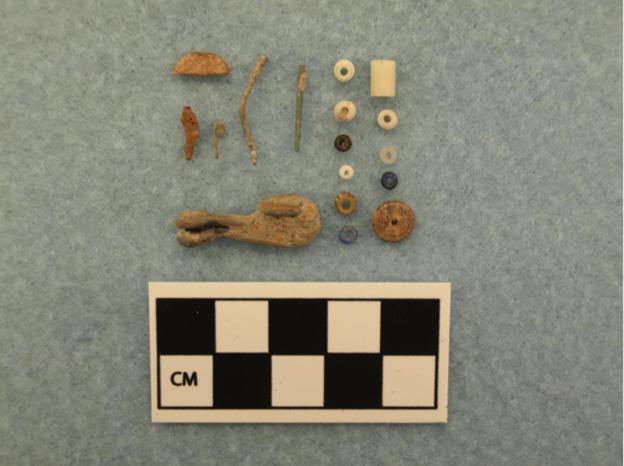
Traditionally, Ursuline nuns were cloistered from the rest of French society, except for the education and catechism of young girls. In New Orleans, the Ursulines who arrived in the colony had expanded responsibilities. During the French colonial period, this group of Ursuline Sisters ran the Royal Hospital, raised orphaned children, did missionary work for enslaved and Indigenous people, and had a day school, in addition to educating young girls from wealthy New Orleans families. As a result, the convent was not socially separated from the rest of the city. Foot traffic in and out of the convent was common. The main building and outbuildings formed a courtyard. Based on artifact finds from the archaeological excavations, such as clothing pins, and a lack of typically male artifacts like pipe fragments, this courtyard was interpreted as a female-only space. This points to the fact that even though the Ursuline convent was a liberal, fluid institution, there were cloistered activity areas.
Despite being a place of mixed races, classes, and genders, the Ursuline Convent was designed with segregation in mind. The second convent building had dedicated sections for orphans and sick people, and separate quarters for enslaved people which were situated behind the convent. These sections were kept separate from the classroom for young girls of wealthy families.
While these areas were segregated, a large amount of aboriginal pottery was found throughout at the site. The local, handmade pottery was most likely made by Native American girls and women living at the convent, though hand-built pottery could also have been made by Europeans or people of African descent. The presence of this pottery may point to an inclusion of Native Americans in convent life without a demand for complete separation from their families or material culture.
There were few identifiable religious artifacts found at the site. In addition to the educational and earthly mission of the convent, the excavation reveals the space functioned as a practical, secular space, in contrast to other religious sites in New Orleans.
Files
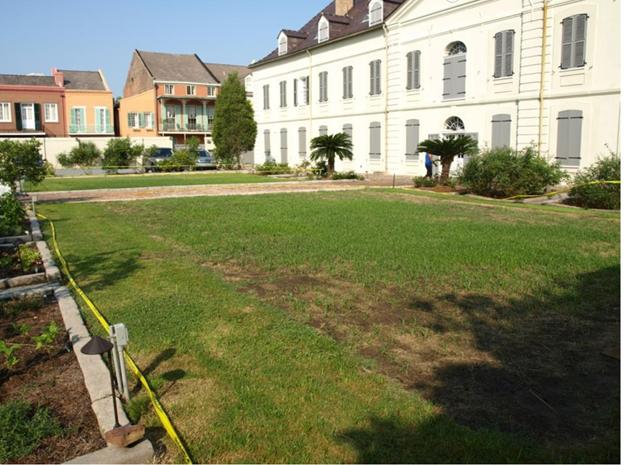
Site Overview: The Old Ursuline Convent
View of the site facing northwest (downriver) | Source: Dr. Shannon Dawdy and the University of Chicago | Date: 2011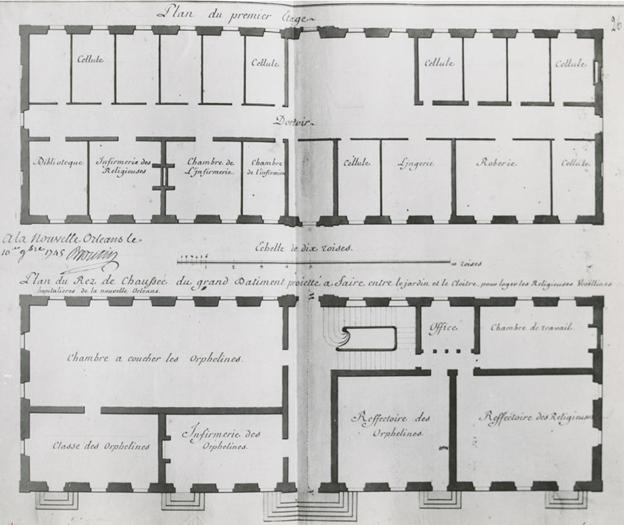
Plan of the Ursuline Building, 1745
Plan du premier Etage [et] du Rez de Chaussée du grand Bâtiment proietté à faire entre le jardin et le cloître, pour loger les Religieuses Ursellines hospitalières de la nouvelle Orléans: Plan of first and ground floor of the Ursuline Convent building | Source: Archives nationales d’outre-mer (Aix-en-Provence), Nevative 2-019-033. Vieux Carre Survey, HNOC Database | Date: 1745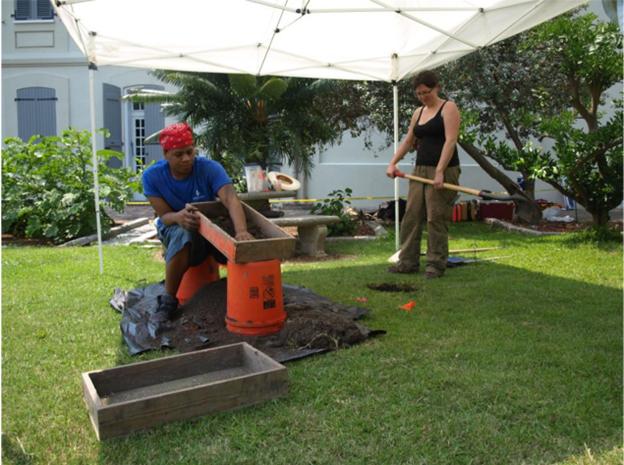
Crew Shot
University of Chicago 2011 Field School: Shovel testing in process, facing north | Source: Courtesy of Dr. Shannon Dawdy and the University of Chicago | Date: 2011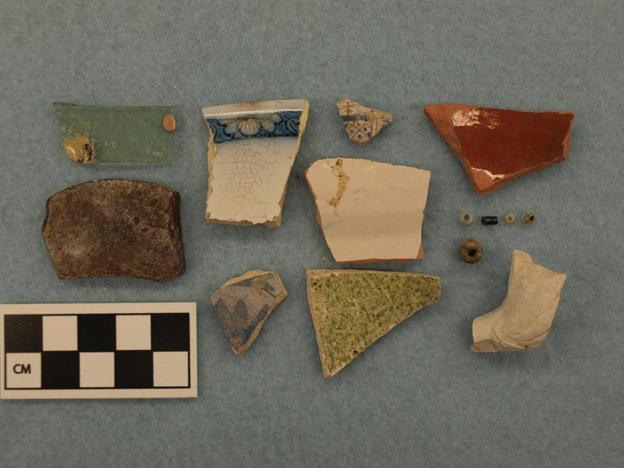
Artifacts made of Ceramic
Various ceramics fragments, beads, and white clay pipe fragment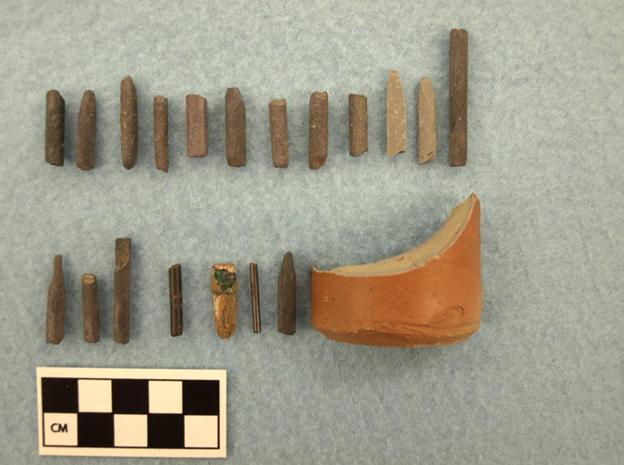
Literacy Artifacts
Graphite and slate pencils from St. Mary’s School at the Urusline Convent | Source: Dr. Shannon Dawdy and the University of Chicago | Date: 2011