Streets on the Table Episode 3: Margaret Elizabeth
Text
In 2019, the New Orleans City Council launched a city-wide effort to change the names of streets honoring white supremacists. While the city implemented its renaming efforts, a clear need for an educational component to give context to the changes presented itself. Filling the gap, public history graduate students at the University of New Orleans created projects to illuminate the work of the Street Renaming Commission.
Produced by the Midlo Center for New Orleans Studies, Streets on the Table is a podcast that reflects on the historical relevance of both the old and new street names. Hosted by two UNO graduate students, the podcast highlights the lives and histories unrecognized in the commemorative landscape.
In this episode, Eddie and Lauren use a newspaper advertisement to reconstruct the experience of Margaret Elizabeth, an enslaved woman who fled bondage in New Orleans.
Files
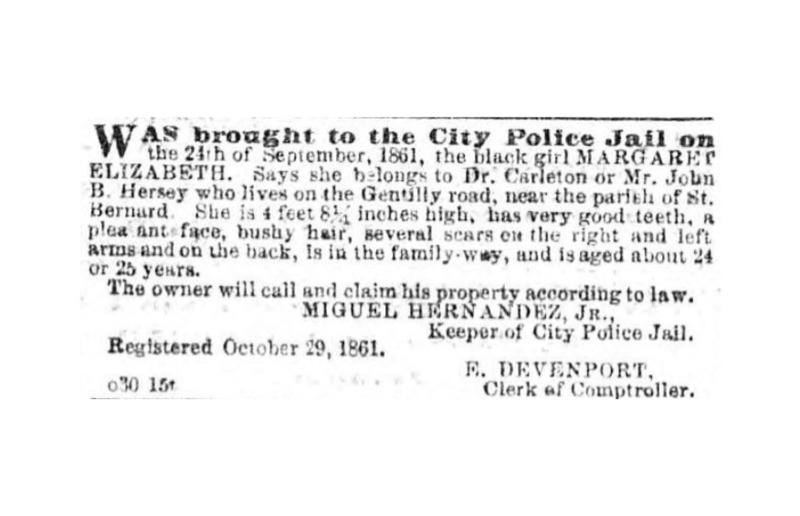
Enslavers and jailers listed advertisements for self-liberating people in newspapers in an attempt to re-enslave them. The advertisement for Margaret Elizabeth appears in the New Orleans Daily Crescent and describes her physical description, age, and enslaver. From these few sentences, historians can draw details about Margaret Elizabeth’s life and reconstruct her experience living in nineteenth-century New Orleans as a pregnant, self-liberating person.
Source: New Orleans Daily Crescent, 30 October 1861, Chronicling America: Historic American Newspapers, Library of Congress, accessed 8 November 2021, https://chroniclingamerica.loc.gov/lccn/sn82015753/1861-10-30/ed-1/seq-4/.
The Louisiana Secession Ordinance declared the state’s withdrawal from the United States government and its refusal to adhere to the laws of the Constitution.
Source: “State of Louisiana Secession Ordinance,” January 1861, Wisconsin Historical Images, Wisconsin Historical Society, https://content.wisconsinhistory.org/digital/collection/quiner/id/23321.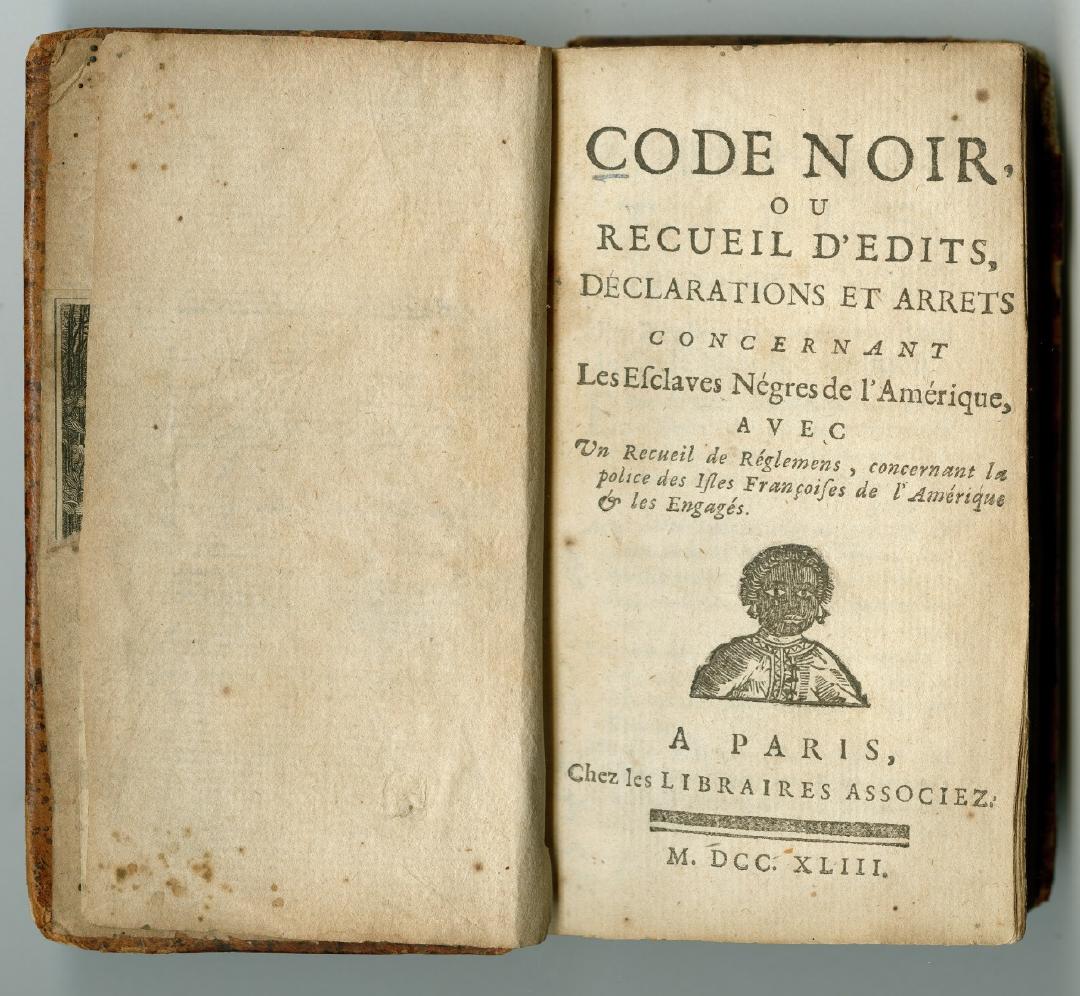
The Code Noir, introduced in Louisiana in 1724, established laws regulating enslaved people's lives. The 1825 Louisiana Civil Code adopted some of the same provisions. Find a translated version of the Code Noir under Related Resources.
Source: Code noir, (Paris: Chez les libraires associez, 1743), The Historic New Orleans Collection, http://hnoc.minisisinc.com/thnoc/catalog/2/4434.Streets on the Table Episode 3: Margaret Elizabeth
Map
New Orleans, LA 70124
United States