<?xml version="1.0" encoding="UTF-8"?>
<feed xmlns="http://www.w3.org/2005/Atom">
  <title type="text">New Orleans Historical</title>
  <updated>2026-08-24T00:36:57+00:00</updated>
  <generator uri="http://framework.zend.com" version="1.12.20">Zend_Feed_Writer</generator>
  <link rel="alternate" type="text/html" href="https://neworleanshistorical.org/"/>
  <link rel="self" type="application/atom+xml" href="https://neworleanshistorical.org/items/browse?output=rss2"/>
  <id>https://neworleanshistorical.org/</id>
  <author>
    <name>New Orleans Historical</name>
    <uri>https://neworleanshistorical.org</uri>
  </author>
  <link rel="hub" href="https://pubsubhubbub.appspot.com/"/>
  <entry>
    <title type="html"><![CDATA[Misbeliefs: A Linguistic Look at a Beloved New Orleans Fruit]]></title>
    <summary type="html"><![CDATA[<img src="https://neworleanshistorical.org/files/fullsize/fb12aa9cee3162c91979d7056f13326d.jpg" alt="&quot;Woman leaning on a balcony, New Orleans&quot;" /><br/><p>The residents of New Orleans have a history of creating unusual pronunciations of words. Local street names provide common examples of New Orleanians’ inventive pronunciations, such as Burgundy Street (<span>pronounced bur-GUHN-dee, not BUR-guhn-dee</span>) and a cluster of Uptown streets named for the nine Greek Muses, including Urania, Thalia, Euterpe, Calliope, Clio, Erato, Melpomene, Terpsichore, and Polymnia Streets. Another lesser-known example of the city’s linguistic creativity can be found with “misbeliefs,” the fruit of the Eriobotrya japonica tree, that New Orleanians also refer to as Japanese plums or loquats. [1] </p><p>Misbelief trees can be found throughout New Orleans.  Although the tree is native to China, it thrives in southern Louisiana’s climate. [2] One example of a misbelief can be found at 1226 Royal Street, a portion of the French Quarter highly populated by Italian immigrants in the late nineteenth century.</p><p>Unlike figs and other fruits mentioned in the early colonial period of New Orleans, misbeliefs are not recorded in letters, gardening articles, advertisements, or plant lists until the late 1800s. [3,4] The first mention of the misbeliefs in New Orleans coincides with a great influx of Sicilian immigrants to the city. </p><p>The first written evidence of misbeliefs grown in Louisiana appeared on May 29, 1883, in the Lagniappe column of the Times-Picayune, “Did you ever eat one of those Japanese plums grown in Louisiana? If you want something good wrap a piece of roller composition up in a piece of sheepskin and call it a Japanese plum.” Apparently, the writer was not a fan of the fruit. </p><p>How and why did these fruit trees and their fruit come to be called misbeliefs in New Orleans? Some New Orleanians, including blogger Dee Hollins, believe that Italian immigrants introduced the tree to the area and that the Italian name for the fruit probably evolved into the name misbeliefs. [5] </p><p>A 1989 analysis of plants referred to as “medlars” found that Eriobotrya japonica was incorrectly associated with the plant genus Mespilus, or specifically, Mespilus germanica which, unlike misbeliefs, are actual medlar plants. The study also revealed that the Italian word nespola was often used to describe medlars and other fruit. [6] In a 1905 travel book about Sicily, Eriobotrya japonica is listed as one of the fruits found on the island and states that this fruit was called nespoli by Italians. [7] </p><p>Similarly, in 1899, the Louisiana State Experiment Station was doing research on what they thought were three types of Mespilus germanica when in reality these were three different varieties of Eriobotrya japonica (misbeliefs) which they also called Japanese medlars. According to the same article in Economic Botany, there was no proof that true medlars were ever grown in Louisiana. [8] To make matters even more confusing, many New Orleanians also call misbeliefs Japanese plums even though they are not plums nor are they indigenous to Japan. In 1903, Amite City, a town heavily settled by Sicilian immigrants was described as the “great strawberry and Japanese plum parish of the State.” [9, 10] </p><p>According to Dan Gill, retired Consumer Horticulture Specialist at the Louisiana State University AgCenter, the name Mespilus japonica is an old Latin name for Eriobotrya japonica. Whether anyone ever used this name in New Orleans is unclear, but the transition from mespilus to misbeliefs could be possible. </p><p>Most Italian immigrants who came to New Orleans in the late 1800s were from southern Italy or Sicily and many spoke Sicilian rather than Italian. [11] The Italian word for the fruit nespoli does not sound phonetically similar to misbeliefs, but the Sicilian word niespuli sounds much closer to the word misbeliefs when sounded out. [12] (Listen to a recording of the Sicilian pronunciation below.)</p><p>Whichever word was misinterpreted as misbeliefs, it reminds us that New Orleans was a place where immigrants speaking foreign languages interacted with locals and made a lasting impact on the city’s culture. Sharing food is often a meeting point of different cultures. And while food habits typically remain after language has faded, the term misbeliefs, misunderstood as it was, survived to become a lasting part of the local language. [13]</p><p><em><strong><a href="https://neworleanshistorical.org/items/show/1648">For more (including 3 images&#32;&amp;&#32;1 audio file) view the original article</a></strong></em></p>]]></summary>
    <published>2021-04-28T20:29:12+00:00</published>
    <updated>2026-08-24T00:31:29+00:00</updated>
    <link rel="alternate" type="text/html" href="https://neworleanshistorical.org/items/show/1648"/>
    <id>https://neworleanshistorical.org/items/show/1648</id>
    <author>
      <name>Laura Guccione</name>
    </author>
  </entry>
  <entry>
    <title type="html"><![CDATA[Sicilian Bakers of New Orleans: F. Lombardo and Sons Bakery]]></title>
    <summary type="html"><![CDATA[<img src="https://neworleanshistorical.org/files/fullsize/4add059e3fa4bdf4e91541d84dbad47d.jpg" alt="1210 Decatur" /><br/><p>The French may claim New Orleans French bread, but later immigrant bakers' influence on the city's bread-making traditions is undeniable. At the turn of the nineteenth century, a wave of Sicilian immigration to New Orleans left a lasting impact on the city's culture and economy. Nowhere is this more evident than the French Quarter, where traces of a once-thriving community known as "Little Palermo" are still etched in tiles and memories. Many of the Sicilians who arrived in New Orleans lived and worked in the French Quarter and forged a path in the commercial food business, unloading produce on the wharves, truck farming, and establishing grocery stores, restaurants, macaroni factories, and bakeries. </p><p>The 1891 City Directory lists a baker on St. Philip Street named Agostino Lombardo, who arrived in New Orleans from Trabia, outside of Palermo. [1, 2] There were almost 200 bakers in New Orleans at that time, most with German or French names. Agostino Lombardo was one of only two bakers at that time with an Italian last name (the other was Lorenzo Federico, a pasta maker, also on St. Philip Street). With his father Francesco and brother Filippo, Agostino Lombardo soon moved to 1210 Decatur Street, where "F. Lombardo and Sons Bakery" operated until declaring bankruptcy in 1941. [3] </p><p>Lombardo Bakery was one of the earliest recorded Italian bread bakeries in New Orleans. [4] With entrances facing both Decatur Street and French Market Place (previously <a href="https://neworleanshistorical.org/tours/show/57">Gallatin Street</a>), Lombardo Bakery served the port, and the growing Sicilian community clustered near the bustling French Market. The grandson of Francesco Lombardo, Frank Lombardo, wondered in a 2015 oral history, "why do they call this the French Market? It's all Italians. Sicilians!" [5] This tight-knit community added their language, traditions, and foods to an already vibrant mix of New Orleans cultures. Other small, multi-generational Sicilian bakers such as Lanasa, Ancona, Aiovolasiti/Ace Bakery, Lovoi, Ruffino, Evola, Gendusa, Brocato, and LoGiudice/United Bakery, continued the French and American bread-making traditions of New Orleans. But they also added their own styles of bread to the mix, including <a href="https://neworleanshistorical.org/items/show/480">the famous "poor boy loaf,"</a> St. Joseph's bread, braided sesame twist loaves, sfincione pizza, and the other well-known loaf, the <a href="https://neworleanshistorical.org/items/show/505">muffuletta</a>. Lombardo's bakery laid the groundwork for this dynasty of Sicilian bread-makers to follow.</p><p><em><strong><a href="https://neworleanshistorical.org/items/show/1637">For more (including 7 images) view the original article</a></strong></em></p>]]></summary>
    <published>2020-12-10T05:26:14+00:00</published>
    <updated>2026-08-24T00:31:29+00:00</updated>
    <link rel="alternate" type="text/html" href="https://neworleanshistorical.org/items/show/1637"/>
    <id>https://neworleanshistorical.org/items/show/1637</id>
    <author>
      <name>Dana Logsdon</name>
    </author>
  </entry>
  <entry>
    <title type="html"><![CDATA[Local No. 35: The New Orleans Bakers&#039; Union ]]></title>
    <summary type="html"><![CDATA[<img src="https://neworleanshistorical.org/files/fullsize/430a9d366df4921e190ff1053965053d.jpg" alt="The 200 Block of Exchange Alley" /><br/><p>Bread-baking is a hard, physically demanding job. Before the Civil War, most bakery owners relied on apprenticeships and enslaved laborers to handle the workload. Postbellum bakery workers inherited a system of forced on-premises lodging, 16 to 23-hour shifts with no days off, low wages, hard manual labor, and dangerous, unsanitary conditions. The New Orleans bakers’ union took shape in the 1880s to address these concerns. Although largely a forgotten force, the New Orleans bakers’ union is an important piece of the city's baking and labor history. It is responsible for what are now considered standard labor practices (eight-hour workday, overtime, paid vacation, and safety measures). </p><p>On January 13, 1886, representatives from the local bakers’ union joined those from ten other cities in Pittsburgh, Pennsylvania, to establish the Journeymen Bakers’ National Union. In New Orleans, the Journeymen Bakers’ Union presented a list of demands at their offices at No. 52 and 54 Exchange Place (now 220 Exchange Alley). [1] Although the union occupied several different downtown addresses throughout its existence, this first recorded location was on a busy commercial thoroughfare that housed several other labor organizations. A group of fifty-three mostly small bakery owners formed a separate Baker Bosses’ Union to “support and assist the Journeymen Bakers’ Union.” [2] It was later renamed the Master Bakers Association of New Orleans and was tasked with negotiating agreements with the labor union. </p><p>By 1892, the union expanded to include ice cream and candy makers, renaming itself Union of Journeymen Bakers and Confectioners. 1892 also marked the <a href="https://neworleanshistorical.org/items/show/489">general strike in New Orleans</a> when several other labor movements joined together to force business owners to negotiate. The bakers’ union demands included a closed union shop, a six-day workweek, a twelve-hour day (fifteen on Friday), the abolishment of forced lodging, union product labeling, and two holidays. [3] Most of the owners agreed to the union demands. [4] </p><p>One unexpected result of the union’s action to highlight working conditions was an increased public concern not for the well-being of bakers, but customers, due to perceived unhygienic bakeries and “unclean bread.” Advertisements in the early 1900s emphasized “sanitary bakeries” and bread “untouched by human hands.” [5] The New Orleans Health Department passed several related sanitary ordinances around this time, requiring bread to be placed behind a screen or wrapped. A 1909 newspaper article described the "crusade" of the pure food department of the city's Board of Health to enforce bakery ordinances. The inspectors frequently targeted immigrant bakers in the Sicilian section of the French Quarter. [6] </p><p>The bakers' union continued to strengthen in size and power, becoming one of the city's largest labor organizations. [7] The New Orleans branch of the union, Local No. 35, opened its doors to Black bakers in 1918, a rare example of an interracial bakers' association in the South, but common in a city where Black and white laborers often worked together in the same trade. [8] A 1939 bulletin by the United States Department of Labor titled "Wages, Hours, and Working Conditions in Union Bakeries" points to a changing industry and union. As bakery work shifted from small hands-on shops to factory-type bakeries, the list of job descriptions moved beyond ovenmen, mixers, and benchmen to include machine operators, maintenance men, elevator operators, clerks, and janitors. The union bakeries in New Orleans maintained more hands-on jobs than other cities. They also had slightly lower wages and a longer workweek than other cities. [9] </p><p>Collective bargaining negotiations preceding a threatened strike in 1947 revealed that 90% of bakeries in New Orleans employed union labor. These 1,100 union bakers produced 700,000 loaves of bread per day to feed a city. [10] While the bakers’ union no longer operates in New Orleans, many of the benefits and conditions it fought for still linger in the city’s remaining traditional bread bakeries. Local No. 35 laid the groundwork for bakery workers to earn their daily bread.</p><p><em><strong><a href="https://neworleanshistorical.org/items/show/1636">For more (including 4 images) view the original article</a></strong></em></p>]]></summary>
    <published>2020-12-04T04:26:27+00:00</published>
    <updated>2026-07-15T16:20:25+00:00</updated>
    <link rel="alternate" type="text/html" href="https://neworleanshistorical.org/items/show/1636"/>
    <id>https://neworleanshistorical.org/items/show/1636</id>
    <author>
      <name>Dana Logsdon</name>
    </author>
  </entry>
  <entry>
    <title type="html"><![CDATA[The French and Spanish Colonial Mark on New Orleans Bread-Making: Cadet’s Bakery]]></title>
    <summary type="html"><![CDATA[<img src="https://neworleanshistorical.org/files/fullsize/95b297ec04d1564fa0fc47f79684a55f.jpg" alt="701 Royal Street, Cadet&#039;s Bakery" /><br/><p>The intersection of St. Peter and Royal Streets is loud and busy with the passing hustle of to-go drinks, music, and tourists, making it hard to notice a faded patch of tile work outside the corner grocery store located at 701 Royal Street. However, this almost hidden marker is a powerful reminder of a long line of baking and confectionary businesses that once occupied the space and built on French and Spanish colonial baking traditions.</p><p>Mannessier’s Confectionary was the last of several bakeries to operate out of the location. An 1895 photograph shows the elegant and ornate interior of Mannessier’s, lined with the above-mentioned tilework. (Pictured below) According to owner Adolph LeClerc’s 1912 obituary, “he owned a confectionary at the time of his death, which is noted throughout the city as one of the landmarks of the old French section.” [1]  The first recorded bakery to operate out of this location was Cadet’s Bakery (1789 to 1824). Frenchman Jacques Molon (or Moulon) established Cadet’s in a rear structure facing St. Peter Street and operated a mill "in which coarse flour, floated down the Mississippi River on flatboats, was reground to a finer grade – the grade that made the loaves Cadet sold over the counters of his corner store second to none. No other baker made a better brioche." [2]</p><p>Bakers and millers were among the first laborers sent by the French government to New Orleans in 1718, bringing the supplies and knowledge necessary to establish strong bread-making and bread-eating traditions. The first recorded commercial bakery in New Orleans was for a baker named Francois Lemelle (or Lemesle), who operated under the alias of “Bellegarde” at the corner of St. Ann and Chartres Streets. [3]  These transplanted French bakers relied on standard methods and recipes. The types of bread baked resembled those popular in eighteenth-century France – large dense round loaves of mixed grains, smaller enriched loaves of white flour, and hard, long-lasting biscuits suitable for sea voyages. Bakeries often produced two qualities of bread, one of more refined quality and one of second quality, for those unable to afford the higher-priced loaves. This two-tiered bread system continued into the next century and reinforced bread as a marker of social class. [4]  Eventually, the more elite white loaves of bread became the norm, replacing the large whole grain loaves. [5]  Today, small artisan bakeries are again reversing the trend, returning to whole grain rustic loaves, but this time at an elevated status/price. </p><p>Bakeries in eighteenth-century New Orleans also resembled bakeries of the same time in France -- equipped with one or more wood-burning brick ovens, wooden peels to move the loaves in and out, long wooden dough troughs to mix the dough, and a workbench to weigh and shape loaves. By 1820, approximately sixty French bakers and confectioners operated in New Orleans close to the Mississippi River – a source for the water needed to make bread. Rainwater collected in outdoor cisterns provided an additional source of water. While the bread baked at Cadet’s bakery maintained a French identity, the bakery opened when New Orleans was under Spanish colonial control. The Spanish colonial forces had a lasting impact on bread-making history in New Orleans not through recipes but by implementing ordinances on the price of flour and the size and price of bread due to flour shortages. The Municipal Council of New Orleans also taxed the number of barrels of flour bakers consumed to collect funds for the city's illumination system. This tax replaced a system of taxation based on the number of chimneys on each building, obsolete following a fire in 1784 that destroyed many buildings and chimneys. [6]  These government regulations contributed to the standardization of a loaf of bread in the city.</p><p>After Cadet’s bakery closed, several other bakers and confectioners operated in that same location (Leblanc, Lefevre, Tambelli, Vincent, Desbonnes and Bonnecayes, Mannessier, and LeClerc). [7]  While always evolving and adapting, the bread-making traditions of New Orleans remain firmly established in the familiar identity of the early French bakers. </p><p><em><strong><a href="https://neworleanshistorical.org/items/show/1635">For more (including 8 images) view the original article</a></strong></em></p>]]></summary>
    <published>2020-12-04T00:07:11+00:00</published>
    <updated>2026-07-15T16:20:25+00:00</updated>
    <link rel="alternate" type="text/html" href="https://neworleanshistorical.org/items/show/1635"/>
    <id>https://neworleanshistorical.org/items/show/1635</id>
    <author>
      <name>Dana Logsdon</name>
    </author>
  </entry>
  <entry>
    <title type="html"><![CDATA[A Bakery Shaped by Place: Garic’s Bakery]]></title>
    <summary type="html"><![CDATA[<img src="https://neworleanshistorical.org/files/fullsize/a46ecd2a0c2d1e6999cc4fcc4a8cbd34.jpg" alt="Garic’s Bakery Supports Hurricane Relief Efforts" /><br/><p>Often visible in the background of historic images of the French Market, the three-story Italianate building with the “Garic’s Bakery" sign anchored the neighborhood. [1] Garic’s Bakery was once part of a bustling riverfront commercial corridor, closely intertwined with the nearby port and public farmers market, at times even taking on the name “French Market Bakery.” An 1893 newspaper article reported Garic’s bakery among the merchants that offered hurricane relief to the lower coast's oystermen, who traded near the French Market. [2] </p><p>Newspaper advertisements throughout the bakery’s existence reflected the busy, diverse, and ever-changing French Quarter neighborhood. The bakery was “always open,” operated 24 hours a day, serviced ships, and supplied loaves of bread and pastries to some of the city’s finest restaurants as well as the people who lived, shopped, and worked in the area. The bakery was referred to as the “French Italian Bakery” (that sold rye bread!) and adapted its products to customer demand. Some of the types of bread baked at Garic's over its almost one-hundred-year existence included hardtack for ships (a long-lasting biscuit that looks like a flat, dimpled disk, a staple since the colonial era), cap bread, French bread, Sicilian St. Joseph's bread, German rye and pumpernickel bread, and French biscuits. </p><p>When Lawson Garic opened his namesake bakery in 1885, close to 150 bakeries were listed in the New Orleans City Directory. Garic had previously managed Stiegler Bakery near the Treme Market and was a flour merchant to some of <a href="https://neworleanshistorical.org/items/show/1622">the city’s older bakeries, such as Chretien’s</a>. Just as bakeries reflected the surrounding community's needs, they also had to adapt to outside forces such as sanitary laws and flour shortages. In the early 1900s, health ordinances required bakeries to wrap loaves and adjust loaf size, resulting in the standardization of products. [3] Records show that a rise in ingredients' cost resulted in a 1916 request to renegotiate Garic’s contract to deliver 17,000 pounds of bread a month to Charity hospital. [4] After a few years, Garic left the bakery business to pursue real estate ventures, but family members continued to operate the bakery until 1952. [5] </p><p>In the 1930s and 1940s, new challenges, such as industrialization, changing bread styles, and World War II labor shortages appeared. An article from 1933 reveals the growing popularity of "poor boy" loaves and machine-made sliced pan bread versus old-fashioned French bread and the French cap bread. The same article highlights Sterling Garic, a third-generation owner of Garic’s, as the last baker to produce hardtack. [6] </p><p>In 1952, the Gaudet family purchased Garic’s bakery and renamed it “Gaudet's French Market Bakery.” A few years later, the family leased the business to German baker Andreas Reising who operated the bakery as “Sunrise French Market Bakery.” In a 1958 Times-Picayune advertisement, Reising described the charm of the old Garic's bakery and its appeal to tourists in the changing French Quarter. Location still mattered, but the clientele had shifted once again – this time away from locals to tourists. He implored locals to follow the example of “visitors from all over the country, with Sunrise French Bread to be carried to their homes” to serve “daily at our table, n’est ce pas?” [7] </p><p>Following Sunrise Bakery, another baker, Adam Falkenstein, operated "French Market Bakery” at the site briefly in the early 1970s. In 1981, records show that the Gaudet family estate sold the property. The famous bakery that once served and profited from the busy French Market, port, and surrounding neighborhood transitioned to a gallery and souvenir shop. Garic’s history stands as an enduring testament to a bakery’s power to anchor and serve a community.</p><p><em><strong><a href="https://neworleanshistorical.org/items/show/1623">For more (including 8 images) view the original article</a></strong></em></p>]]></summary>
    <published>2020-11-10T04:44:42+00:00</published>
    <updated>2026-07-15T16:20:25+00:00</updated>
    <link rel="alternate" type="text/html" href="https://neworleanshistorical.org/items/show/1623"/>
    <id>https://neworleanshistorical.org/items/show/1623</id>
    <author>
      <name>Dana Logsdon</name>
    </author>
  </entry>
  <entry>
    <title type="html"><![CDATA[Enslaved Bakers and the Foreign French: D’Aquin, Bouny, and Poincy Bakeries]]></title>
    <summary type="html"><![CDATA[<img src="https://neworleanshistorical.org/files/fullsize/5f36dc93dfb45a1b004cf4070afc3854.jpg" alt="Street Scene 800 block Royal Street
" /><br/><p>Before the Civil War, enslaved labor was an integral part of the commercial baking industry and the overall economy in New Orleans. While food historians note the role that French, Spanish, and Anglo colonial bakers played in shaping the city’s early bread-making traditions, they often exclude the contributions of enslaved Africans, Free People of Color, and Afro-Creoles from the narrative.[1] By tracing some of New Orleans' antebellum bread bakers' history and piecing together fragments from the archives (legal documents, census records, fugitive slave advertisements) a parallel story of forgotten forced labor unfolds. </p><p>Records show several prominent antebellum bakeries in the French Quarter, including those belonging to Louis D’Aquin, Widow Bouny, and Paul Desdunes Poincy, who relied on enslaved labor. [2] The above-mentioned bakery owners worked within a two-block radius of each other, respectively located at 840-842 Royal Street, 921-25 Chartres Street, and 530-36 Dumaine Street. They were members of an exodus from the West Indies to Louisiana in the 1790s and early 1800s following the Saint-Domingue revolution (present-day Haiti). This wave of refugees, referred to as the Foreign French, fortified a dwindling French presence in New Orleans in the face of encroaching Americanization. Many of these white refugees from the West Indies were involved in the trades and crafts, including baking. [3] </p><p>Enslavers profited from the skills of enslaved bakers but often placed little value on keeping families intact. Advertisements list for sale or lease “machinery and fixtures for carrying on the baking business with or without 6 negroes, all superior bakers.” [4] An 1847 auction advertisement in the Times-Picayune lists the names of twenty enslaved persons, all fluent in French and English, with a wide range of skills, including the following experienced bakers: </p><p>“Washington – aged 32 years, excellent baker, capable of taking charge of any bakery. Jacob – aged 27 years, good baker, salesman, and oven man. Bazile – aged 27, excellent miche baker and salesman, also, oven hand. Zeno – aged 24, baker, somewhat of a pastry cook, tailor and a remarkably handy boy. Barm – aged 24 years, excellent hard bread baker and understands the making of dough. Reuben – aged 25 years, excellent hard bread baker, hostler, coachman and valuable boy for taking care of horses. Monday – aged about 45 years, an excellent pastry maker, good confectioner and strictly honest.” [5] </p><p>An 1856 auction advertisement for the indebted “F. D’Aquin and Co.” bakery (the predecessor to <a href="https://neworleanshistorical.org/items/show/477">Margaret Haughery</a>’s Steam Bakery) lists the property for sale, including building leases, machinery, utensils, wagons, bread carts, horses, and thirty-eight enslaved persons, from age sixty-one to eighteen months. The advertisement lists the enslaved workers' skills, including oven repairman, flour sifter, dough mixer, yeast maker, carpenter, drayman, bread seller, and the types of bread baked (hard bread, soft bread, loaf bread). [6] </p><p>Fugitive slave advertisements illustrate the cruelty of slavery, with mention of injuries and physical bondage including chains, and neck and leg irons. Fugitive slave advertisements also show how enslaved bakery workers moved through the city and shared expert knowledge– both as vendors traversing the streets and markets, and as human property transferred between enslavers. Multiple listings suggest that some enslaved people who worked in bakeries made several attempts to escape bondage and that some even succeeded in their quest for self-emancipation. [7] </p><p>Labor is an essential foundation of the bread-making history of New Orleans. Whether brought into the business by family ties, economic necessity, or (in the case of slavery), force, the people who mixed dough, shoveled embers or hawked wares on the street reflect the complex multi-faceted history of New Orleans and its bread. Reinscribing enslaved people and their baking skills in this history demonstrates the significance of forced labor to the growth and development of one of the city’s most beloved and iconic industries.</p><p><em><strong><a href="https://neworleanshistorical.org/items/show/1621">For more (including 12 images) view the original article</a></strong></em></p>]]></summary>
    <published>2020-11-06T23:55:14+00:00</published>
    <updated>2026-07-15T16:20:25+00:00</updated>
    <link rel="alternate" type="text/html" href="https://neworleanshistorical.org/items/show/1621"/>
    <id>https://neworleanshistorical.org/items/show/1621</id>
    <author>
      <name>Dana Logsdon</name>
    </author>
  </entry>
  <entry>
    <title type="html"><![CDATA[“Don’t Wear Your Good Shoes Up Here”: The Arcadia and Alamo Dance Halls of Prohibition Era New Orleans ]]></title>
    <summary type="html"><![CDATA[<img src="https://neworleanshistorical.org/files/fullsize/bbf320d7821a4b47bb8efbd8cd2f1b6e.jpg" alt="Cartoon advertisement for The Fischbein-Williams Syncopators jazz group posted at the Arcadia Dance Hall." /><br/><p>In the 1920s and 1930s, the second floor of 1001 Canal Street was home to the Arcadia and Alamo Dance Halls. These dance halls served as a space for thirsty men in New Orleans to cut loose at the height of Prohibition. Prohibition, enacted in January 1920 by the 18th Amendment, made the manufacture and sale of alcohol federally illegal throughout the United States, but nowhere housed more scofflaws than New Orleans. When Izzy Einstein, a famous 1920s customs agent, traveled to New Orleans to enforce Prohibition, he remarked that it took only thirty-five seconds to find alcohol. The driver of a taxi that Einstein hailed at the train station offered a swig of liquor from a bottle stashed beneath a seat. [2] </p><p>One of sixty-three dance halls in New Orleans, the Arcadia was known as a ‘closed,’ or ‘nickel-a-dance’ hall, primarily catering to single men without dates who would pay for dances from the women employed by the establishment. [3] The women working in these closed halls were known as ‘hostesses’ and club owners encouraged them to dance, drink, and converse with the male clientele. [4] In 1924, New Orleans Item journalist <a href="https://neworleanshistorical.org/items/show/1602">Dorothy Day</a> went undercover as a hostess in the Arcadia dance hall. Day's first-hand account of dance hall goings-on gives us an in-depth glimpse into New Orleans nightlife in the 1920s. Day describes the diverse clientele of the Arcadia as “transients, salesmen, sailors and boys from the army and navy, [and] high school boys out seeing life.” [5] Alcohol consumption was everywhere, especially in the practice of ‘B-drinking’, a scheme wherein women wokring at the dance hall would convince gullible male suitors to buy them the most expensive drinks. Police officers frequented the dance hall and often overlooked the sale of alcohol - for a fee. [6] Like most music venues in the city, jazz was the music of choice for the dance halls at 1001 Canal. The dance halls hosted a variety of jazz acts, including The Fischbein-Williams Syncopators and the world-famous banjoist/guitarist, Danny Barker. [7, 8]</p><p><em><strong><a href="https://neworleanshistorical.org/items/show/1601">For more (including 3 images) view the original article</a></strong></em></p>]]></summary>
    <published>2020-06-30T22:59:31+00:00</published>
    <updated>2026-07-15T16:20:25+00:00</updated>
    <link rel="alternate" type="text/html" href="https://neworleanshistorical.org/items/show/1601"/>
    <id>https://neworleanshistorical.org/items/show/1601</id>
    <author>
      <name>Joseph LeDesma</name>
    </author>
  </entry>
  <entry>
    <title type="html"><![CDATA[Café du Monde: Coffee in George Herriman’s Krazy Kat Comics]]></title>
    <summary type="html"><![CDATA[<img src="https://neworleanshistorical.org/files/fullsize/af503c13d985847d1d82902ae1438522.jpg" alt="Café du Monde Coffee Can Label" /><br/><p>There is no way of knowing if young George Herriman ever accompanied his parents to the historic Café du Monde Coffee Stand, which was established in the New Orleans French Market in 1862, eighteen years before Herriman’s birth. What is certain, however, is that the restaurant’s signature cafe au lait would become one of Herriman’s favorite metaphors for describing the complexities of race and social identity.</p><p>Growing up in a mixed-race family in 1880s New Orleans, young Herriman would have experienced the very real consequences of having an identity that shifted legally and culturally over the years. Whether called “Creole,” “Free People of Color,” “Mulatto,” or “Negro,” the Herrimans learned what it was like to see hard-earned rights disappear with each new designation. So perhaps it is no surprise that as a cartoonist, Herriman explored the shifting nature of reality, creating desert backgrounds that changed from panel to panel, and inventing a protagonist who changed color frequently, and gender constantly. </p><p>Herriman used many clever visual metaphors to convey these ideas. Krazy Kat’s crooked tail might stand in for hair, which was often considered a tell-tale sign of a person’s ethnicity. A beauty parlor might be visited to lighten complexion, demonstrating how shades of color could imply greater or lesser worth. But it was in strips about coffee that Herriman found one of his most ingenious ways to discuss meaning and identity. In a 1919 “Krazy Kat” comic, Krazy asks why coffee is called cafe au lait when it has milk. “Aint my shoes still shoes when I put my foots in them?” Krazy asks. And in a 1931 strip that might be interpreted as a subtle commentary on racial passing, Ignatz Mouse is serving a customer and asks Krazy, who is working in the kitchen, for a black coffee. Krazy passes it through the window. Scowling at the cup, Ignatz says, “Hey, this isn’t black coffee!” “Sure it is,” replies Krazy. “Look unda the milk.”  </p><p><em><strong><a href="https://neworleanshistorical.org/items/show/1530">For more (including 4 images) view the original article</a></strong></em></p>]]></summary>
    <published>2019-08-12T20:24:16+00:00</published>
    <updated>2026-07-15T16:20:26+00:00</updated>
    <link rel="alternate" type="text/html" href="https://neworleanshistorical.org/items/show/1530"/>
    <id>https://neworleanshistorical.org/items/show/1530</id>
    <author>
      <name>Michael Tisserand</name>
    </author>
  </entry>
  <entry>
    <title type="html"><![CDATA[Kohlman’s Tavern: Historic Algiers Black Business Hub]]></title>
    <summary type="html"><![CDATA[<img src="https://neworleanshistorical.org/files/fullsize/dbcee6ea7c98bb93eafa30da658fba51.jpg" alt="Kohlman’s Tavern" /><br/><p>Kohlman’s Tavern, once located at 414 Homer Street in Algiers, was operated by Mr. Louis Kohlman. His son, Freddie Kohlman, the world-renowned jazz drummer, studied drums in the neighborhood with the legendary Professor Manuel Manetta, moved to Chicago where he built his reputation, and returned home in the 1950s to work regularly on Bourbon Street and later at Preservation Hall. The tavern was a gathering place, restaurant, beer garden, and, as seen in one of the photographs, the home base for Mr. Kohlman’s taxi cab company. </p><p>The Honorable Edwin A. Lombard, judge on the Louisiana Court of Appeal, Fourth Circuit, grew up as best friends with Freddie’s son, who they called “Little Louis.” Judge Lombard recalled the elder Kohlman: </p><p>“He was a great businessman. He had a fleet of cabs that he was leasing out. He had real estate. . .  I’m sure he had about 25 or 30 rental units, houses, rowhouses that he had. One of the sisters Bert, Betha Kohlman, we used to call her, she lived behind the club. She was the lady who cooked for the club, the catfish and potato salad and stuff . . . They had some music, but it was a beer garden, a lot of fund raisers. I mean church people would give suppers and stuff in there. They used to call it the beer garden, so I’m not sure they had hard liquor. It was Kohlman’s Beer Garden, Club 414, which was their address. Like I said, on weekends they served food and that was it . . . You went to Kohlman’s; it was well lit; it wasn’t a typical barroom with the blues honkytonk kind of stuff like that. Mr. Kohlman always kept it like a restaurant kind of place.” Judge Lombard further explains: “If you look at that picture of the club, next to it you see a building, that was a supermarket, that was our supermarket, The Bells supermarket at that point. So, Kohlman was right there, and a lot of his business had to do with people who couldn’t walk home with their groceries.” </p><p>As Hogan Jazz Archive Associate Curator Lynn Abbot points out in Jazz Archivist, the photo is a “sobering reminder that segregation in the Jim Crow South tainted every aspect of life; even separate cab services were necessary for African Americans wishing to travel safely through the city.” Judge Lombard recalls those years: “They got organized. I don’t know whether it was integration or what. Before, when you got off the Algiers ferry, the white cab stand was directly across the street, and the black cab stand was right on that side where you walk down by the levee. And then at some point, they formed an association with Mr. Taylor and all the black cab drivers, and they started Algiers Cab Company with one phone number. Before, everybody was independent. And before Kohlman died, they had put together this group, and they all had the same color. It was powder blue and white. Because Kohlman’s cabs were black, and most of Mr. Taylor’s cabs were black. Wilson’s cabs were a certain color. Mr. Kohlman had the majority of the cabs.” </p><p>Today, 414 Homer Street is a private residence, but for many years, it was a hub for a thriving African American business community on the West Bank.</p><p><em><strong><a href="https://neworleanshistorical.org/items/show/1504">For more (including 4 images) view the original article</a></strong></em></p>]]></summary>
    <published>2019-05-03T20:43:18+00:00</published>
    <updated>2026-07-15T16:20:26+00:00</updated>
    <link rel="alternate" type="text/html" href="https://neworleanshistorical.org/items/show/1504"/>
    <id>https://neworleanshistorical.org/items/show/1504</id>
    <author>
      <name>Robert H. Cataliotti</name>
    </author>
  </entry>
  <entry>
    <title type="html"><![CDATA[Brennan&#039;s Restaurant ]]></title>
    <summary type="html"><![CDATA[<img src="https://neworleanshistorical.org/files/fullsize/ca28a6252214ae137e555caecfeea0a5.jpg" alt="Brennan&#039;s Restaurant " /><br/><p>For over 70 years, visitors and locals alike have considered Brennan’s Restaurant one of the French Quarter’s top-dining locations.  In 1946, New Orleans native Owen Brennan founded the restaurant and since then, Brennan’s has specialized in fine Creole dining. Creole-style cooking originated in Louisiana, and is influenced by a mix of cultures such as French, Spanish, and Haitian.</p><p>Originally, Owen Brennan opened his establishment on Bourbon Street, directly across the Old Absinthe House. As business grew, in 1956 Brennan’s moved to its current location at 417 Royal Street. The pink Vieux Carré building, dating back to 1795, was the site of the Louisiana State Bank and former home of chess-master Paul Morphy.  Morphy resided here until his death in 1884. In 1920 the building was given to Tulane University, who in 1954 leased the location to the Brennan family. The family then purchased the building in 1984.</p><p>Brennan’s is credited for the creation of many dishes, including the New Orleans classic flaming dessert, Bananas Foster. One night in 1951, Ella Brennan created the dish – bananas, butter, brown sugar, cinnamon, rum, banana liqueur, and ice cream – in honor of New Orleans Crime Commission chairman Richard Foster. Brennan’s is also known for its popular “Breakfast at Brennan’s,” and has become a sought-after brunch location for tourists and locals.</p><p>The Bloody Bull cocktail, a relative to the popular Bloody Mary, originated at Brennan’s in the 1950s. The Bloody Bull puts a spin on the original cocktail by including beef broth in the recipe:</p><p>-	1-1/2 ounces vodka</p><p>-	Dash of fresh orange juice</p><p>-	4 dashes of tobacco</p><p>-	Dash of pepper</p><p>-	3 ounces beef broth</p><p>-	2 ounces tomato juice</p><p>-	Garnish with orange peel</p><p>Aside from its culinary history, Brennan’s also has played a role in New Orleans political history as well. The restaurant is said to be the location where New Orleans District Attorney Jim Garrison and businessman Clay Shaw, the man he would later accuse of conspiring in the assassination of President John F. Kennedy, first crossed paths. According to witnesses, both were dining at Brennan’s separately, when Garrison began to argue with his wife. After raising his voice at her, Clay Shaw stood up to stop the fight. Supposedly, Shaw approached the District Attorney and stated “Garrison, behave yourself.” </p><p><em><strong><a href="https://neworleanshistorical.org/items/show/1502">For more (including 4 images) view the original article</a></strong></em></p>]]></summary>
    <published>2019-04-30T23:00:16+00:00</published>
    <updated>2026-07-15T16:20:26+00:00</updated>
    <link rel="alternate" type="text/html" href="https://neworleanshistorical.org/items/show/1502"/>
    <id>https://neworleanshistorical.org/items/show/1502</id>
    <author>
      <name>Connie Gentry</name>
    </author>
  </entry>
  <entry>
    <title type="html"><![CDATA[Circle Food Store]]></title>
    <summary type="html"><![CDATA[<p><strong><em>Paper Monuments Project #031</em></strong></p><img src="https://neworleanshistorical.org/files/fullsize/9aa1d703fb38dc6a4f9007d5aa111088.jpg" alt="Paper Monuments Poster #031: Circle Food Store" /><br/><p>Centrally located in the Seventh Ward, the St. Bernard Market began as a public market, part of an expansive network of public markets across New Orleans, in 1854. It carried everything from produce to livestock, including — as lore has it — enslaved people who were auctioned on the second floor of the building. At the turn of the twentieth century, the Market experienced a sharp decline and eventually shuttered in 1915. The building was subsequently transferred three times before coming to Ninth Ward native Herbert Gabriel and his brother Mike in 1954.</p><p>The son of dairyman Miguel Gabriel who immigrated to New Orleans from Mississippi, Herbert Gabriel milked cows and unloaded fruit box cars with his father and, coincidentally, sold fruit at the St. Bernard Market. Mr. Gabriel would have grown up with self-service neighborhood stores like Puglia’s and Matassa’s Groceries, but he “changed the game” by pioneering one-stop shopping. </p><p>Named for the streetcar turnaround at St. Bernard Circle, Circle Food Realty and Circle Drug Store merged in 1969 creating the Circle Food Store. From its earliest days, Circle had offered everything! Dirt-still-on produce. Fully qualified butchers. Live chickens to be wrung and plucked for Sunday dinner. </p><p>Through the years, offerings evolved into shelf stable, packaged items, but there was always fresh produce — plus bicycles, uniforms, schoolsupplies, Easter baskets and dresses. And if that weren’t enough, a physician, pharmacy, chiropractor, dentist, and full-service bank operated on site. </p><p>Known city-wide for its bell peppers, in 1991 Circle became known nationwide for becoming one of only 46 black-owned-and- operated groceries in the US when long-time manager Dwayne Boudreaux took over ownership. It was business as usual for a time, until the storm came. A photograph taken from the overpass above Circle Foods, showed its arched entryways filled with floodwaters, and became one of the iconic images of New Orleans’ near destruction. </p><p>The new management struggled to reopen post-Katrina, but with assistance from government funding and university design and planning, opening day in January of 2014 was a celebration of years of effort and hope for a revitalized Seventh Ward. For four years, Circle Foods struggled with the financial burdens of repeated flooding, mounting debt, and changing neighborhood demographics, before finally succumbing. In December 2018, it shut its doors for the last time.</p><p><em><strong><a href="https://neworleanshistorical.org/items/show/1467">For more view the original article</a></strong></em></p>]]></summary>
    <published>2019-03-21T19:28:15+00:00</published>
    <updated>2026-07-15T16:20:26+00:00</updated>
    <link rel="alternate" type="text/html" href="https://neworleanshistorical.org/items/show/1467"/>
    <id>https://neworleanshistorical.org/items/show/1467</id>
    <author>
      <name>Paper Monuments, Bryan C. Lee Jr., Artist,&amp;#32;&amp;amp;&amp;#32;Pepper Bowen, Storyteller</name>
    </author>
  </entry>
  <entry>
    <title type="html"><![CDATA[Café Reconcile]]></title>
    <summary type="html"><![CDATA[<p><strong><em>Reconcile New Orleans transforms the lives of young adults and the community through the ministry of reconciliation.</em></strong></p><img src="https://neworleanshistorical.org/files/fullsize/c963aaf8223f7bbdb1234c7274fae013.jpg" alt="Cafe Reconcile" /><br/><p>Café Reconcile is known for great New Orleans food and a life-changing experience for both the customer and the trainees.  Now in its 16th year, the restaurant operates an eight week on the job training program for young adults and places them in internships at New Orleans restaurants and hotels.  By participating in the program, trainees improve life skills, behavior, interpersonal skills, and emotional health, and increase their resilience and workplace readiness.  Graduates leave the program with digital financial literacy skills, that assist in personal budgeting and baking accessing online employment information and resources.  Over 1,500 youths have been trained and assisted in finding employment.  Café Reconcile prides itself on being an effective alternative to involvement in the criminal justice system.  The annual cost of participation per trainee is $13,900 versus the $46,662 annual cost to incarcerate a young adult in Louisiana.  </p><p><em><strong><a href="https://neworleanshistorical.org/items/show/1414">For more (including 2 images) view the original article</a></strong></em></p>]]></summary>
    <published>2018-04-09T07:43:32+00:00</published>
    <updated>2026-07-15T16:20:27+00:00</updated>
    <link rel="alternate" type="text/html" href="https://neworleanshistorical.org/items/show/1414"/>
    <id>https://neworleanshistorical.org/items/show/1414</id>
    <author>
      <name>Jennie Garcia, Adriana Bennett ,&amp;#32;&amp;amp;&amp;#32;Dr. Michelle Thompson</name>
    </author>
  </entry>
  <entry>
    <title type="html"><![CDATA[Southern Food &amp; Beverage Museum]]></title>
    <summary type="html"><![CDATA[<p><strong><em>DEDICATED TO THE DISCOVERY, UNDERSTANDING AND CELEBRATION OF THE FOOD, DRINK, AND CULTURE OF THE WORLD THROUGH THE EYES OF THE SOUTH.</em></strong></p><img src="https://neworleanshistorical.org/files/fullsize/6c3801389608d2f6e8291a095035bbc3.jpg" alt="Southern Food &amp; Beverage Museum" /><br/><p>The Southern Food & Beverage Museum (SoFAB) is a non-profit that celebrates and educates visitors on the Southern culture of food and beverage. After years at the New Orleans Riverwalk development, SoFAB relocated to Oretha Castle Haley Boulevard in 2014 after purchasing and renovating one of the vacant historic buildings (circa 1911) of the former municipal Dryades Market. Their new location is a 30,000 sq. ft. space that includes a demonstration kitchen for educational programs, a bookshop, permanent and rotating exhibits (including the Museum of the American Cocktail), special events, and a Southern-themed bar/restaurant.</p><p><em><strong><a href="https://neworleanshistorical.org/items/show/1412">For more (including 5 images) view the original article</a></strong></em></p>]]></summary>
    <published>2018-04-09T04:56:49+00:00</published>
    <updated>2026-07-15T16:20:27+00:00</updated>
    <link rel="alternate" type="text/html" href="https://neworleanshistorical.org/items/show/1412"/>
    <id>https://neworleanshistorical.org/items/show/1412</id>
    <author>
      <name>Jennie Garcia, Adriana Bennett,&amp;#32;&amp;amp;&amp;#32;Dr. Michelle Thompson</name>
    </author>
  </entry>
  <entry>
    <title type="html"><![CDATA[French Market ]]></title>
    <summary type="html"><![CDATA[<img src="https://neworleanshistorical.org/files/fullsize/4900c0a293068be2fd63a80c961358f2.jpg" alt="French Market, New Orleans, La. Louisiana New Orleans, ca. 1910." /><br/><p>The French Market is a notable location right at the edge of the French Quarter. The market was built in 1791 and has continued to be a historic and important location for the people of New Orleans. Throughout its years the market has changed with each new government, starting as a Native American trading post right on the banks of the Mississippi, and converted by the Spanish into a covered public market on the riverfront. In 1788, a great fire that consumed most of New Orleans destroyed the market. The new covered market was completed around the site of the present French Market in 1791. The market was destroyed again in the Hurricane of 1812 and would not be rebuilt until 1813. Since then the market has been greatly altered, but it still stands as part of the French Market complex. Through the centuries, immigrants from Europe, Africa, and the Caribbean opened their own tables in the market offering part of their local cuisine to the passerby.</p><p>From 1936 – 1937, a major renovation was undertaken by the WPA and the city of New Orleans. Rebuilding a new Bazaar Market, wholesale seafood, adding to the Butcher Market and a New Farmers Market. To help with sanitation, new refrigeration and sanitation systems were updated for the sale of meat and fish. Through the years there have been many changes, disasters, and renovations, but the French Market has stayed strong through it all and is still open to the public today. Though the market has been demolished, moved, expanded and redesigned, it still shows the intricate history of New Orleans. The market has become a location that is visited by millions of locals and visitors of New Orleans every year. The French Market is America’s oldest public market that is one of the main attractions to tourist every year.</p><p><em><strong><a href="https://neworleanshistorical.org/items/show/1395">For more view the original article</a></strong></em></p>]]></summary>
    <published>2018-02-05T17:54:21+00:00</published>
    <updated>2026-08-24T00:34:56+00:00</updated>
    <link rel="alternate" type="text/html" href="https://neworleanshistorical.org/items/show/1395"/>
    <id>https://neworleanshistorical.org/items/show/1395</id>
    <author>
      <name>Katie Vest</name>
    </author>
  </entry>
  <entry>
    <title type="html"><![CDATA[Beignets]]></title>
    <summary type="html"><![CDATA[<img src="https://neworleanshistorical.org/files/fullsize/189d8f9a296d5beb905473b456c0eb30.jpg" alt="Linus Noel offers beignets and Chicory coffee at Cafe Du Monde, New Orleans, Louisiana.  [Between 1980 and 2006]" /><br/><p>Enjoyed with a hot cup of New Orleans’ chicory coffee, the beignet, pronounced “bayne-yay”, is the official doughnut of Louisiana. True to an American migration story, the beignet’s journey to Louisiana has roots across the globe. From Rome and Gaul to the Great White North and the Big Easy, beignets are an American success story. Europeans have been eating fried dough as far back as ancient Rome when scriblita, a type of Roman pastry made of moist dough dipped into boiling animal fat, was popular. Over time, French cooks developed two basic types of pastry: doughs that use yeast as a raising agent and those that rise with their own steam. Doughs that are moist enough to use steam to fluff up are called choux pastries, under which category traditional beignets fall. </p><p>In the 17th century, French settlers brought beignets with them as they migrated to the eastern coast of Canada, to a region called Acadia. When the British took control of the region a hundred years later, thousands of Acadians endured a forced migration, with many Acadians settled in Louisiana where their descendants became known as Cajuns. Acadians brought their cuisine and their language with them as they migrated south. In their journey to New Orleans, Acadian culture collided with the cultures of Native Americans, African-Americans, Spanish, French, and Caribbean influences already present in the city. Though their roots have traveled long and far, today, beignets are most associated with the French Quarter of New Orleans, Louisiana. </p><p>Since its opening in the mid-nineteenth century, Café Du Monde has been a popular sensation for all ages and classes alike. The Café’s doors are open year-round, with the exception of Christmas Day and the occasional hurricane headed to New Orleans. Unlike most doughnuts, beignets are square with no hole in the center. Traditionally served on a plate of three, beignets are covered with a thick coating of powdered sugar. Because they are typically fried in vegetable oils that have a high “smoke point”, they can reach a high temperature without burning. </p><p>In 1928, Louis Gillette of Cafe du Monde told the Item that one tourist had offered him $250 to give up the doughnut recipe, the equivalent of roughly $4000 in today's currency. He wouldn't spill the secret at any price, but he did offer some details on how they were manufactured. </p><p>"The dough is rolled out very thin -- about one-eighth of an inch thick," the paper wrote. "An ordinary table knife, the blade broken off at the middle, is used to cut the dough in strips. The strips then are cut in squares and dumped in a vat containing six or seven gallons of hot grease. They immediately puff out and turn a beautiful golden color. They are done in two minutes and are served with a sprinkling of powdered sugar." </p><p>In 1958, the French Market doughnuts were rebranded as beignets, according to Times-Picayune writer Howard Jacobs in his column titled, “Good ole doughnut has gone cultural on us”.  In reference to cultural roots and the pastries being “made the way they were in Belgium”, the name change faced minimal resistance and has become a household nickname for tourists and locals. </p><p><em><strong><a href="https://neworleanshistorical.org/items/show/1394">For more view the original article</a></strong></em></p>]]></summary>
    <published>2018-02-01T20:19:10+00:00</published>
    <updated>2026-08-24T00:34:56+00:00</updated>
    <link rel="alternate" type="text/html" href="https://neworleanshistorical.org/items/show/1394"/>
    <id>https://neworleanshistorical.org/items/show/1394</id>
    <author>
      <name>Shelby Loyacona</name>
    </author>
  </entry>
  <entry>
    <title type="html"><![CDATA[Coffee in New Orleans]]></title>
    <summary type="html"><![CDATA[<img src="https://neworleanshistorical.org/files/fullsize/771f55d80f44dca510e70bcd1071360a.jpg" alt="New Orleans, February 10, 1842. " /><br/><p> In the nineteenth century, the port of New Orleans grew from a colonial supply depot into the second largest port in the country and the fourth largest in the world during the 1840s. European explorers and traders dispersed the centuries-old practices of coffee cultivation and consumption from the Middle East to Europe, then to the Americas. During the eighteenth century, New Orleans began receiving its first shipments of green coffee from Cuba and other Caribbean Islands. As the city and commerce grew, more coffee arrived from the Caribbean and South America. </p><p>The Civil War and Reconstruction’s impact on the port of New Orleans was catastrophic. The city treasury was wiped out, leaving few funds to repair the docks and build covered wharves to store incoming goods. New Orleans also faced threats of yellow fever, which shut down the port for months at a time and forced importers to take their cargoes elsewhere. City lore dictates that during the Civil War, Louisianans looked to adding chicory root to their coffee when Union naval blockades cut off the port of New Orleans. With shipments coming to a halt, desperate New Orleanians began mixing things with coffee to stretch out the supply. While chicory alone cannot provide a caffeine buzz, the grounds taste similar and can be sold at a lower rate. Just as the French had done during the blockades of the Napoleonic wars, it is said that resourceful New Orleanians stretched their precious stock of imported coffee by mixing it with ground, roasted chicory root, which could be grown locally. Though a (possibly fabled) invention of wartime necessity, the chicory blend was embraced for the mellow caramel undertones and smooth texture it added to coffee. Now a tradition deeply rooted in the city’s culture, the locals and tourists alike enjoy the unique blend of coffee now commonly associated with New Orleans. </p><p>During the 1920s, “the coffee break” had not yet become a part of the daily ritual of American workers. In New Orleans, “where business was said to have taken a secondary role to pleasure” the mid-morning break was becoming a necessity. In 1928, literary icon, Lyle Saxon, wrote in Fabulous New Orleans: </p><p>“It is no unusual thing for a businessman to say casually: ‘Well, let's go and get a cup of coffee,’ as a visitor in his office is making ready to depart. It is a little thing perhaps, this drinking of coffee at odd times, but it is very characteristic of the city itself. Men in New Orleans give more thought to the business of living than men in other American cities… I have heard Northern businessmen complain bitterly about these little interruptions for coffee or what-not.”         </p><p>Currently, New Orleans is one of the top coffee ports in North America. Beans are shipped to New Orleans in large containers from over thirty coffee-producing countries. Once processed in New Orleans, the coffee is shipped out to large bulk roasters and smaller specialty roasters around the world. A dozen local coffee roasters prepare products for 20 national and local brands, while Folgers now operates the world’s largest coffee roasting plant a few miles downriver from the French Quarter. The aroma of roasting coffee is a familiar scent, known by locals as “the bridge smell”, in the mornings in many of New Orleans’ historic neighborhoods. </p><p>The Original Cafe Du Monde Coffee Stand was established in 1862 in the New Orleans French Market. The Cafe is open 24 hours a day, seven days a week, closing only on Christmas Day or in preparation for an unwelcome hurricane. For many visiting the Crescent City, a stop at Cafe du Monde has served as a delightfully delicious introduction to the coffee traditions of New Orleans. The freshly powdered beignets and café au lait have been popular since its opening, attracting anyone from day laborers on a coffee break to debutantes on their way home from a ball. “The original menu consisted of dark roasted coffee with chicory, beignets, white and chocolate milk, and freshly squeezed orange juice. The coffee is served black or au lait, meaning that it is mixed half and half with hot milk.” Beignets are square French-style doughnuts, generously covered with powdered sugar. In 1988, iced coffee and soft drinks were introduced to the cafe. The establishment remains an important part of local culture, as new locations have spread further from the city into suburban areas to reach new audiences. </p><p><em><strong><a href="https://neworleanshistorical.org/items/show/1393">For more view the original article</a></strong></em></p>]]></summary>
    <published>2018-02-01T18:57:16+00:00</published>
    <updated>2026-07-15T16:20:27+00:00</updated>
    <link rel="alternate" type="text/html" href="https://neworleanshistorical.org/items/show/1393"/>
    <id>https://neworleanshistorical.org/items/show/1393</id>
    <author>
      <name>Shelby Loyacano</name>
    </author>
  </entry>
  <entry>
    <title type="html"><![CDATA[St. Anthony&#039;s Garden]]></title>
    <summary type="html"><![CDATA[<img src="https://neworleanshistorical.org/files/fullsize/a5490ae4db7429cfa66a0fa6ea1d7f3e.jpg" alt="View of Garden Area to Rear of St. Louis Cathedral Prior to Renovation (2008)" /><br/><p>Saint Anthony’s Garden is located just behind the landmark St. Louis Cathedral in the heart of the French Quarter.  The space is easily identifiable by the large iron fence and the statue of Jesus with his arms outstretched that casts a remarkable shadow against the back wall of the Cathedral. </p><p>The history of St. Anthony’s Garden is complex. The garden did not begin to take own its present form till 1845. Originally, Orleans Street went all the way to the back of what became St. Louis Cathedral, meaning that the upriver and downriver sides of today’s garden have different developmental histories in the 18th century. The downriver side of the garden, for instance, was the location of a garden maintained by Capuchin monks in the early years of the city. Later, Spanish curate Antonio de Sedella, also known as Pere Antoine, is said to have maintained a residence in the area behind the church. Pere Antoine is also said to have allowed the church grounds to be used for temporary housing after the Good Friday fire of 1788. This practice was later institutionalized in a series of residences fronting on Royal Street, none of which remain today. During the early 19th century, the open square behind the church was a popular meeting place and an informal market for residents of the French Quarter. </p><p>St. Anthony’s Garden was badly damaged during Hurricane Katrina, and the Getty Foundation supported an effort to restore it afterward. Archaeological investigations were conducted in order to provide insight into how the space functioned historically and to inform plantings in the restored garden. The wealth of materials from well-defined proveniences and stratigraphic contexts will make the St. Anthony’s Garden excavations an invaluable source for future research in New Orleans.  Among the noteworthy aspects of the excavations was an abundance of Native American wares in Colonial-era contexts, including materials associated by Dawdy and her team with trade and reciprocal relationships between French and Indians in the early years of the city.  The dig produced a substantial assemblage of hand-formed wares, with some 225 sherds of hand-built earthenwares of likely Native manufacture, including many red-filmed shell-tempered varieties, one of the largest such samples from urban New Orleans.  Dawdy interprets many of the Colonial-era features as indicative of an informal marketplace that would have contributed to the formation of creole or hybrid practices through trade and co-labor.  Later deposits demonstrate the degree to which this formerly public space is closed to access and regulated in later periods, with the neighboring Cathedral coming to dominate the space’s use.</p><p><em><strong><a href="https://neworleanshistorical.org/items/show/1388">For more (including 9 images) view the original article</a></strong></em></p>]]></summary>
    <published>2017-11-13T17:37:52+00:00</published>
    <updated>2026-07-15T16:20:27+00:00</updated>
    <link rel="alternate" type="text/html" href="https://neworleanshistorical.org/items/show/1388"/>
    <id>https://neworleanshistorical.org/items/show/1388</id>
    <author>
      <name>Charlotte Willcox&amp;#32;&amp;amp;&amp;#32;Dr. Ryan Gray</name>
    </author>
  </entry>
  <entry>
    <title type="html"><![CDATA[Civil Rights Activists Protest Woolworth’s Department Store]]></title>
    <summary type="html"><![CDATA[<img src="https://neworleanshistorical.org/files/fullsize/9981469d7cac036e5bd6eaaa0d76fa4d.jpg" alt="Canal St. Looking Towards River from Rampart St. " /><br/><p>On September 9, 1960, seven local university students staged a sit-in at Woolworth’s department store located at <a href="https://neworleanshistorical.org/items/show/1628">1031 Canal Street</a> to protest the store’s refusal to serve Black people at the lunch counter. According to <i>The New Orleans States Item</i>, this protest was “the first organized demonstration of its kind in New Orleans.” [1] The New Orleans chapter of Congress on Racial Equality (CORE) organized the protest and all seven protestors were CORE members. </p><p>Protesters included five Black students and two white students--Jerome Smith of Southern University, Ruth Despenza of Southern University, Joyce Taylor of Xavier University, William Harper of University of New Orleans, Hugh Murray Jr. of Tulane University, William Harrell of Tulane University, and Archie Allen of Dillard University. Woolworth’s employees refused to serve the students when they sat down together at the lunch counter. The students remained seated at the counter while waitresses continued to serve white patrons. [1]</p><p>Crowds gathered to watch the protest. Store officials closed and barricaded the lunch counter, but the student protestors remained. Meanwhile, over forty police officers patrolled the store and surrounding area. District Attorney Richard A. Dowling ordered the students to leave the lunch counter, but they refused, and Dowling ordered their arrest. New Orleans Police Officers, under the direction of Superintendent Joseph I. Giarruso, arrested all seven protestors. Newspaper coverage of the arrests detailed the protestors’ names, age, school affiliation, and home address. [1]</p><p>Following the protest at Woolworth’s, Mayor Chep Morrison declared that sit-ins and picketing demonstrations were not permitted and directed the police department to prohibit the demonstrations through enforcement of Act 70 and Act 80 passed by the 1960 State Legislature. Under these new laws, demonstrators could be arrested for disturbing the peace, disorderly conduct, or obstructing public sidewalks. [2] However, civil rights activists continued to hold protests and boycotts against Woolworth’s and other stores on Canal Street. In addition to calling for racially integrated services, protestors demanded stores employ Black people. </p><p>In a 2017 interview, Dr. Raphael Cassimere reflected on his participation in the Canal Street protests. At the time of the protests, Cassimere was a student at the University of New Orleans (then LSUNO) and president of the local chapter of the National Association for the Advancement of Colored People (NAACP) Youth Council. Cassimere stated that he never expected the protests to last so long, but it was not until 1965 (when the Civil Rights Act of 1964 went into effect) that Canal Street retailers finally yielded to protestors’ demands. [3] For more of Dr. Cassimere’s reflections on the Canal Street protests, see the video segments below.</p><p><em><strong><a href="https://neworleanshistorical.org/items/show/1358">For more (including 4 images&#32;&amp;&#32;5 videos) view the original article</a></strong></em></p>]]></summary>
    <published>2017-04-05T00:45:19+00:00</published>
    <updated>2026-07-15T16:20:27+00:00</updated>
    <link rel="alternate" type="text/html" href="https://neworleanshistorical.org/items/show/1358"/>
    <id>https://neworleanshistorical.org/items/show/1358</id>
    <author>
      <name>Kathryn O&amp;#039;Dwyer&amp;#32;&amp;amp;&amp;#32;Oral history interviews by Claire DeLucca</name>
    </author>
  </entry>
  <entry>
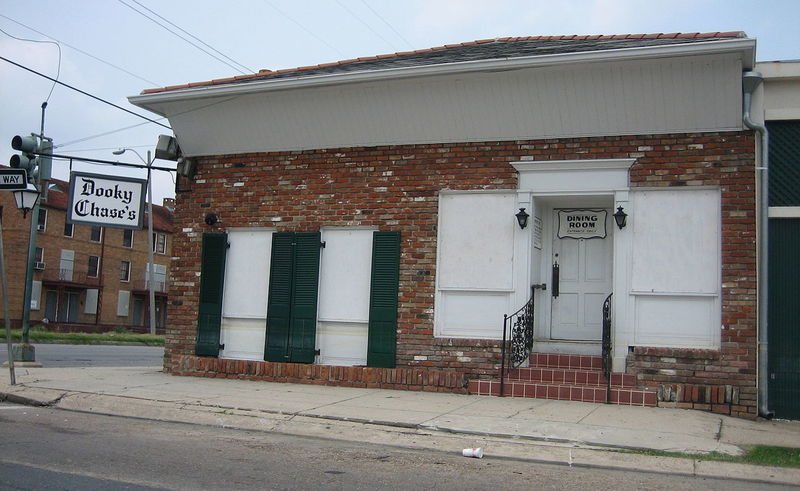
    <title type="html"><![CDATA[Dooky Chase&#039;s Restaurant]]></title>
    <summary type="html"><![CDATA[<p><strong><em>Dooky Chase's Restaurant provided a space for activists to come together over what New Orleanians know best: food.</em></strong></p><img src="https://neworleanshistorical.org/files/fullsize/41a1d4fa2546edd8862780a9f54ee5f1.jpg" alt="Dooky Chase&#039;s Restaurant" /><br/><p>During the 1950s and 60s, Dooky Chase’s Restaurant provided a safe space for national and local civil rights activist to meet and strategize over a bowl of Leah Chase’s famous Creole Gumbo. Beginning in 1939, as a sandwich shop and lottery outlet on Claiborne Avenue, Emile and Dooky Chase moved their business to their home on Orleans Avenue in 1941. In 1946, newlyweds Edgar “Dooky” Chase Jr. and Leah Chase took over the restaurant and turned the sandwich shop into one of the few upscale establishments available for the city’s African American community to dine and socialize. </p><p>Despite state and city ordinances prohibiting most interracial assembly, Edgar and Leah Chase embraced the spirit of the Civil Rights Movement and invited labor and social activists of all races to use their dining room for meetings. Dooky Chase’s Restaurant served as a meeting place for labor leaders during the Godchaux Sugar Refinary strike in 1955, planning sessions for local lunch counter protesters Jerome Smith, Rudy Lombard and Oretha Castle Haley, and as a secret meeting location for Rev. Martin Luther King Jr. and the Freedom Bus Riders.</p><p>On May 1965, a homemade bomb was thrown out of a moving car towards Dooky Chase’s Restaurant sending metal fragments into the bar and entrance way of the restaurant. Remembering the incident, Leah Chase explains the bomb did not injure anyone and the restaurant only suffered minor damage. </p><p>Surviving Hurricanes Betsy and Katrina, Dooky Chase's remains open for business.  Visitors to the restaurant can view Leah Chase’s vibrant art collection featuring African American artists.         </p><p><em><strong><a href="https://neworleanshistorical.org/items/show/1354">For more (including 3 videos) view the original article</a></strong></em></p>]]></summary>
    <published>2017-04-05T00:08:28+00:00</published>
    <updated>2026-07-15T16:20:27+00:00</updated>
    <link rel="alternate" type="text/html" href="https://neworleanshistorical.org/items/show/1354"/>
    <id>https://neworleanshistorical.org/items/show/1354</id>
    <author>
      <name>Joseph Cripple&amp;#32;&amp;amp;&amp;#32;Mindy Jarrett</name>
    </author>
  </entry>
  <entry>
    <title type="html"><![CDATA[Pat O&#039;Brien&#039;s]]></title>
    <summary type="html"><![CDATA[<img src="https://neworleanshistorical.org/files/fullsize/1d990edac8db782a0273ce0de8561a7c.jpg" alt="Pat O&#039;Brien&#039;s Signature Hurricane" /><br/><p>Located in the heart of the New Orleans French Quarter, Pat O’Brien’s is a prime destination for tourists who may not know its past as a popular speakeasy. On December 3, 1933, two days after the repeal of Prohibition, Pat O’Brien converted his speakeasy, Mr. O’Brien’s Club Tipperary, into a legal drinking establishment on the 600 block of St. Peter Street. When business began to grow, O’Brien moved his bar to its present location at 718 St. Peter. The current Pat O’s offers a main bar, patio, and patio lounge. </p><p>Pat O’Brien’s signature drink, the Hurricane, was invented in the 1940’s during World War II when manufacturing replaced distilleries, making whiskey scarce.  To obtain a single case of whiskey, bar owners would have to order 50 cases of rum. The abundance of rum inspired employees at Pat O’s to create a new cocktail, and the Hurricane, a rum-based drink, was born. </p><p>The daily “Dueling Pianos” show is a crowd favorite. Taking the late 1800s dueling piano concept, Pat O’Brien’s turned the show into an audience-driven experience. Piano players and other musicians perform songs based on requests from the audience, and “battle” for tips and crowd reactions. </p><p>Now owned by the Oechsner family, Pat O’Brien’s has expanded into out-of-state locations to Orlando, Florida, and San Antonio, Texas.</p><p>At Pat O’Brien’s, Hurricanes are made with a mix of rum and Hurricane mix from the original recipe crafted in the 1940s. The drink is served in a distinctive glass stamped with the Pat O’Brien’s logo. For tourists, these glasses are sought-after souvenirs of New Orleans. </p><p>Although the Pat O’Brien’s recipe remains a secret, here’s a close match:</p><p>A traditional hurricane includes:</p><p>-2 oz. light rum </p><p>-2 oz. dark rum </p><p>-2 oz. passion fruit juice </p><p>-1 oz. orange juice </p><p>-1/2 oz. fresh lime juice </p><p>-1 tbsp. simple syrup </p><p>-1 tbsp. grenadine </p><p>- an orange slice and cherry to garnish. </p><p><em><strong><a href="https://neworleanshistorical.org/items/show/1182">For more (including 4 images) view the original article</a></strong></em></p>]]></summary>
    <published>2016-03-06T21:42:43+00:00</published>
    <updated>2026-07-15T16:20:29+00:00</updated>
    <link rel="alternate" type="text/html" href="https://neworleanshistorical.org/items/show/1182"/>
    <id>https://neworleanshistorical.org/items/show/1182</id>
    <author>
      <name>Jessica Linde&amp;#32;&amp;amp;&amp;#32;Connie Gentry</name>
    </author>
  </entry>
  <entry>
    <title type="html"><![CDATA[William Sydney Porter: Becoming O. Henry]]></title>
    <summary type="html"><![CDATA[<img src="https://neworleanshistorical.org/files/fullsize/91a431cca416c7906723a1ba1f86dbdd.jpg" alt="O. Henry " /><br/><p>In February 1896, William Sydney Porter was indicted for embezzlement of funds from the First National Bank in Austin, Texas, where he had been recently employed. In July of that year, instead of returning to Austin to face trial, Porter hopped on a train for New Orleans leaving behind his wife, Athol, and their young daughter, Margaret. It is speculated that Porter was just a pawn in the bank’s scheme and that he was framed for the crime.</p><p>Being on the run from the law, Porter was cautious about how much attention he brought on himself, therefore not much information exists about his stay in New Orleans. In a 1922 <i>Times</i>-<i>Picayune</i> article, Porter’s widow claimed that her late husband spent his first nights in New Orleans sleeping on a bench in Lafayette Square Park. Porter later procured lodging in a rooming house across the street from the Old Absinthe House at 238 Bourbon Street. </p><p>In New Orleans, Porter wrote the for local newspapers the <i>Times-Picayune</i> and the <i>New</i> <i>Orleans Delta. </i>He socialized with other reporters and journalists at the nearby bars in and around the French Quarter, such as Begue’s Restaurant and the Tobacco Plant Saloon on Gravier Street. It was in New Orleans where Porter picked up the pen name, O. Henry. The most famous story of Porter’s acquiring his <i>nom de plume</i> involves a night of drinking with fellow <i>Times-Picayune</i> employee Ernst Hoepner (described as a talented but pugnacious artist with “alcoholic tendencies”), at the Tobacco Plant Saloon. Anxious bar patrons were calling out to the bartender “Oh, Henry, another of the same!” </p><p>After a few months in New Orleans, O. Henry left for Honduras. Honduras did not have an extradition treaty with the U.S. and was therefore a perfect place for the author to lie low. Porter kept in touch with his wife, Athol, while he was away. He sent her coded letters with illustrations that gave away his whereabouts. While in South America, he received word that his wife was gravely ill, prompting him to stop running. Porter made the trip back to Texas to be with his wife before she died.</p><p>On April 25, 1898, the day the Spanish-American War began, O. Henry was sent to a federal penitentiary in Columbus, Ohio, to serve a five-year sentence. He was released in 1901 and moved to New York City, where he remarried and quickly became one of the most predominant figures in American literature until his death on June 5, 1910. Some of Porter’s most famous works include <i>The Gift of the Magi</i> (1905), <i>The Ransom of Red Chief</i> (1907), and <i>The Caballero’s Way</i> (1907). Today the O. Henry Prize Stories is a prestigious award given annually to twenty short stories of merit. </p><p>Despite his brief stint in New Orleans, Porter developed a deep affinity for the city. He used New Orleans as the setting for four of his short stories, and is quoted by his widow as declaring there are “only two cities in the world – New York and New Orleans." Porter’s former home on Bourbon Street housed several restaurants over the years, most famously the Vieux Carré Restaurant, owned by the famous restauranteur family, the Brennans. </p><p>Today, Bourbon Cowboy, a popular bar where patrons can ride a mechanical bull, occupies the house where O. Henry once lived.</p><p><em><strong><a href="https://neworleanshistorical.org/items/show/961">For more (including 7 images) view the original article</a></strong></em></p>]]></summary>
    <published>2015-12-04T16:42:51+00:00</published>
    <updated>2026-07-15T16:20:31+00:00</updated>
    <link rel="alternate" type="text/html" href="https://neworleanshistorical.org/items/show/961"/>
    <id>https://neworleanshistorical.org/items/show/961</id>
    <author>
      <name>Woody Brown</name>
    </author>
  </entry>
  <entry>
    <title type="html"><![CDATA[Leidenheimer Baking Company]]></title>
    <summary type="html"><![CDATA[<img src="https://neworleanshistorical.org/files/fullsize/18e70d715c96684bf942802220b1d9e8.jpg" alt="&quot;Leidenheimer Baking Company&quot;" /><br/><p>Founded in 1896 by George Leidenheimer, Leidenheimer Bakery’s original bread baking style was far different from today's classic French Bread, po-boy making loaves.  Leidenheimer established his Dryades Street bakery after moving to New Orleans from Deidesheim, Germany and became a part of the neighborhood’s growing German immigrant population. Leidenheimer began by making dense, dark brown German bread loaves, but changed his style to cater to the French customer base in Old New Orleans, who preferred a light, airy texture to their bread. </p><p>Leidenheimer is was one of thousands of Germans who flocked to New Orleans in the mid-1800s. Other German bakeries that still exist include Alois Binder Bakery, Haydel’s Bakery, and until Katrina, Hubig’s Pies. The Leidenheimer bakery has since moved from its original Dryades Street location to nearby 1501 Simon Bolivar Avenue to accommodate its growing production and popularity.</p><p>Leidenheimer is now in its third generation, now managed by Sandy Whann and sister Katherine Whann. Leidenheimer Bakery is the city’s largest producer of French Bread, and continues to economically support its Central City neighborhood, a section of town the Whann’s affectionately label, “the bakery neighborhood.”  </p><p><em><strong><a href="https://neworleanshistorical.org/items/show/899">For more (including 4 images) view the original article</a></strong></em></p>]]></summary>
    <published>2015-04-16T01:24:34+00:00</published>
    <updated>2026-07-15T16:20:32+00:00</updated>
    <link rel="alternate" type="text/html" href="https://neworleanshistorical.org/items/show/899"/>
    <id>https://neworleanshistorical.org/items/show/899</id>
    <author>
      <name>UNO Public History</name>
    </author>
  </entry>
  <entry>
    <title type="html"><![CDATA[Streetcar Historian Michael Mizell-Nelson]]></title>
    <summary type="html"><![CDATA[<img src="https://neworleanshistorical.org/files/fullsize/cb25339292036bc9ef9b33d88df3a6b7.jpg" alt="Staff photograph of Michael Mizell-Nelson" /><br/><p>Michael Mizell-Nelson was a historian of the streetcar, exploring the labor history and publicizing the connection of streetcar strikes to the creation of the Po Boy Sandwich, examining streetcar segregation and integration, documenting the women transit operators during World War II, and explaining their rise and demise. His 1995 documentary Streetcar Stories, exploring their cultural history, was aired on over 100 PBS affiliate nationwide. </p><p>Both of the featured clips are excerpts from interviews he did for Poppy Tooker's NPR radio show Louisiana Eats. In the first, he discusses the history of the streetcar, including who used the streetcars--with a focus on domestic workers--and the issue of segregation.</p><p>In the second he discusses the food history of streetcars including their connection to the creation of the Po Boy, mini markets on the streetcars themselves, the banning of crayfish, and motormen's meals with their families.</p><p><em><strong><a href="https://neworleanshistorical.org/items/show/885">For more (including 2 audio files) view the original article</a></strong></em></p>]]></summary>
    <published>2015-01-11T09:07:17+00:00</published>
    <updated>2026-08-24T00:36:57+00:00</updated>
    <link rel="alternate" type="text/html" href="https://neworleanshistorical.org/items/show/885"/>
    <id>https://neworleanshistorical.org/items/show/885</id>
    <author>
      <name>Kevin McQueeney</name>
    </author>
  </entry>
  <entry>
    <title type="html"><![CDATA[The Barrooms and Brothels of Gallatin Street]]></title>
    <summary type="html"><![CDATA[<img src="https://neworleanshistorical.org/files/fullsize/aacf2ecfdf4128ba89bf9f90d1dbfcfa.jpg" alt="View of Gallatin Street" /><br/><p>Gallatin Street was once filled with barrooms, dance houses, and brothels — most institutions serving as all three. There was rarely a fee to enter, but men were encouraged to buy a drink for their dance partner at the end of each dance, keeping the bartenders happy and the patrons “loose.” The Times-Picayune reported that owning a bar on Gallatin Street required “Courage, Brutality, and Diplomacy.” Many stories from Gallatin's most notorious bars describe the dangerous of business of hanging around or worse, owning one of these taverns.</p><p>The California House was a popular barroom on Gallatin Street during the antebellum era. In 1854, a policeman named Phillips was suspended for attempting to prevent the arrest of Archy Murphy and David Kinney after the two started a brawl outside the California House. Peter Johnson, better known as “Dutch Pete,” owned the California House at the time of Murphy and Kinney’s brawl. Only a few years later, police protected Dutch Pete after he killed a man and escaped to Cuba. The California House was one of the Gallatin Street institutions that certainly had the police on its side.</p><p>The Amsterdam House hit its peak during the Civil War, after the infamous dog fighter Dan O’Neil took ownership of the place. It remained one of the best regarded dens of vice until 1869. The year of its decline started when Molly Mason, a prostitute who worked for O’Neil at the Amsterdam, ran away with her lover. When Mason returned seeking her job again, she was drugged, stripped, and abused in the alley behind the bar. Later that year, the police fined O’Neil for running a house of ill-repute, and he was forced to close the Amsterdam for good.</p><p>Of all the clubs on Gallatin Street, The Green Tree Tavern had one of the longest and most violent reputations. An article in the Times-Picayune recalls a sign that hung in front of the building on which “was painted a tree, green with foliage.” The Times-Picayune also described the building as a “three-story brick house [which] had three doors opening on Gallatin street and was two houses distance from Barracks street. The bar ran across the rear of the front room of the house, and in the rear was the ballroom.” </p><p>The Green Tree Tavern’s popularity peaked during the Civil War. The institution, however, seemed to curse all who dared to own it. Some Gallatin Street bar owners took to the custom of watering down drinks after the second or third round to temper drunkenness while saving a little money on alcohol. Harry Rice was one of the bar owners who had taken to watering down his patron’s drinks. This upset some sailors drinking at The Green Tree Tavern one night in 1854, and they responded by stoning Rice to death for his offense. From there, a woman took over the bar, but did not fare much better. In 1865, Mary Rich, better known as “One Legged Duffy,” was stabbed multiple times by her husband before being beaten by her own wooden leg.</p><p>After One Legged Duffy’s death, Paddy Welsh ran the Green Tree Tavern. He owned it until 1873, when he offended some members of the Live Oak Gang and was found drowned in the Mississippi River. Thomas Pickett became the next owner of the Green Tree. Pickett, not learning from Welsh’s mistakes, also took on members of the Live Oak Gang. On January 11, 1876, Jack Lowe and William Knuckley, members of the Live Oak Gang, caused a disturbance at the Green Tree. Infuriated, Pickett went looking for revenge. He found the two men at a nearby coffee shop with Knuckley’s brother, Mike. Pickett shot and killed Mike Knuckley, who hadn’t even been at the Green Tree that night. Pickett then fled the city, but in October 1867 was brought back to New Orleans in chains. </p><p>By the time Pickett returned to New Orleans, D.A.C. Lee and his wife Lena Welsh had taken over the club. Lee arrived in New Orleans during the Civil War as a drum major in the army. After the war ended, Lee married the widow Lena Welsh, who was the proprietor of the Green Tree Tavern. Lee worked as a police officer during the day, and as a bartender at the Green Tree Tavern at night. On October 8, 1876, Billy Lyons and William Knuckley, the same Knuckley brother Pickett was after, caused a disturbance at the Green Tree. As Lee was escorting the two men out of the bar, Knuckley turned and stabbed Lee, at which point Lyons fired two fatal shots at Lee.  </p><p>In the 1880s, The Green Tree Tavern was converted to a bakery. By this time, vice on Gallatin Street was in decline. In 1886, a fire from Decatur Street leapt onto the old Green Tree building, burning it to the ground. Perhaps a fire was the most appropriate way to close the violent history of the Green Tree Tavern.</p><p>The rest of the street found a much more deliberate end, and the countless stories form Gallatin Street’s dark past were lost in the rubble.</p><p><em><strong><a href="https://neworleanshistorical.org/items/show/828">For more (including 5 images) view the original article</a></strong></em></p>]]></summary>
    <published>2014-07-28T18:45:27+00:00</published>
    <updated>2026-08-24T00:36:57+00:00</updated>
    <link rel="alternate" type="text/html" href="https://neworleanshistorical.org/items/show/828"/>
    <id>https://neworleanshistorical.org/items/show/828</id>
    <author>
      <name>Jessica Anne Dauterive, Greg Lambousy, William Jones, Sean Simonson,&amp;#32;&amp;amp;&amp;#32;Ellie Ginsberg</name>
    </author>
  </entry>
</feed>