The New Orleans Tribune: America’s First Black Daily Newspaper
The New Orleans Tribune, or la Tribune de la Nouvelle Orléans, was America’s first Black daily newspaper. Created by free Black leaders, the Tribune was a formidable political tool that built a courageous campaign for social justice during the Civil War and Reconstruction eras. The paper’s primary mission, the right for all Black men to vote, resonated throughout the nation and demanded Lincoln’s attention. The Tribune agenda included redistribution of plantation land to the emancipated, streetcar desegregation, the creation of integrated public schools, equal accommodations in public facilities, equitable legislative representation, and full legal rights. The journal swiftly built a reputation as the leading voice of the Black community and was widely respected as a force in Louisiana politics and beyond.
The Tribune tirelessly attacked any notion of Black inferiority, serving as a counter-narrative to an overwhelmingly prejudiced white press and public. Turning those lies around, the journal projected a positive image of Black manhood and womanhood, giving voice and agency to all people of African descent.
Free Black men had created one of the most radical and influential newspapers of its time, resulting in a greatly expanded sphere of power and influence for people of African descent. Their project, articulated in print and manifested in social protest, anticipated events 100 years later and forged the first coherent civil rights movement in the American South.
Access: Walking or biking
Distance: ~2.5 miles, ~1 hour walking, ~20 minutes biking
Stories 9

L’Union, the South’s First Black Newspaper and New Orleans Tribune, America’s First Black Daily Newspaper
You are standing in front of the L’Union and the New Orleans Tribune building, the birthplace of civil rights history in the Crescent City. Here, surrounded by the howling madness of the Civil War,…
New Orleans Tribune Offices After November 1866: Growing Readership in the Reconstruction Era
In November 1866, the Tribune moved from its offices on Conti Street to 122-124 Exchange Alley. These new digs were in the shadow of the St. Louis Hotel (site now occupied by the Omni Royal Orleans…
Mechanics' Institute Massacre
On July 30, 1866, black Republicans attempted to reconvene the Louisiana constitutional convention in an effort to secure voting rights. Held at the Mechanics' Institute, a large crowd of black…
Residence and Medical Practice of Dr. Louis Charles Roudanez and Family
Dr. Louis Charles Roudanez was a visionary free man of color, doctor, and journalist. Angered by slavery and racial injustice, he took up the cause of equality during the Civil War and Reconstruction eras, and founded two of New Orleans’ premier black newspapers, L’Union and the New Orleans Tribune.
Tomb of Dr. Louis Charles Roudanez
Faubourg Tremé is home to the oldest existing cemetery in the City of New Orleans, St. Louis Cemetery No. 1. Dr. Louis Charles Roudanez, founder of the New Orleans Tribune, America’s first black daily…
Tombs of Jean Baptiste Roudanez and his mother Aimée Potens
Jean Baptiste Roudanez, publisher of L’Union, the South’s first black newspaper, and the New Orleans Tribune, America’s first black daily newspaper, is entombed alongside his mother Aimée Potens, a…
Residence of Jean Baptiste Roudanez
Jean Baptiste Roudanez (1815-1895), a free man of color, served as publisher of L’Union, the South’s first black newspaper, and the New Orleans Tribune, America’s first black daily newspaper. Dr.…
Economy Hall
Soon after Union forces seized New Orleans from the Confederacy in 1862, calls for equality reverberated among free people of color. Hundreds assembled at frequent mass meetings and rallies at Economy…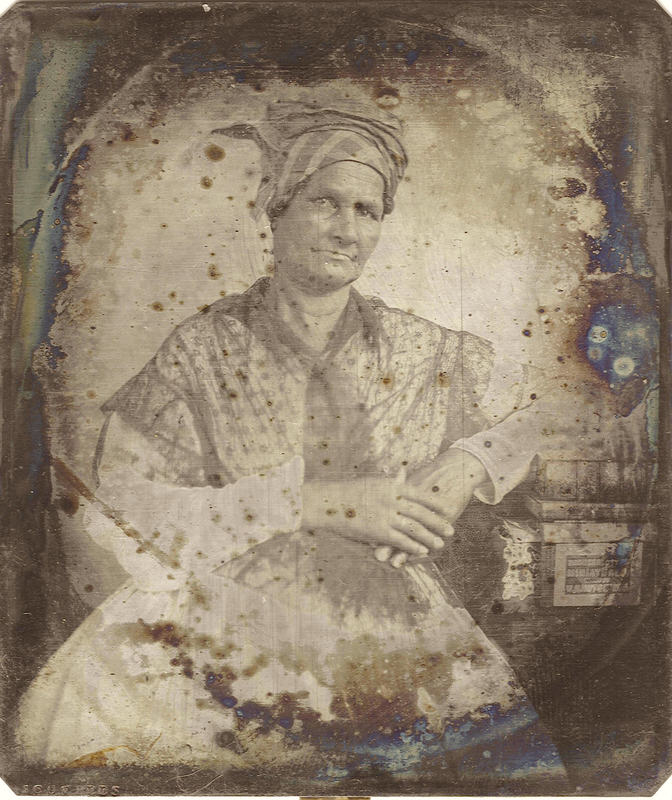
Aimée Potens Residence
Aimée Potens was the mother of Louis Charles and Jean Baptiste Roudanez, the founder and publisher of L’Union, the South’s first black newspaper, and the New Orleans Tribune, America’s first black…Tour curated by: Mark Charles Roudané | This tour is based on Mark Charles Roudané’s most recent book “The New Orleans Tribune: An Introduction to America’s First Black Daily Newspaper.” To learn more about Roudané’s work, visit his official website (roudanez.com) and Facebook page (facebook.com/roudanezhistory).