Pelican Stadium
Text
In 1908, Pelican Park opened on South Carrollton Avenue, situated between Palmyra and Banks Streets. In 1915, sections of the stadium were dismantled and moved by mules to the corner of Tulane and Carrollton Avenues, where Heinemann Park opened.
The park was named after A.J. Heinemann, stadium owner and Pelicans shareholder who moved the team to their new stadium. On January 8, 1930, Heinemann shot himself in the head at the park after suffering great losses during the stock market crash. In 1938, Heinemann Park was renamed Pelican Stadium.
The stadium was home to New Orleans' first professional team, the Pelicans, from 1915 through 1957. 11,000 fans turned out for the first night game played in Pelican Stadium in 1936. The last game played in Pelican Stadium occurred on Sunday, September 1, 1957, before a sparse crowd of 941 who saw the Pelicans defeated by the Memphis Chicks.
Files

Pelican Stadium Aerial View
The Pelicans played for years at Pelican Stadium, at Tulane and South Carrollton avenues Image courtesy of Times Picayune and nola.com
Pelican Park postcard
In the distance one can see the upper floor of the Criminal Court Building. Image courtesy of Wikimedia Commons
Mayor Robert Maestri seated in Pelican Park.
Mayor Maestri appeared among a crowd of 21,025 baseball fans in Heinemann Park to see the Pelicans beat the Little Rock Travelers 10 to 4. Courtesy of Louisiana State Museum.
Yankee Spring Training In New Orleans. 1921
New York Yankees baseball team at New Orleans, posed in front of the bleachers, during spring training, 1921. Babe Ruth is seated in the center of the middle row. Waite Hoyt is standing in the back row, above and to the right of Ruth (below boy sitting in stands). Image courtesy of Library of Congress
View from behind homeplate
Pelican Stadium New Orleans, 1934. Image courtesy of Wikimedia Commons
New Orleans Team-Champions Southern Association
1910 Pelicans The most famous among these players is "Shoeless Joe" Jackson, number 12. Image courtesy of Wikimedia Commons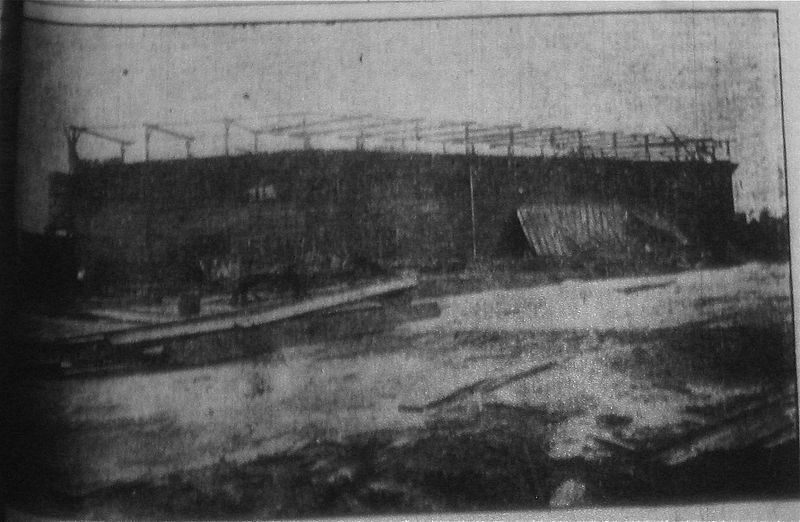
Wind Damage from the 1909 Hurricane.
There were almost 400 reported deaths from the 1909 hurricane, making it one of the deadliest to hit the Gulf Coast. Image courtesy of Wikimedia Commons
"Shoeless Joe" Jackson at Pelican Park
Shoeless Joe Jackson of the New Orleans Pelicans headed for first base. Pelican Park, New Orleans, 1910. Towards the end of the season, Jackson was called up to play in the major leagues. He is better known for his role in the 1919 Black Sox Scandal, when as a member of the Chicago White Sox, Jackson and several other teammates were implicated in a scheme to throw the World Series in exchange for bribes. Image courtesy of Wikimedia Commons
Ed Reagan, New Orleans Team, baseball card portrait
Eddie Reagan" played with New Orleans Pelicans for 1910 season Tobacco companies and candy companies placed baseball cards in cigarette packages beginning in the late 1800s. Uncredited artist for American Tobacco Company Image courtesy of Library of Congress
Charles Fritz Baseball Card
"Fritz New Orleans". Baseball card for Charles Fritz of the New Orleans Pelicans, 1909. Uncredited artist for American Tobacco Company Image courtesy of Library of Congress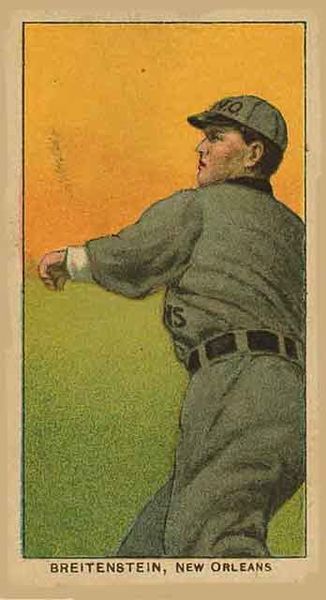
Ted Breitenstein Baseball
Baseball card featuring Ted Breitenstein while he was playing with the New Orleans Pelicans (1904-1911). Uncredited artist for American Tobacco Company Image courtesy of Library of Congress
New Orleans Pelicans baseball team, 1915
Photo published in 2 October 1915 "Times-Picayune" newspaper Image courtesy of Wikimedia Commons