Duncan Plaza
Text
This past July, if you happened to be downtown near the Superdome and New Orleans City Hall, you might have seen something unexpected: in the public park known as Duncan Plaza, there were students digging, screening and sorting through buckets of dirt, and recovering thousands of artifacts from the “back-of-town” neighborhood that Louis Armstrong once called home, lost to urban renewal after World War II. Up until the end of the 1940s, this area had been part of a dense working-class neighborhood filled with tenements, saloons, and dance halls. At least a portion of Duncan Plaza had also been a part of an African American red light district that was the segregated counterpart of the better-known Storyville District. The back-of-town was a crucible for Black culture in New Orleans: Louis Armstrong’s childhood home was just a few doors down from this summer’s excavations, as was the Union Sons Hall, better known as the original “Funky Butt”, the dance hall where Armstrong supposedly heard legendary jazz musician Buddy Bolden play. The neighborhood was razed after World War II as part of the construction of the new downtown municipal complex that includes the present-day City Hall.
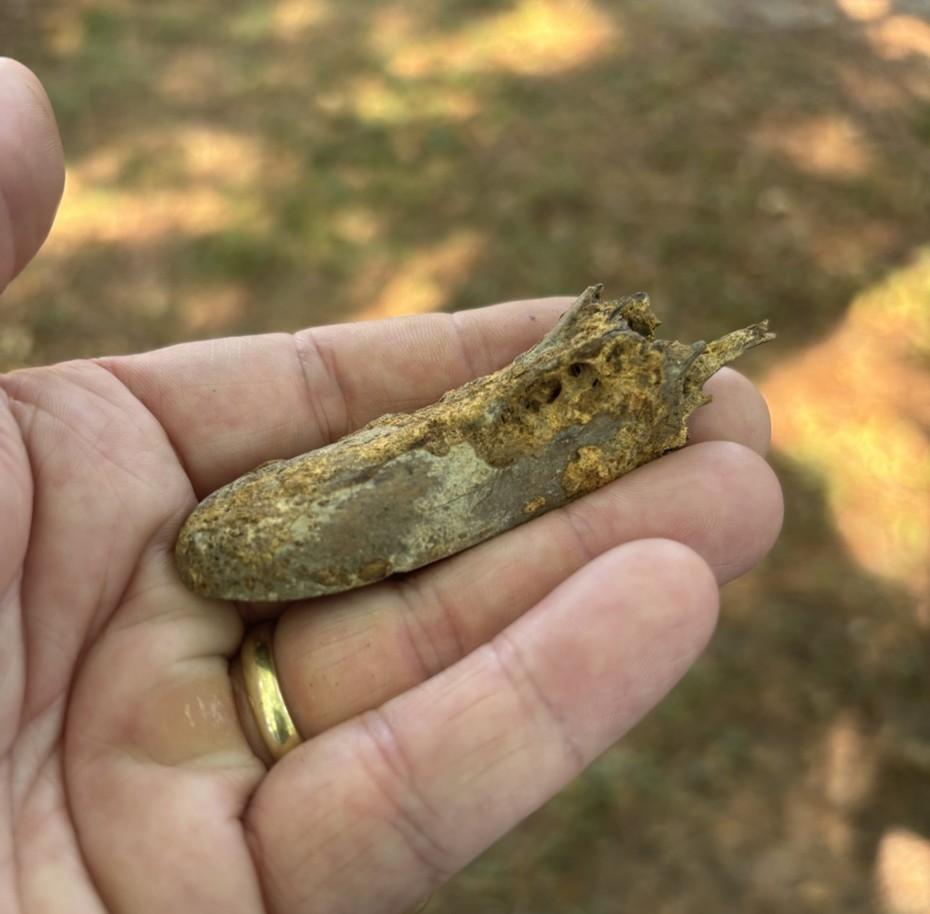
The City of New Orleans (CNO) allowed a team of professors, staff, and students from the University of New Orleans and the New Orleans Baptist Theological Seminary to conduct archaeological excavations at Duncan Plaza. Team members placed test units across what would have been the rear yards of homes on Perdido Street, finding thousands of artifacts in the process. One of the most exciting finds was a densely-filled nineteenth century privy shaft, perfectly bisected by one of our units. That unit alone produced over 25 boxes of artifacts! It was filled with a remarkable array of animal bone, everything from fragments of cow skulls to duck bills to tiny bits of bone from fish, not to mention hundreds or reconstructable glass bottles and ceramic items.
The Summer 2025 field school literally just scratched the surface of what Duncan Plaza holds, but it represents an important baseline for managing the remains of what once was a bustling urban neighborhood. Moreover, it is the latest demonstration of UNO’s long-standing commitment to documenting and preserving the City’s history through its archaeology.
Files
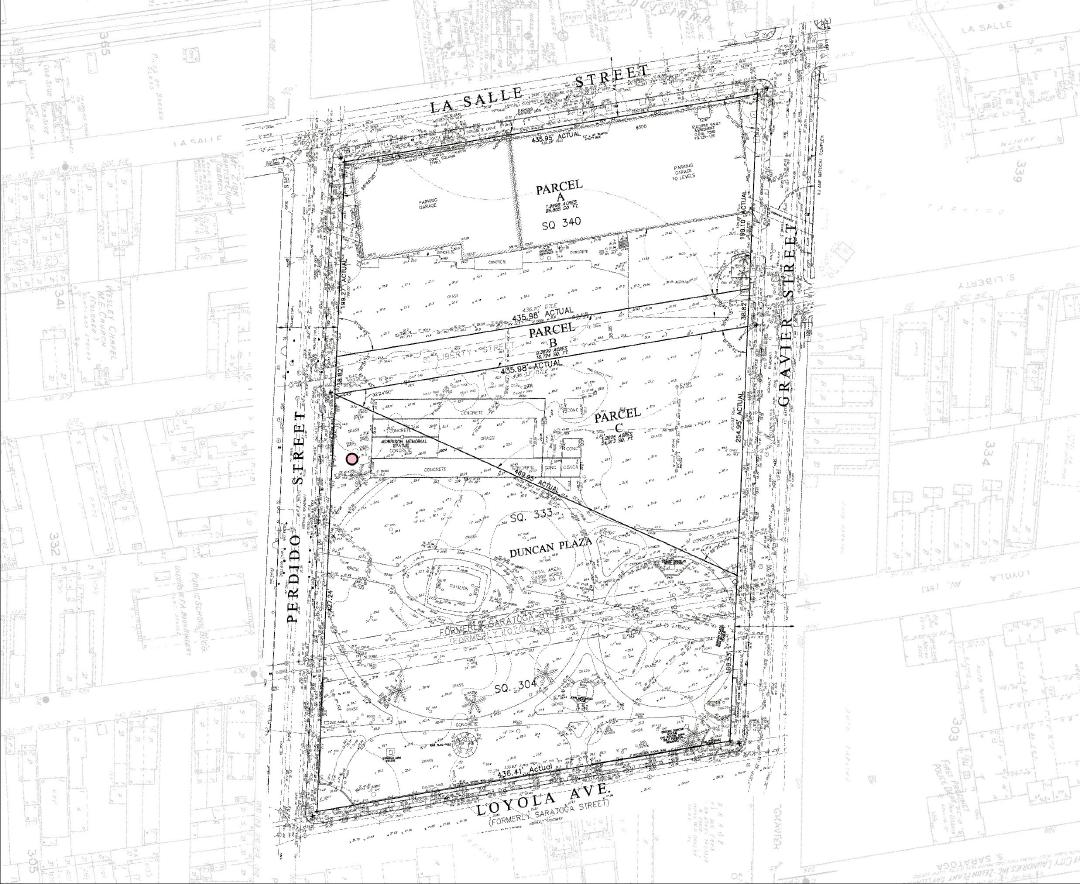
Map Overlay
Overlay of a Schematic with Duncan Plaza's Redevelopment and a Historical Sanborn Map | Source: City of New Orleans and Library of Congress | Date: 1908 and 1980s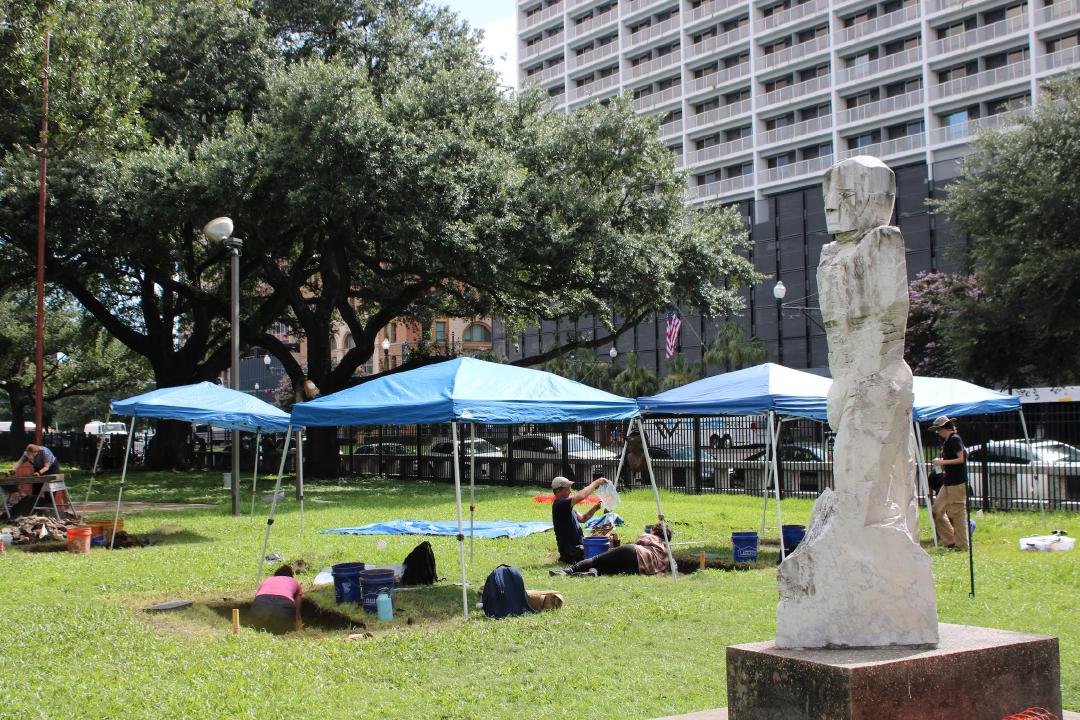
Overview
UNO field school excavations at Duncan Plaza in front of Saratoga Street. | Source: GNO ARC | Date: July 2025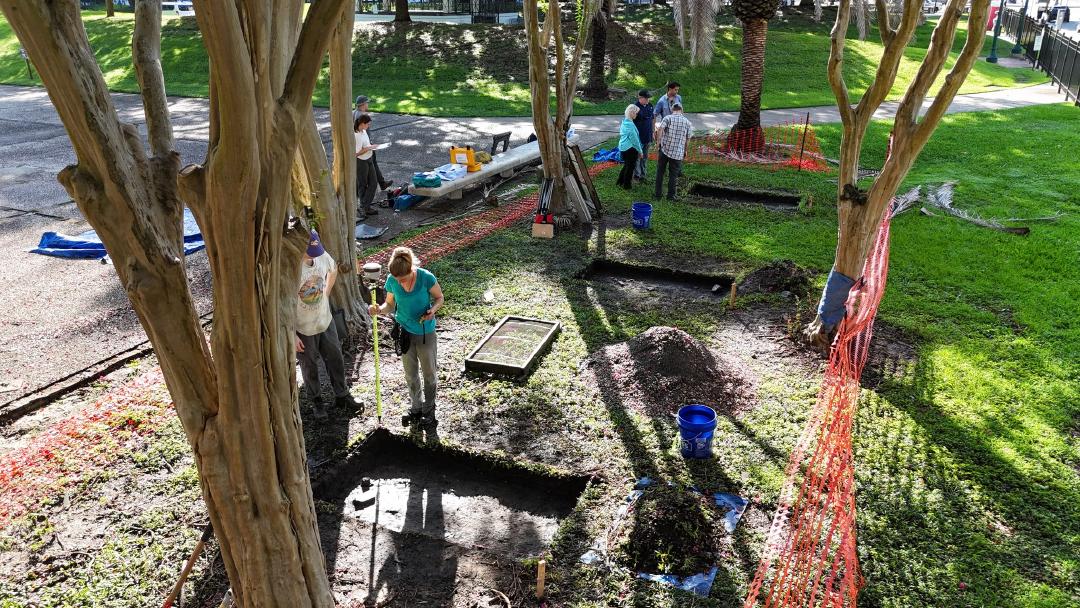
Mapping
UNO field school excavations along Perdido Street, Duncan Plaza, New Orleans. | Source: GNO ARC | Date: July 2025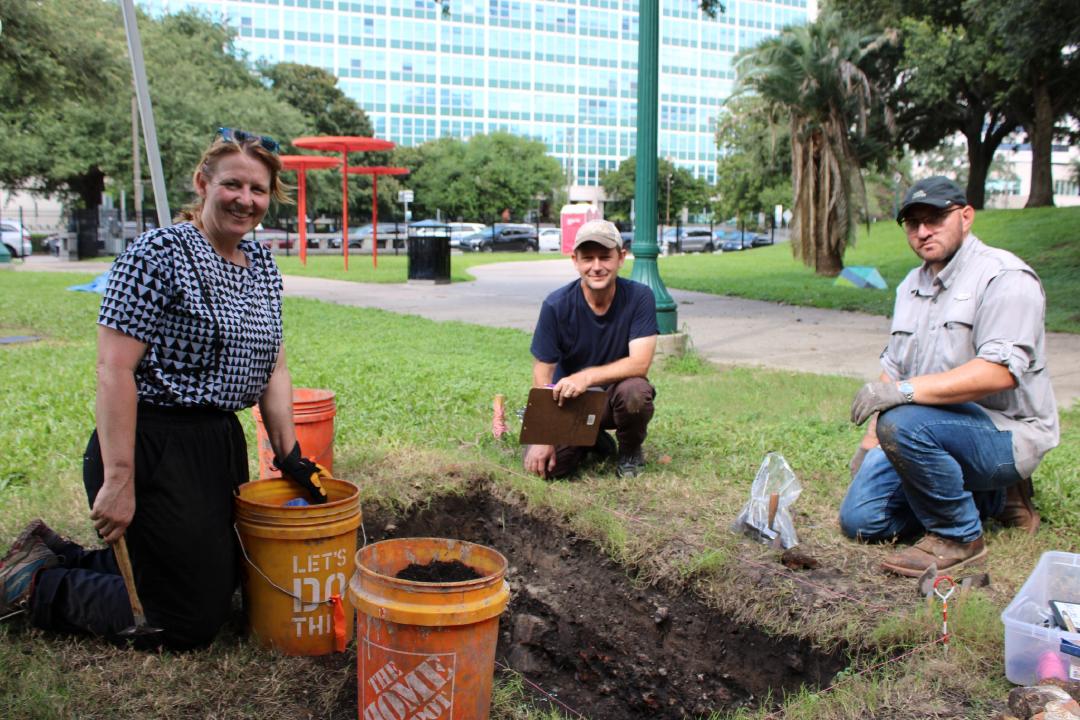
Field Crew Photo
Amy Williams, D. Ryan Gray, and Jody Billiot around an excavation unit at the Duncan Plaza Field School. | Source: GNO ARC | Date: July 2025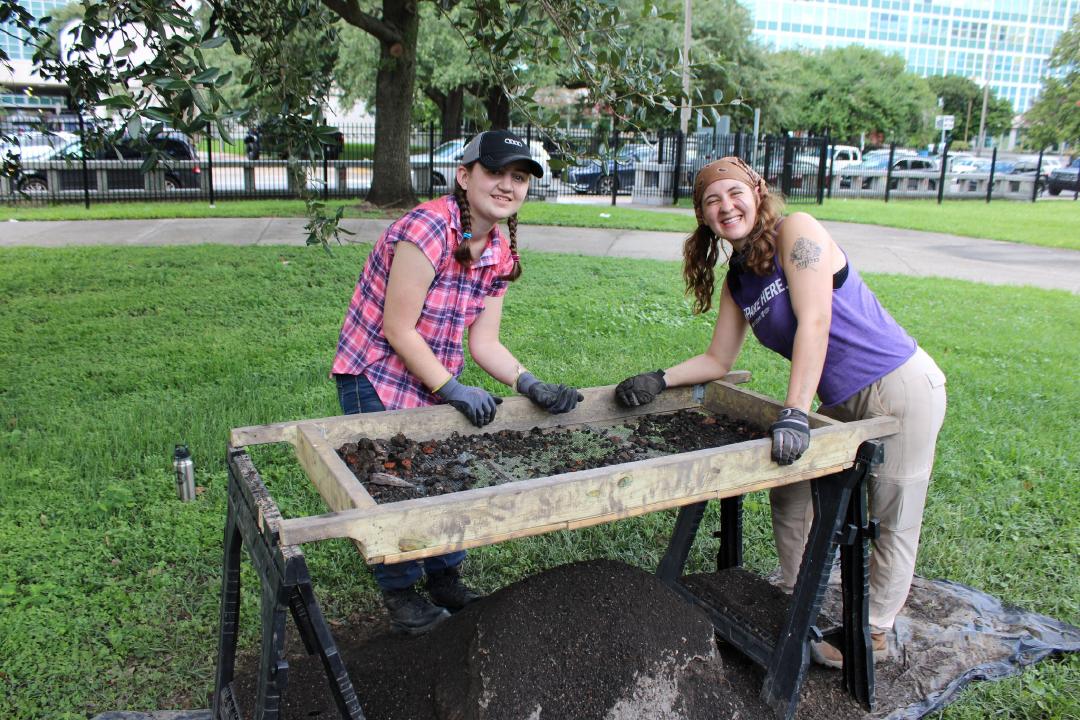
Field Crew Shot
Rainey Cantrelle (UNO) and Meghan Williams (NOBTS) at the screens. | Source: GNO ARC | Date: July 2025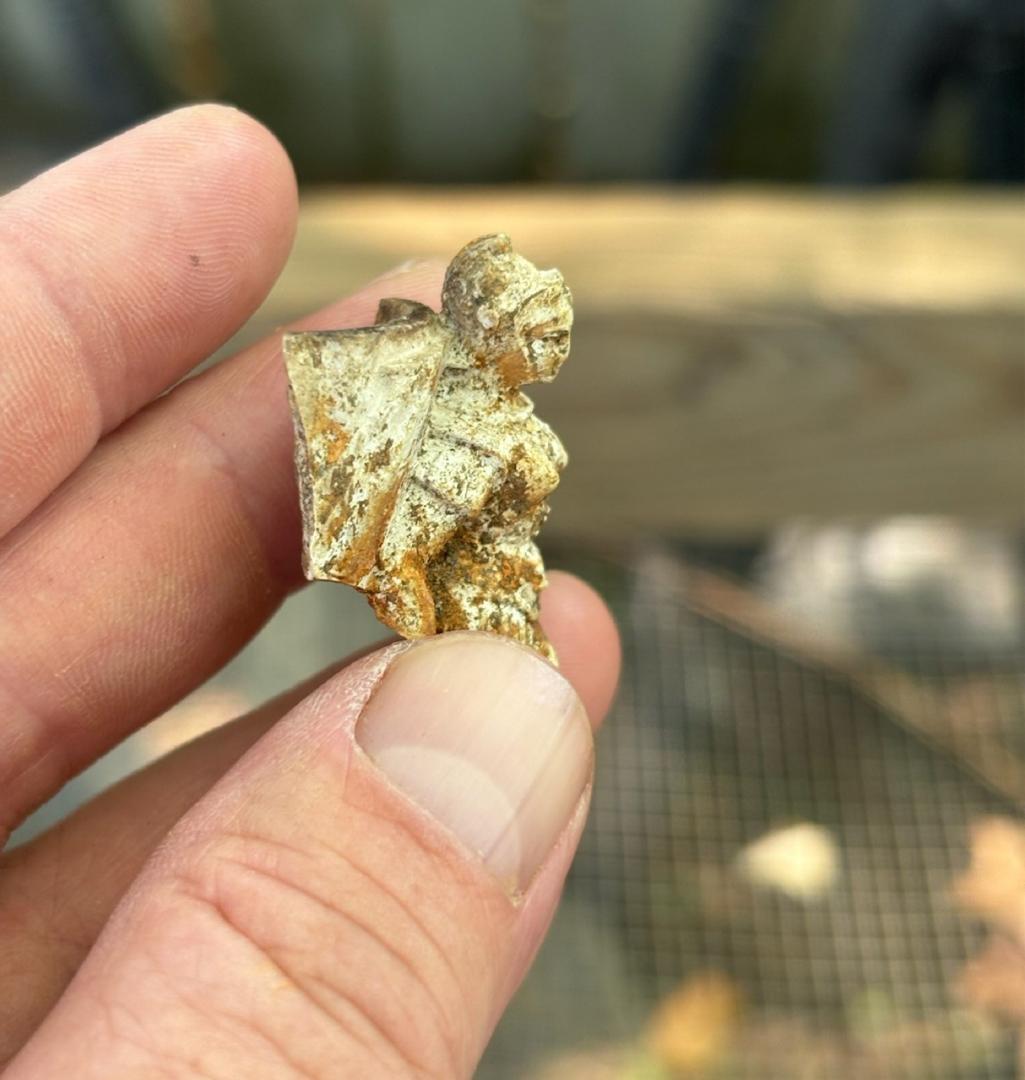
Artifact Photo
Lady Liberty pipe bowl recovered from Duncan Plaza | Source: GNO ARC | Date: July 2025