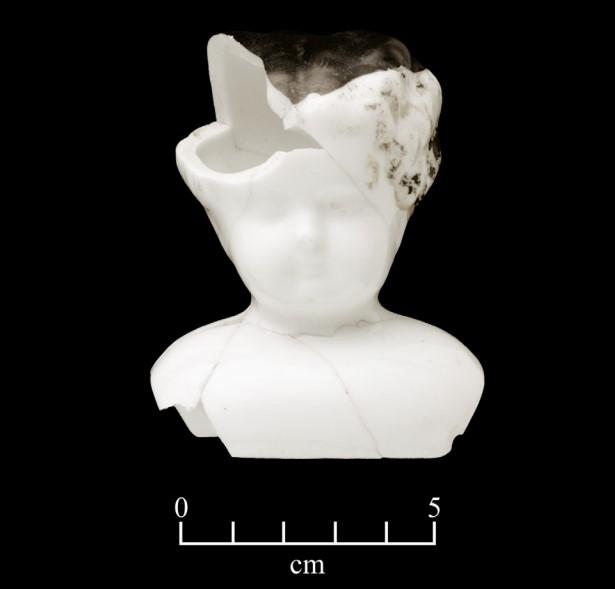
McDonogh No. 5
Text
In 2020, the Federal Emergency Management Agency provided funding to the Recovery School District (RSD) authorizing the renovation of Martin Berhman Elementary School under the Robert T. Stafford Disaster Relief and the Emergency Assistance Act. RC Goodwin and Associates, a cultural resource management company, conducted archaeological excavations of the historic school properties that predated the existing Martin Berhman Elementary School Gymnasium. The site is located north of Red Allen Way, formerly Slidell Street, south of Opelousas Avenue, west of Vallette Street, and east of Verret Street, in Algiers Square 125. The excavation focused predominantly on the historic schoolhouse, a portress dwelling, and a playground used from the Reconstruction Era to the Great Depression.
The property was originally a plantation owned by Canadian immigrants Pierre and Marguerite Gosselin, who moved to New Orleans in the 1770s. The land was passed down through the family line until it was sold by Marguerite Françoise Gosselin to Jean Baptiste Olivier, who maintained ownership of the space until his death in 1869. By 1882, the Gosselin property became the location of a school for African American children in Algiers Point. The McDonogh No. 5 campus expanded to cover over a fourth of the block. In addition to the school building and portress housing, the campus contained five other structures, two of which archaeologists identified as play sheds.
By 1904, plans were made to renovate McDonogh No. 5 and reopen it as a segregated white-only school to accommodate the growing white population in the area. The Orleans Parish School Board, with approval from Mayor Behrman, adopted a resolution to displace the Black student population. Due to vehement protests from Black families, whose children had no other school to attend close by, the Orleans Parish School Board constructed a new school for African American children, McDonogh No. 32. The white student population quickly exceeded the existing campus’s capacity. By 1930, construction began on the new Martin Behrman Public School.
The 2020 renovations provided local archaeologists with the opportunity to examine how this space developed in response to the social and political changes in the decades following the Civil War, as Reconstruction ended and the era of Jim Crow segregation began. In New Orleans, the turn of the century is known both for its Progressive era reforms and its regressive racial policies. From writing utensils and medicine to children’s toys and clothing, the artifacts excavated from this site provide valuable insight into the changing role of schools and the student experience within a segregated education system.
Files
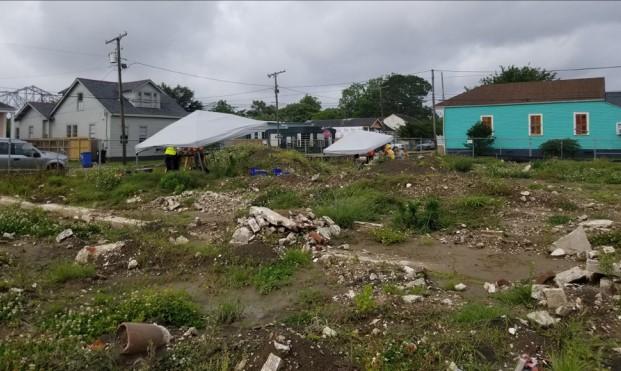
Overview photo of the southern part of the project area, facing southwest.
Photo of the area that was once McDonogh No. 5’s campus. | Source: R. Christopher Goodwin and Associates | Date: 2020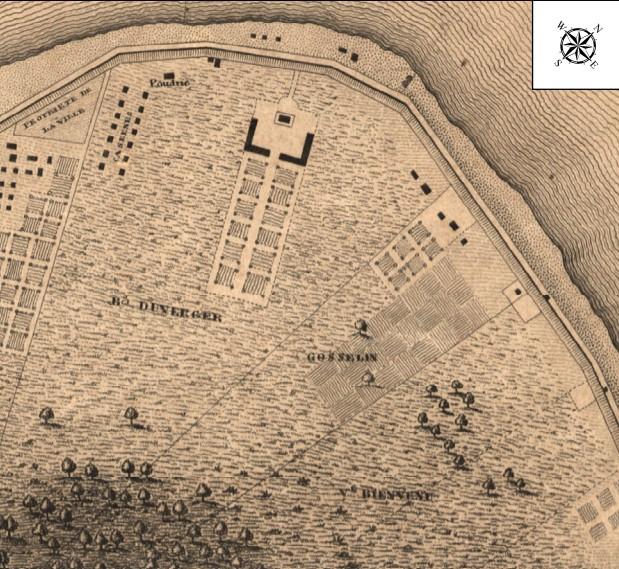
Excerpt of Plan of the City and Suburbs of New Orleans
Historical Map depicting several plantations along the Mississippi River, including the one that belonged to Pierre Gosselin | Source: Library of Congress | Date: 1815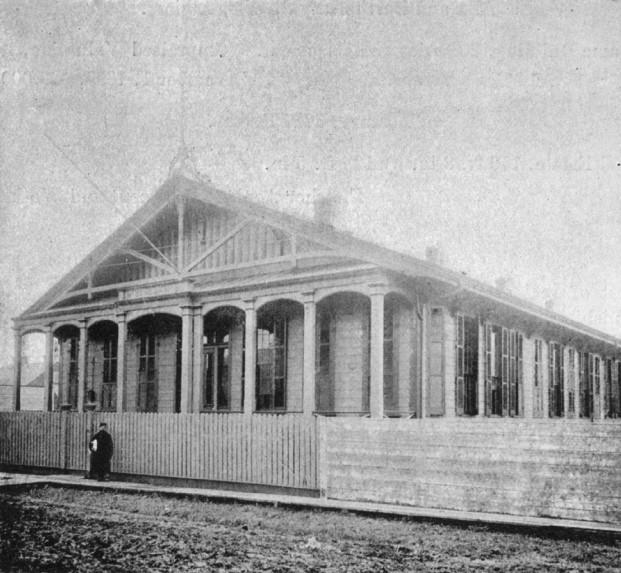
McDonogh School #5, built in 1882.
A photo of the original McDonogh school building | Source: City Archives and Special Collections, New Orleans Public Library. | Date: 1896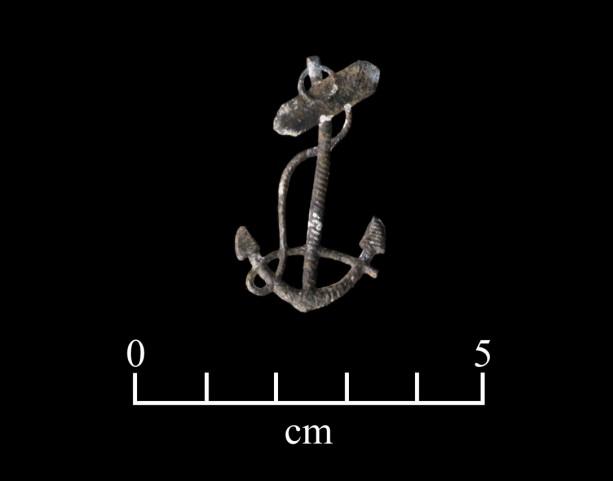
Anchor pendant produced of cupreous metal recovered from Stratum IV within Unit Six
A child’s clothing pin that was found in a privy at McDonogh No. 5 | Source: R. Christopher Goodwin and Associates | Date: 2020