810 Royal Street
Text
On October 22, 2014, an over-200-year-old building at 810 Royal Street collapsed, presumably a victim of unrepaired termite and moisture damage. The collapse sparked conversations in New Orleans about the importance of historic preservation. The complex of buildings at the corner of Royal and St. Ann was constructed by Don Francisco Balthazar Languille sometime soon after his purchase of the lots in 1801.
The group of buildings, including the one that collapsed at 808-810 Royal, and the extant ones at 800-806 Royal and 635-637 St. Ann Street, are reputed to have been among the first 3-story residential structures in the Vieux Carré. The loss of such an important part of the built landscape in the heart of the Quarter through what many saw as ‘demolition by neglect’ highlighted the fragile nature of the city’s architectural heritage, even in its most tightly-regulated district.
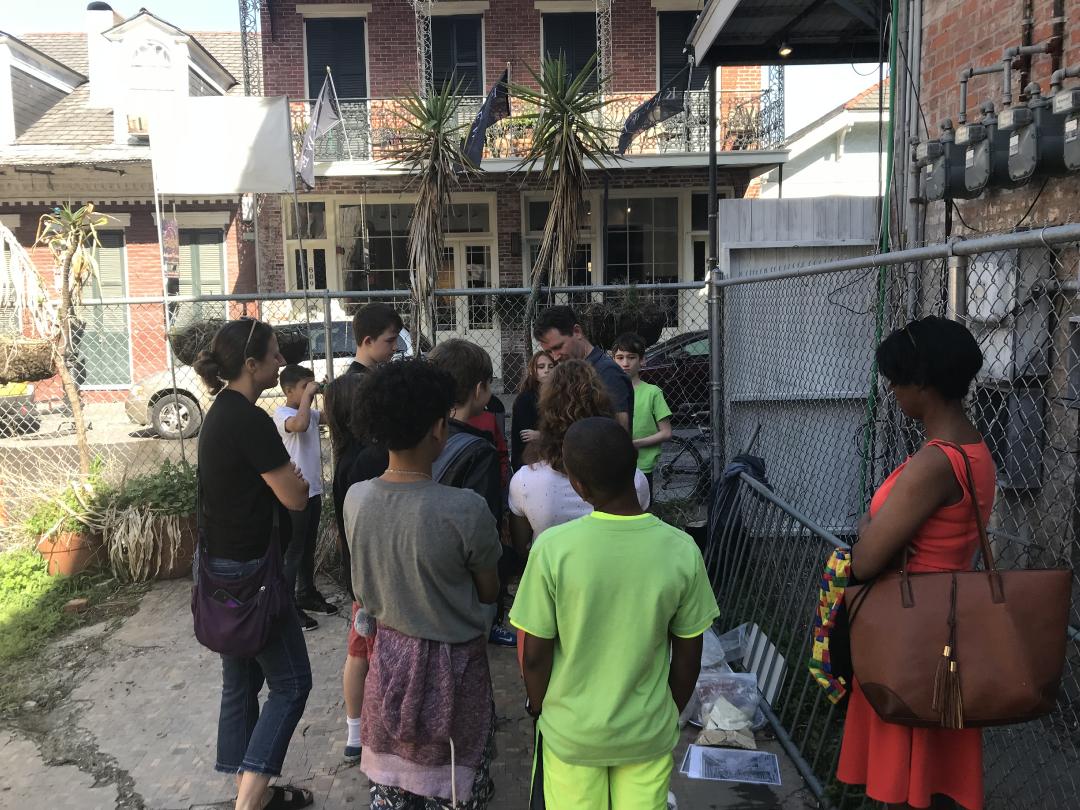
The collapse also offered a rare opportunity to access the layers of soil beneath the building, ground that had been essentially undisturbed since 1801. The new owners offered University of New Orleans Anthropology professor Ryan Gray and his students access to the site while awaiting permits for new construction. The artifacts found during two seasons of excavations conducted by UNO’s summer field school in archaeology have given important insights into life in the Colonial era city.
Files

Image Captured by Google Street View of Field Crew in 2015
Source: Collections of the UNO Archaeology Lab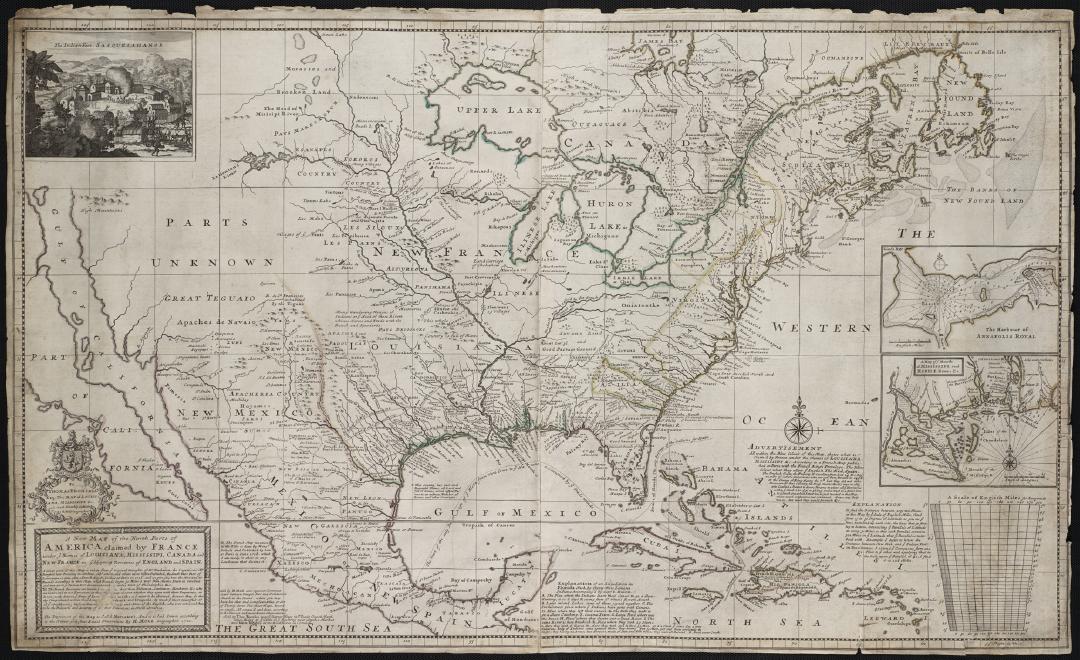
Map of New France
A new map of the north parts of America Claimed by France under the names of Louisiana | Source: Wikimedia Commons | Date: 1720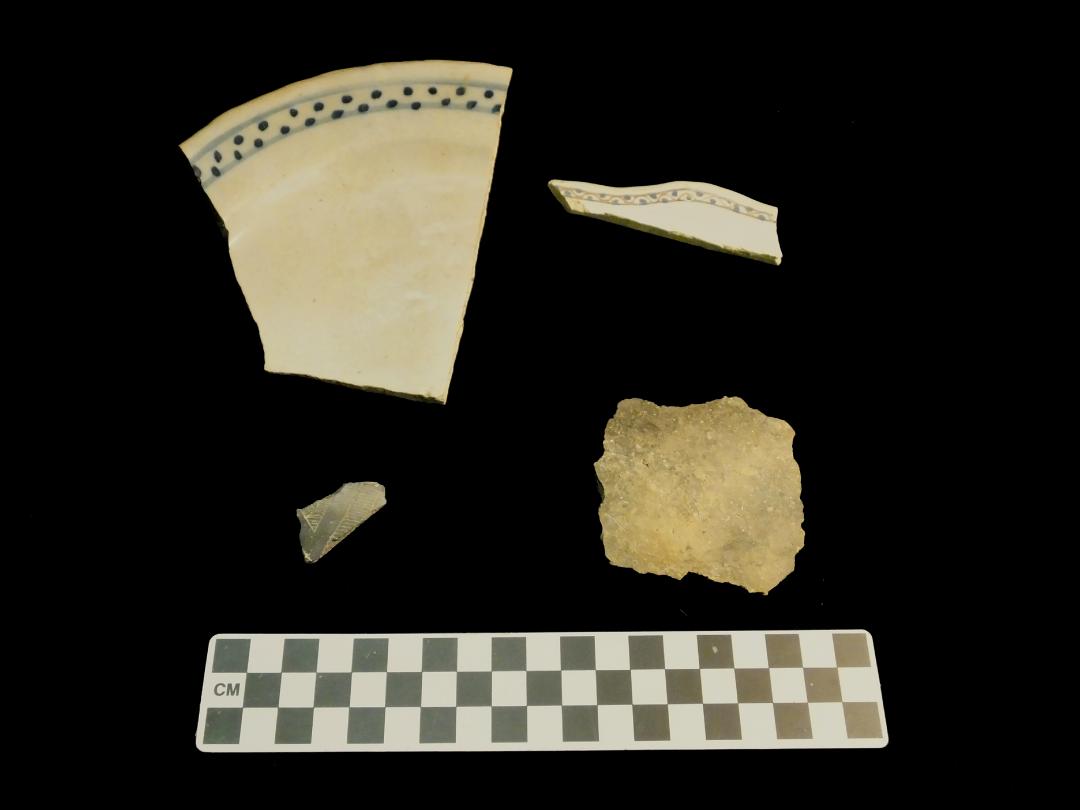
A mix of pottery: Tin-enameled European pottery (top) and Native pottery (bottom) from post-in-ground structure
A mix of pottery: Tin-enameled European pottery (top) and Native pottery (bottom) from post-in-ground structure | Source: GNO ARC | Date: 2015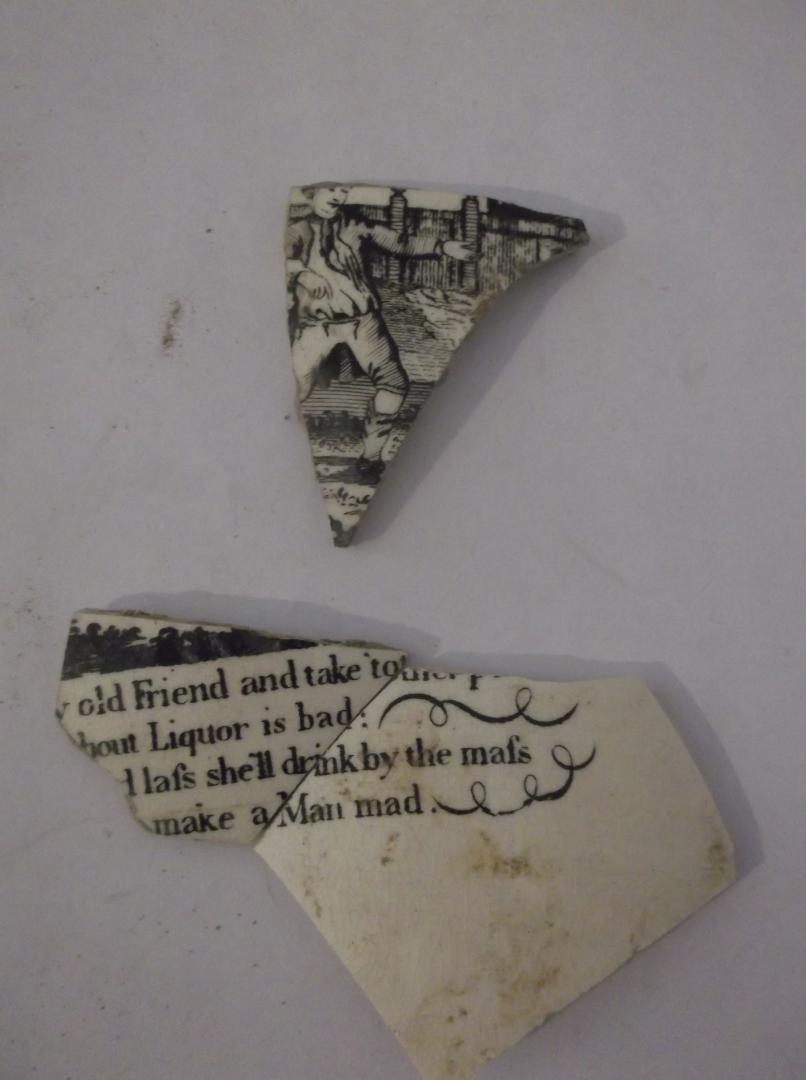
English ‘Liverpool Creamware’ with Satirical Scene
English ‘Liverpool Creamware’ with Satirical Scene | Source: UNO ARC | Date: 2015